
Gutter Nails, Spikes and Hidden Hangers Compared
By: John Ledford | Date Posted: October 11, 2026
Table of Contents
Gutter nails and spikes are the same thing under two names: a long shank driven through the gutter’s front lip, through a ferrule, and into the fascia board. Hidden hangers are a different animal, a bracket that screws into the fascia and locks the gutter from inside, so nothing shows from the ground. If your gutters sag between fasteners, the spike has lost its bite in the wood, and the fix depends on how far gone the fascia is. For a separate plumbing problem, see How to Fix a Running Toilet.
What Each Fastener Actually Does
A gutter spike is a nail with a fat head, usually aluminum or galvanized steel, and it goes in horizontally. The ferrule is the sleeve that keeps the gutter from crushing when you drive the spike home. Old installations used one spike every couple of feet, which is why so many gutters from the 1970s and 1980s look like a roller coaster from the sidewalk.
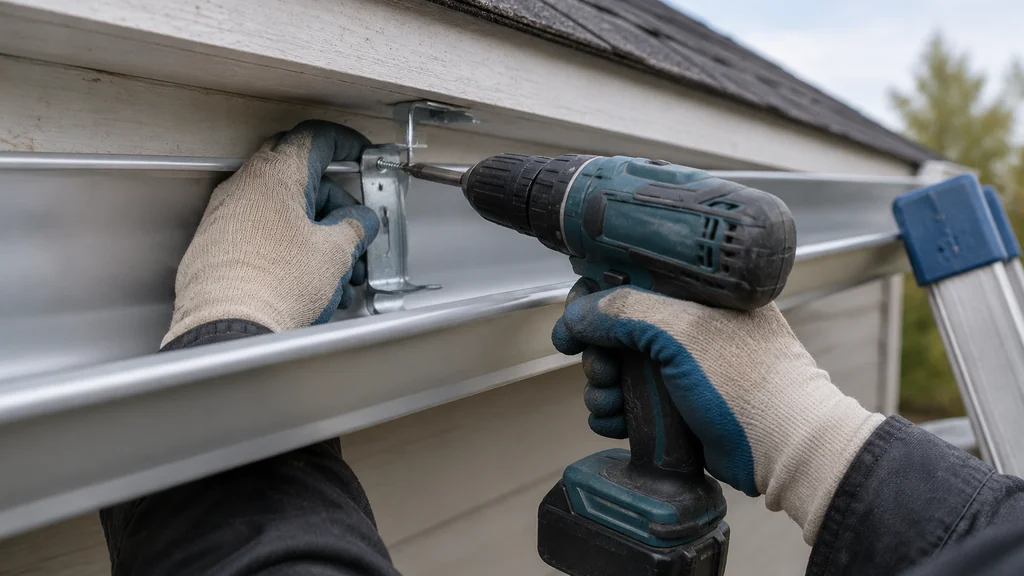
Hidden hangers, sometimes sold as bracket hangers, work from the inside. The bracket hooks over the back wall of the gutter, then a screw drives through the bracket into the fascia. No ferrule, no visible head, and the screw can be backed out and re-driven if the wood is still sound.
A third option, the strap hanger, nails to the roof deck and folds down over the gutter. It shows on the roof, and it is the usual choice when there is no fascia to bite into at all.
Why Spikes Come Loose
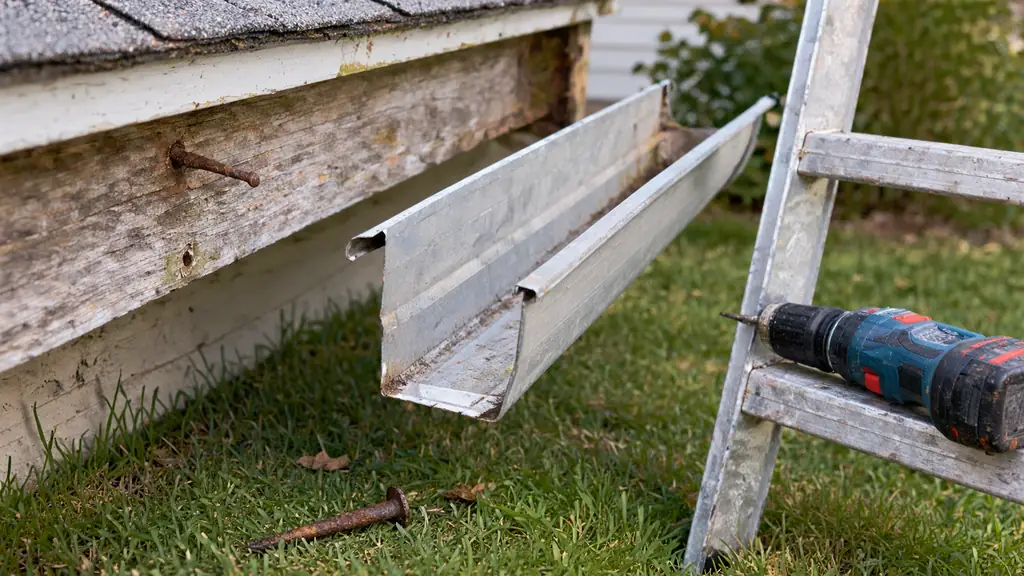
Wood rot is the main reason. Water sits behind the gutter, the fascia softens, and the spike shank starts to wallow in the hole. Once the hole is oversized, driving the spike back in does nothing.
Ice is the second reason. In a hard winter, the weight of ice in the gutter pulls the whole run forward, and the spike heads pop through the front lip. You will see a row of dimples or torn metal along the gutter face.
Thermal movement is the third. Aluminum expands and contracts with the seasons, and a spike that was tight in October can be loose by July. That is why a spike repair on a long run often becomes a yearly chore.
The tell is simple. Stand on the ground and sight down the gutter line. A dip between two spikes means the wood there has given up. Tap the fascia with a screwdriver handle near the dip. A dull thud instead of a sharp knock means rot, and no fastener will hold in it.
Tools and Materials You Need
- Cordless drill with a driver bit, Phillips or Torx depending on the screw heads
- 1/4-inch hex driver for hex-head hangers
- Tin snips for trimming hanger straps
- Replacement hidden hangers, sized to your gutter profile
- 1 1/2-inch or 2-inch exterior-grade screws, check the label for coated or stainless
- Wood hardener or a scrap of pressure-treated lumber for rot repair
- Caulk rated for gutters and flashing
- Ladder, gloves, and a bucket for the old hardware
Buy hangers sized to your gutter. A K-style gutter and a half-round gutter take different brackets, and a bracket that does not seat on the back wall will rattle in the wind. Take a short offcut of your gutter to the store if you are not sure which profile you have.
Swapping Spikes for Hidden Hangers
This is a half-day job on a single-story run and a full day on a two-story house, mostly because of ladder moves.
- Pull the old spikes and ferrules with a pry bar or a claw hammer, working from one end. Keep the ferrules, they tell you the original spacing.
- Probe each hole with an awl. If the wood is soft, mark that spot for repair.
- Treat small soft spots with wood hardener and let it cure per the label. For a rotted section, cut out the bad fascia and scab in pressure-treated lumber.
- Set the new hanger over the back wall of the gutter at the old hole location, or shift it a few inches into sound wood.
- Drive the screw through the hanger into the fascia until the bracket is snug. Do not overdrive it and dimple the gutter face.
- Add hangers so the spacing matches the manufacturer’s spec for your climate and roof load. Snow country needs them closer together than a mild coastal yard.
- Re-check the slope toward the downspout as you go. A run that drains well at the top can pond at the bottom if the last two hangers sit high.
Swapping Spikes for Hidden Hangers
Cost and Time
Hidden hangers cost more per piece than spikes, but the count is the same or lower, and you stop buying them every year. Screws are cheap. The real cost is labor if the fascia is rotted, because the repair involves carpentry.
If you are paying someone, expect the price to track the number of hangers and the condition of the wood behind them. Get a quote that separates the two, so you can see whether you are paying for hardware or for fascia repair.
A leak that shows up after the swap usually points to a seam or pitch problem. If water is running down the wall in one spot, work through the common causes by location before you blame the fasteners. When the run is old and patched, it is often smarter to price a full replacement than to keep chasing leaks. The materials and labor breakdown for that decision is worth reading before you commit either way.
Mistakes That Cost You a Weekend
Driving a spike into rotten wood. It will feel tight for a week and then let go. Fix the wood first.
Spacing hangers by eye. Too far apart and the gutter sags between them under a heavy rain. Follow the spec for your region.
Skipping the slope check. Hangers hold the gutter, they do not set the pitch. Check the fall to the downspout with a level before you tighten the last screw.
Mixing hardware. Stainless screws into aluminum fascia without a barrier can cause corrosion over time. Match metals or use the coated screws the hanger maker specifies.
Working off a ladder alone on a windy day. Gutters are light, but a full run of wet gutter is not. Get a second person for anything above the first story.

When to Call a Pro
Call someone if the fascia is rotted along more than a short section, if the gutter is pulling away from the roof edge, or if the run is above the first story and you do not have a safe way to work at height. Rot behind a gutter often extends into the rafter tails, and that is structural carpentry with a permit attached in many places. Check your local rules before you open up a fascia.
Also call if the gutter itself is cracked, split at the seams, or bent from ice. New hangers will not straighten a deformed gutter, and you will be back on the ladder next season.
Gutter Nails and Spikes FAQ
Are gutter nails and gutter spikes the same thing?
Yes. Spike is the common name for the long nail and ferrule assembly used on older gutters. If a hardware store lists gutter nails and gutter spikes separately, check the length and head shape, because you may be looking at the same item under two labels.
Can I replace a spike with a hidden hanger in the same hole?
Sometimes. If the wood around the old hole is sound, a hanger screw a few inches away will hold well. If the hole is wallowed out, move to fresh wood or repair the fascia first, because a screw in a rotten hole behaves exactly like a spike in a rotten hole.
How many hangers do I need?
It depends on your roof load, your climate, and the gutter maker’s spec. Snow and ice country needs closer spacing than a mild climate. Check the spec sheet for your gutter profile and use its spacing guidance.
Do hidden hangers stop gutters from sagging?
They hold better than spikes in sound wood because the load goes into a screw thread instead of a smooth shank. They will not fix a gutter that is already bent, and they will not help if the fascia behind them is soft.
Will screws pull out of aluminum fascia?
They can, especially in thin aluminum that is not backed by wood. Most hangers are designed to reach through the aluminum into the wood behind it. If there is no wood, you need a strap hanger that ties into the roof deck instead.
Thank you for reading!