
How to Fix a Running Toilet
By: John Ledford | Date Posted: September 20, 2026
Table of Contents
- Why Is My Toilet Running? Common Causes Explained
- Tools I Keep in My Bucket for This Job
- My Four-Step Routine for Checking the Flapper and Chain[+]
- Check and Adjust the Water Level (The Float)[+]
- Inspect the Refill Tube and Overflow Pipe
- Test and Replace the Fill Valve Assembly[+]
- Preventive Maintenance to Avoid Running Toilets
- When to Call a Licensed Plumber
- Frequently Asked Questions[+]
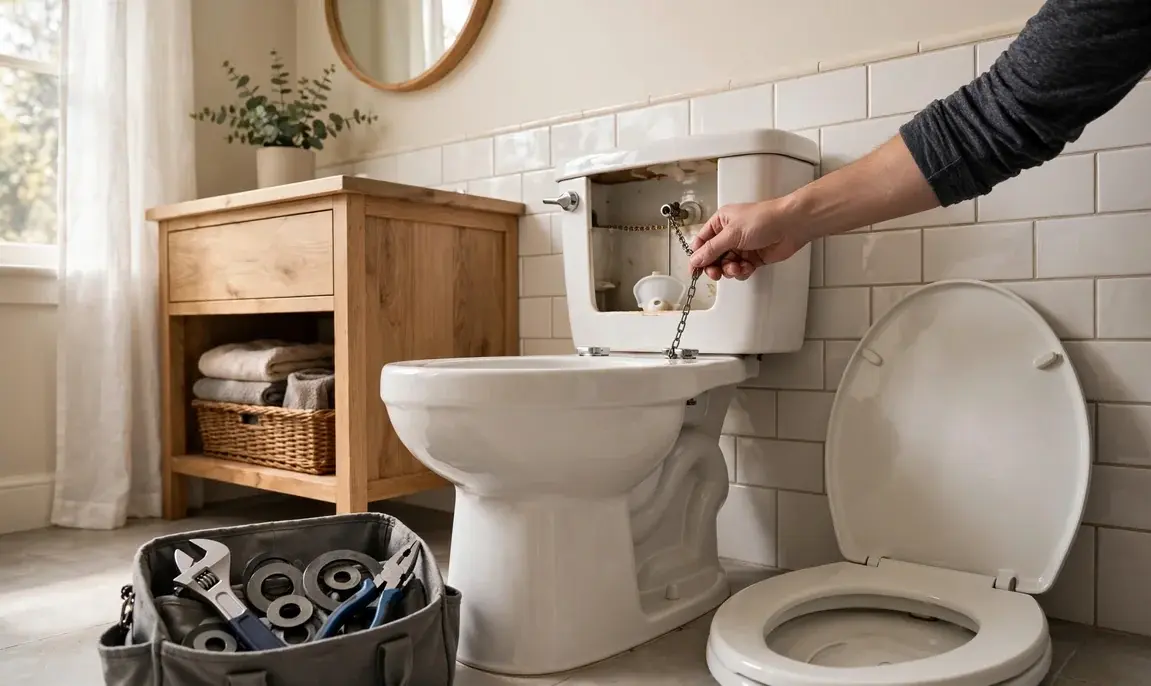
A running toilet is almost always one of three parts misbehaving: the flapper, the float, or the fill valve. Fix it in that order, because the flapper is the cheapest and most common culprit.
Before you touch anything, turn off the water supply valve behind the toilet and flush to empty the tank. That one step saves you from a wet bathroom floor and a second cleanup job.
The valve is the small oval handle on the wall or floor, and it turns clockwise to close.
Why Is My Toilet Running? Common Causes Explained
A toilet runs when water keeps moving from the tank into the bowl after the flush cycle should have ended. The tank never reaches a stable full level, so the fill valve keeps topping it up. You hear the hiss or trickle, and your water meter keeps spinning.
The three usual suspects are a worn flapper that no longer seals, a float set too high so water spills into the overflow pipe, or a fill valve that has given up and will not shut off. Less often, the refill tube is shoved too far down the overflow pipe and siphons water continuously. I’ve chased all three in my own house, and the order matters.
The flapper costs six bucks and takes five minutes, so it’s always the first thing I check before I start unscrewing anything under the tank.
- Water level in the tank is above the top of the overflow pipe
- Flapper is warped, cracked, or coated in slime
- Chain has too much slack or is caught under the flapper
- Fill valve keeps hissing even when the tank is full
- Refill tube is pushed below the water line in the overflow pipe
Tools I Keep in My Bucket for This Job
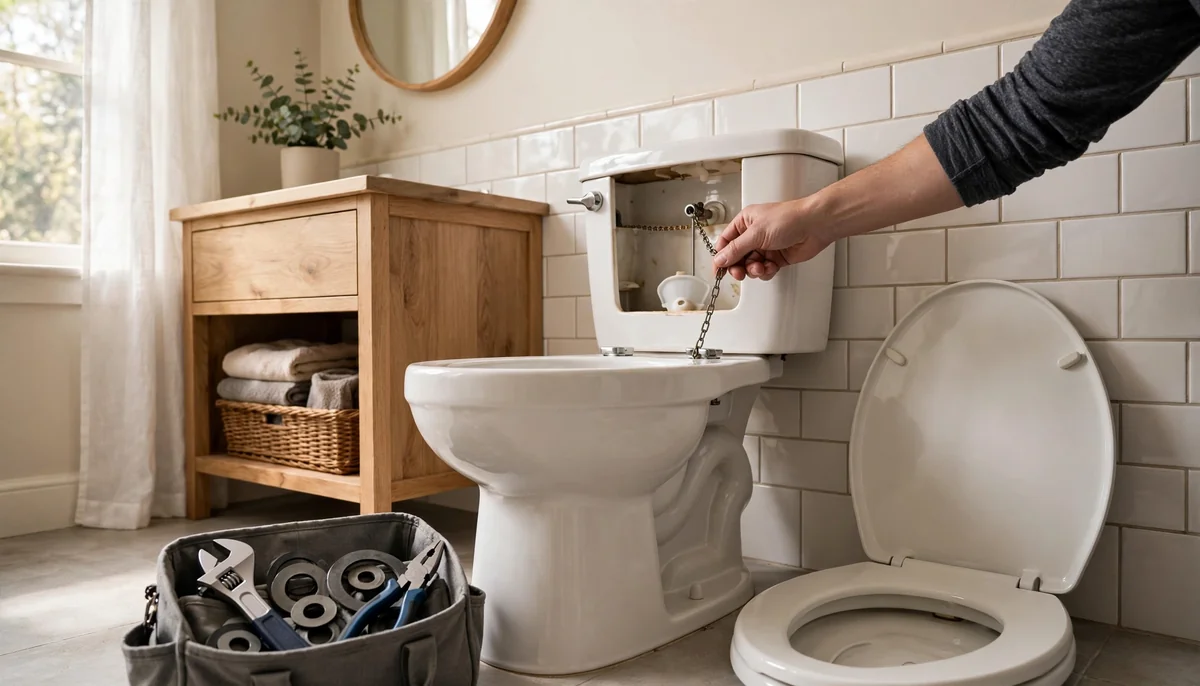
Most of this job needs nothing fancier than a pair of hands and a sponge. I keep a small bucket and an old towel next to the toilet because there is always a little water left in the bottom of the tank no matter how long you hold the handle down.
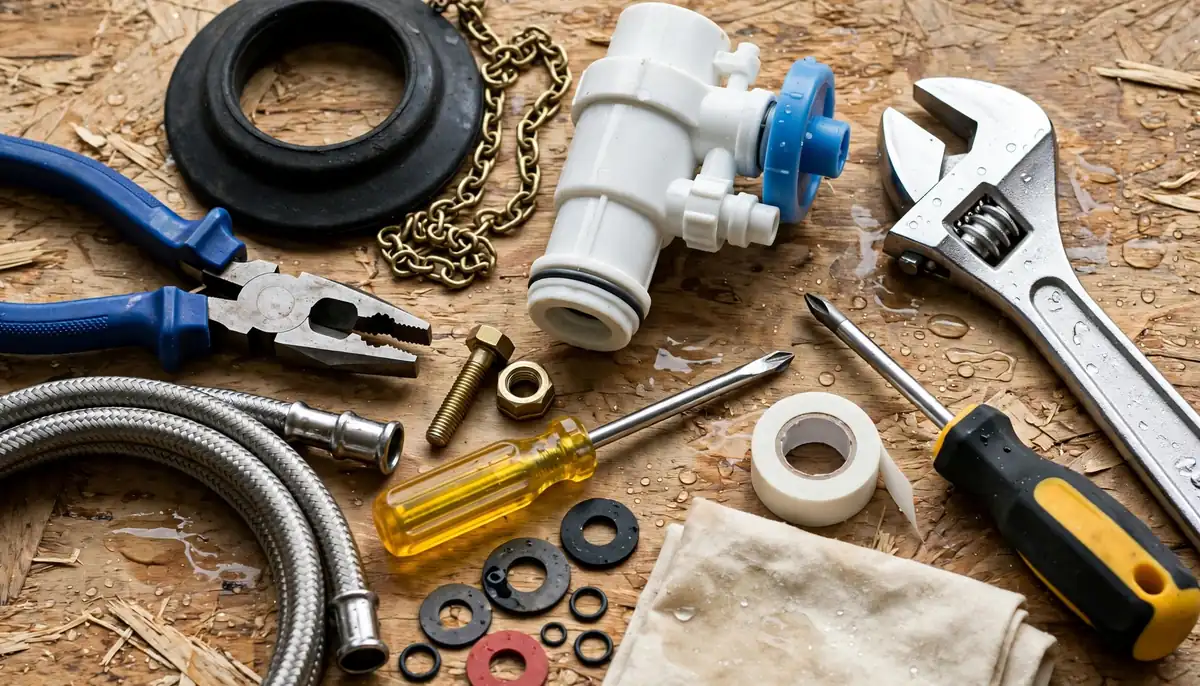
- Adjustable pliers or a small wrench
- Replacement flapper (2-inch or 3-inch, match your existing one)
- Sponge and small bucket
- Towel for drips
- Replacement fill valve, only if testing shows the old one is dead
My Four-Step Routine for Checking the Flapper and Chain
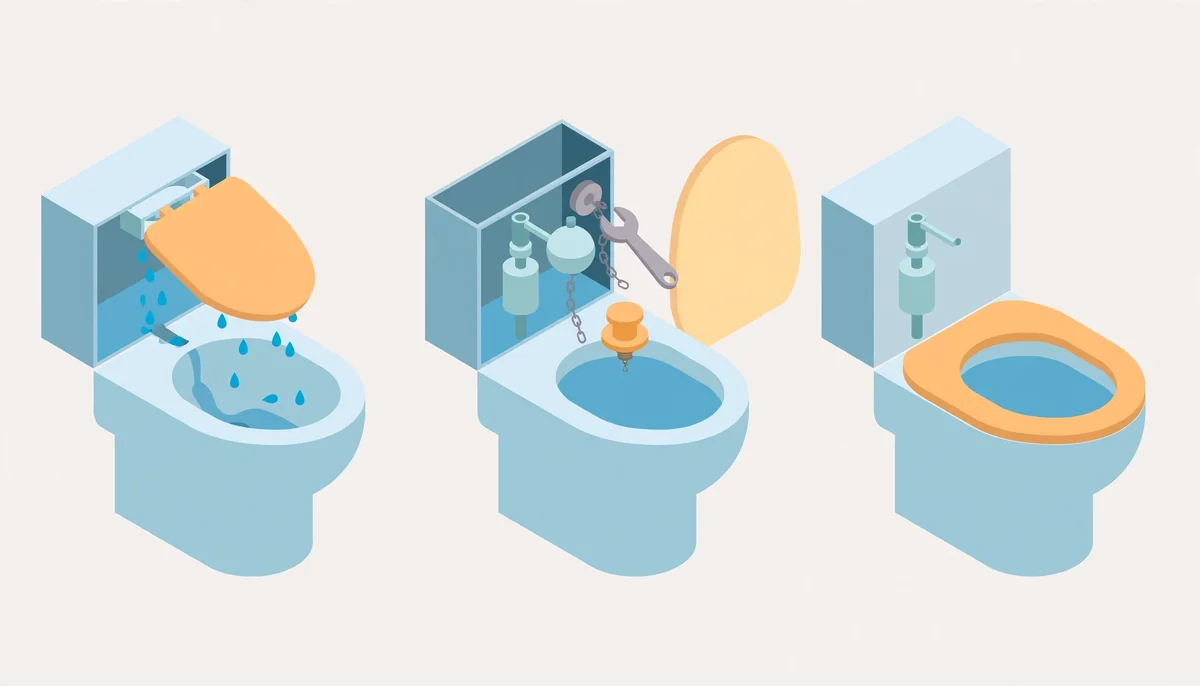
The flapper is the rubber stopper at the bottom center of the tank. When it seals, the tank holds water. When it does not, water leaks into the bowl and the toilet runs. Lift the lid, flush, and watch what happens as the tank refills.
If the flapper drops back into place but water still trickles, the rubber has hardened or cracked. Run your finger around the sealing edge. If it feels rough or you can see a notch, replace it. Flappers cost a few dollars at any hardware store, and the package will say whether it fits a 2-inch or 3-inch flush valve.
Adjusting the Flapper Chain Slack
The chain connects the flush lever to the flapper, and it needs about half an inch of slack when the lever is at rest. Too much slack lets the chain catch under the flapper and hold it open. Too little slack lifts the flapper before the flush finishes, so the tank never empties completely.
- Turn off the water supply and flush to empty the tank.
- Unhook the chain from the flush lever.
- Pull the old flapper off the two pegs on the overflow pipe.
- Slide the new flapper onto the pegs and reconnect the chain.
- Turn the water back on and flush twice to test the seal.
Cleaning or Replacing a Damaged Flapper
Sometimes the flapper is fine but the seat it sits on has mineral buildup. Wipe the seat with a cloth and a little vinegar, then run your finger around the edge to check for rough spots. If the rubber itself feels stiff or shows cracks, replace it.
- Flapper sits flat against the valve opening with no gaps
- Chain has about half an inch of slack when the lever is at rest
- No water leaks past the flapper after the tank refills
Check and Adjust the Water Level (The Float)
If the flapper is fine, look at where the water stops when the tank is full. The correct level is about an inch below the top of the overflow pipe. If water is spilling into that pipe, the float is set too high and the toilet will run forever.
Older toilets use a float ball on a metal arm. Newer ones use a float cup that slides on the fill valve shaft. Both adjust the same way. You change where the float sits so the valve shuts off sooner.
Adjusting Float Balls vs. Float Cups
A float ball on a metal arm adjusts by bending the arm gently downward to lower the water level. A float cup adjusts with a screw or a pinch clip on the side of the fill valve. Turn the screw clockwise to lower the water level, then flush and watch where it stops.
- Flush and watch where the water stops rising.
- Compare the water line to the top of the overflow pipe.
- Adjust the float so the water stops about an inch below the pipe.
- Flush again and confirm the water no longer spills over.
- Water level is roughly one inch below the overflow pipe top
- Float moves freely and does not rub against the tank wall
- Fill valve shuts off completely when the tank is full
Inspect the Refill Tube and Overflow Pipe
The refill tube is the thin flexible hose that squirts water into the overflow pipe while the tank refills. It should point into the pipe but not sit below the water line. If it is shoved down too far, it can siphon water out of the tank continuously, and the toilet will run even with a brand-new flapper.
Pull the tube up so its end sits just above the top of the overflow pipe. Most fill valves have a clip that holds the tube in place. If yours is missing, a zip tie works fine. While you are in there, check that the overflow pipe itself is not cracked. A cracked pipe lets water drain below the flapper and mimics a bad flapper perfectly.
- Refill tube end sits above the water line, not submerged
- Tube is clipped or tied so it cannot slide down
- Overflow pipe has no visible cracks
Test and Replace the Fill Valve Assembly
If the flapper seals, the float is set right, and the refill tube is positioned correctly, but the toilet still runs, the fill valve itself is the problem. This is the tall assembly on the left side of the tank with the float attached to it.
Replacing a fill valve is a bigger job than a flapper but still very doable. You remove the supply line from under the tank, unscrew the lock nut, and lift the whole assembly out. The new one drops in and tightens the same way. Most universal fill valves fit any tank, and the instructions in the box are clear enough.
Removing the Old Fill Valve
Start by disconnecting the supply line from the bottom of the tank. A small adjustable wrench works, but go easy because the plastic threads strip if you force them. Then unscrew the lock nut under the tank and lift the whole assembly out. Keep the sponge handy because a little water always drips out of the supply line.
Installing and Adjusting the New Assembly
Drop the new fill valve into the hole and hand-tighten the lock nut, then give it a quarter turn with the wrench. A Fluidmaster 400A or Korky QuietFill fits almost any tank and comes with clear instructions. Reconnect the supply line, turn the water on, and adjust the float so the water stops about an inch below the overflow pipe.
- Turn off the water and flush to empty the tank.
- Disconnect the supply line from the bottom of the tank.
- Unscrew the lock nut holding the old fill valve.
- Lift out the old valve and drop in the new one.
- Tighten the lock nut, reconnect the supply line, and turn the water on.
- Adjust the float on the new valve to set the correct water level.
- New fill valve shuts off crisply when the tank is full
- No leaks at the supply line connection
- Water level stays about an inch below the overflow pipe
Preventive Maintenance to Avoid Running Toilets
Running toilets rarely announce themselves. You notice them when the water bill arrives or when the hissing keeps you up at night. A few minutes of maintenance twice a year catches most problems before they waste real money. The EPA estimates a continuously running toilet can waste around 200 gallons of water per day, which adds up fast on a monthly bill.
- Drop a few drops of food coloring in the tank and wait 15 minutes; if the bowl water changes color, the flapper leaks
- Clean the flapper seat with a cloth to remove mineral buildup
- Check the chain for corrosion and replace it if it looks thin
- Test the shutoff valve twice a year so it does not seize open
If you have a toilet flange that sits too high, that can also cause a slow leak that looks like a running toilet. The flange is the fitting under the toilet that connects it to the drain pipe, and when it is out of position the wax ring never seals properly.
| Cause | Symptom | Fix |
|---|---|---|
| Worn flapper | Water trickles into bowl constantly | Replace flapper |
| Float set too high | Water spills into overflow pipe | Adjust float down |
| Refill tube submerged | Tank siphons after flush | Raise tube above water line |
| Failed fill valve | Valve never shuts off | Replace fill valve |
When to Call a Licensed Plumber
Most running toilets are a flapper or a float, and you can fix both without calling anyone. But if you have replaced the flapper, adjusted the float, and swapped the fill valve, and the toilet still runs, something deeper is wrong. A cracked tank, a failing flush valve seat, or a problem with the supply line pressure needs a professional eye.
Also call a plumber if the shutoff valve will not close or starts leaking when you touch it. That valve is the only thing between you and a flooded bathroom, and forcing a seized valve usually makes it worse. A licensed plumber will replace it in under an hour, and that is money well spent.
- Toilet still runs after flapper, float, and fill valve fixes
- Shutoff valve is seized or leaks when turned
- Tank or bowl has visible cracks
- Water pressure in the house is noticeably higher than normal
Frequently Asked Questions
Why does my toilet keep running after I flush?
Usually the flapper is not sealing. Lift the tank lid and watch the flapper drop after a flush. If water still trickles into the bowl, the flapper is worn or the chain is too tight. Replace the flapper first, then check the float level.
How much water does a running toilet waste?
A continuously running toilet can waste around 200 gallons per day according to EPA estimates. Even a slow leak adds up to thousands of gallons a month, which shows up directly on your water bill.
Can I fix a running toilet without turning off the water?
You can adjust the float without turning off the water, but anything involving the flapper or fill valve needs the water off. Turn the supply valve clockwise, flush to empty the tank, and work dry. It takes ten seconds and prevents a mess.
How do I know if my flapper is bad?
Put a few drops of food coloring in the tank and wait 15 minutes without flushing. If the color appears in the bowl, the flapper is leaking. You can also feel the flapper edge for cracks or hardness.
Why does my toilet run for a few seconds then stop?
That is usually the fill valve shutting off slowly. The float rises, but the valve takes a moment to close completely. If it bothers you or gets worse, replace the fill valve. It is a straightforward swap with a universal kit.
Fix a running toilet by checking the flapper first, then the float level, then the fill valve, in that order.
Related reading
- 2 Ways On How To Correct Toilet Flange That Is Too High
- Common Mistakes To Avoid When Converting A Garage To An Adu
- 8 Signs You Need To Replace Your Doors
Thank you for reading!