
Bird Guard Gutter: Stopping Nests in Downspouts
By: John Ledford | Date Posted: November 4, 2026
Table of Contents
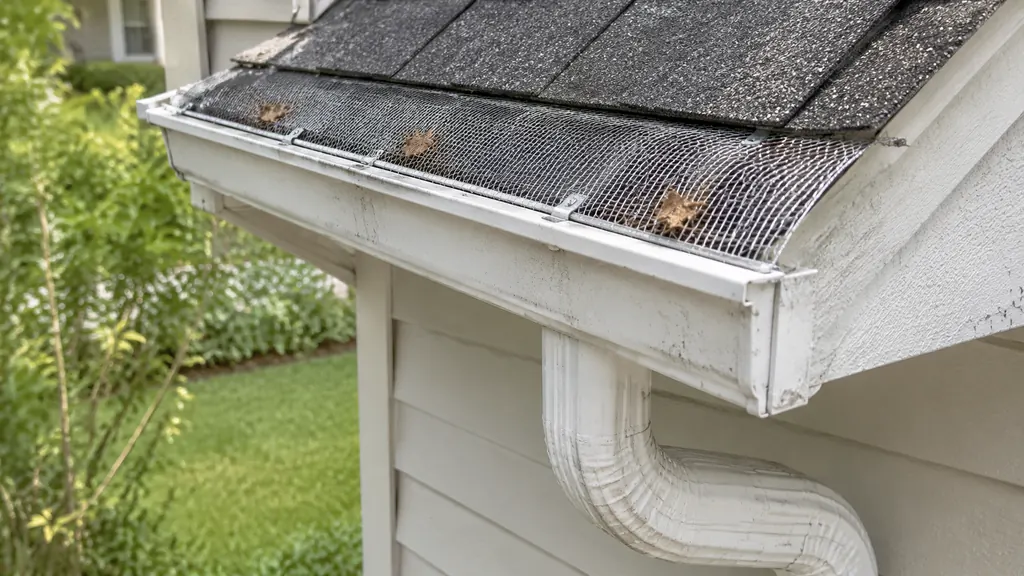
A bird guard gutter is a mesh panel, brush insert or screen cap that closes the openings birds use to nest in your guttering and downpipes. The full job takes an afternoon on a single-storey house and costs little in materials. The part that actually stops nests in the pipe is the downspout screen, so fit that first.
Why birds target gutters and downspouts
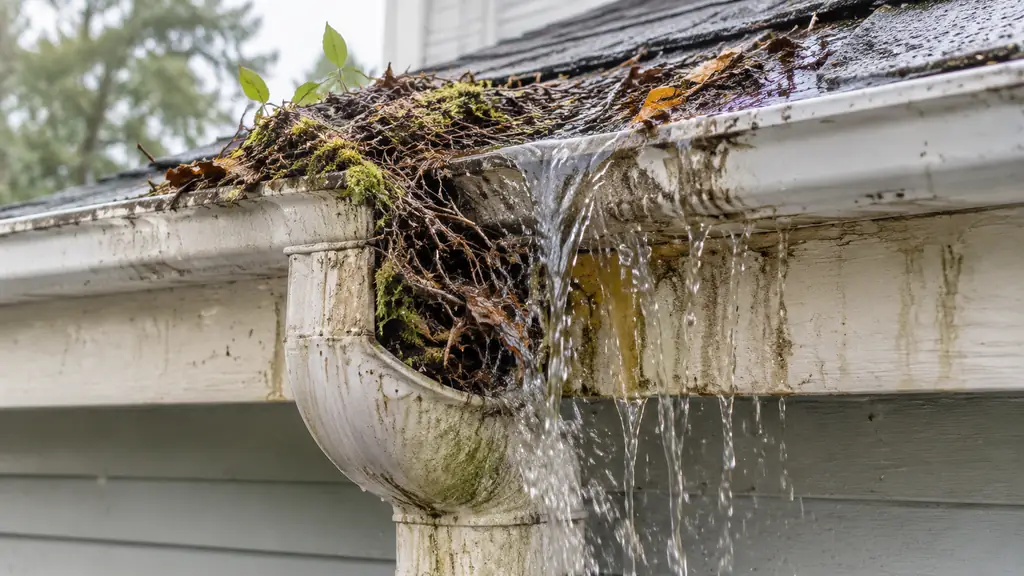
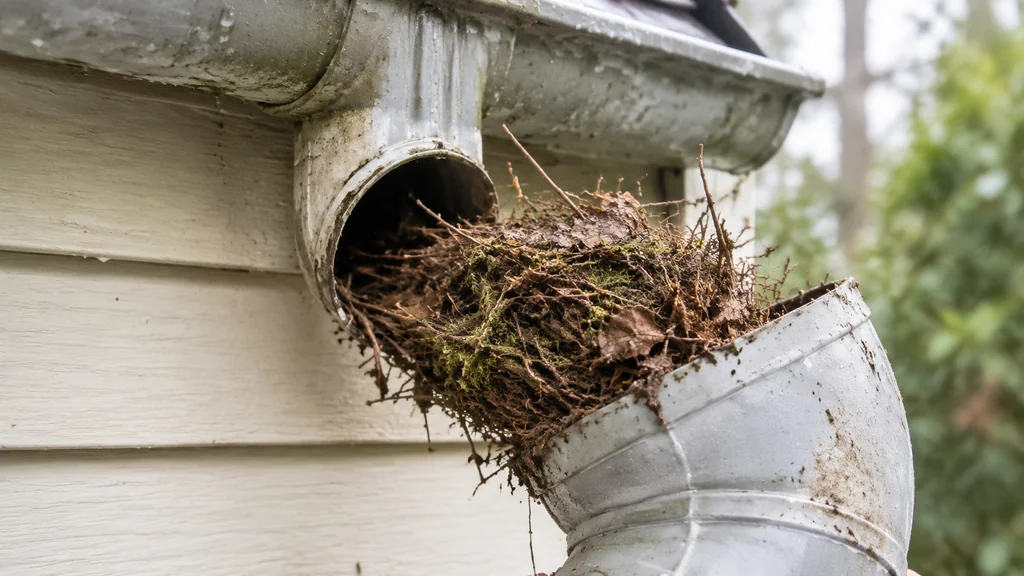
A downspout outlet is an open pipe mouth that collects nesting material. Once a nest wedges into the bend, it plugs the flow. Water backs up the channel, spills over the back edge, and soaks the fascia board and the wall below.
Nest material makes the blockage worse because it compacts. Many small bird species weave spider silk through the structure, and that binding keeps twigs together under running water. The plug gets denser the more it rains.
Bird pressure on a house is real, but the numbers people quote about “most homes” come from companies selling guards, so treat them as marketing. The blocked downpipe is usually noticed late, when a stain appears on a ceiling or a bracket pulls away from the fascia.
There is also a legal angle, and it matters before you pull anything out. If you find an active nest with eggs or chicks, stop and check the relevant authority and your local rules before you remove it. In the UK, metal gutters themselves are covered by BS EN612:2005, which tells you the trade treats rainwater goods as a specified product.
Wet rot is the cost of delay. A gutter that overflows at the back edge wets the same piece of timber every storm, and that timber is structural. A guard fitted in September is cheaper than a fascia replacement in March.
The guard types that keep birds out
Four options cover almost every house, and they suit different budgets and roof shapes.
Mesh gutter guards. A stainless or PVC panel clips over the channel. Aperture size is the whole game. Check the spec sheet before you buy, because coarse mesh lets small birds push material straight through.
Brush inserts. A cylindrical brush of stiff bristles sits inside the channel. Water runs through, birds cannot land and dig, and debris tends to ride over the top. Cheap and fast to fit, though you lift them out for a proper clean now and then.
Downspout screens and baskets. A small mesh cap or basket fits over the outlet at the top of the downpipe. This is the cheapest fix and the most targeted one if nests in the pipe are your only problem.
Solid covers with a mesh strip. A metal or plastic cover over the channel with a narrow mesh band along the front edge. Good on steep pitches where a full mesh panel sheds water too fast.
Material choice matters more than the marketing suggests. PVC mesh can stiffen and lose flexibility with prolonged sun exposure. Compare the outdoor-use specifications of powder-coated steel, aluminium, EPDM and silicone before you commit, and buy for the sun your roof actually gets.
If your roof is metal, the fixing method changes because you cannot drill through a standing seam without a proper clamp. My guide to gutter guards on a metal roof covers profile choice and the clamp options that avoid piercing the panel.
Tools and materials for the job
Gather everything before you go up the ladder. Trips up and down are where the time goes.
- Tape measure and a pencil
- Tin snips or a fine-tooth hacksaw for mesh and plastic
- Cordless drill with a driver bit
- Self-tapping screws or the clips that come with the kit
- Work gloves with a grippy palm
- A bucket and a stiff hand brush
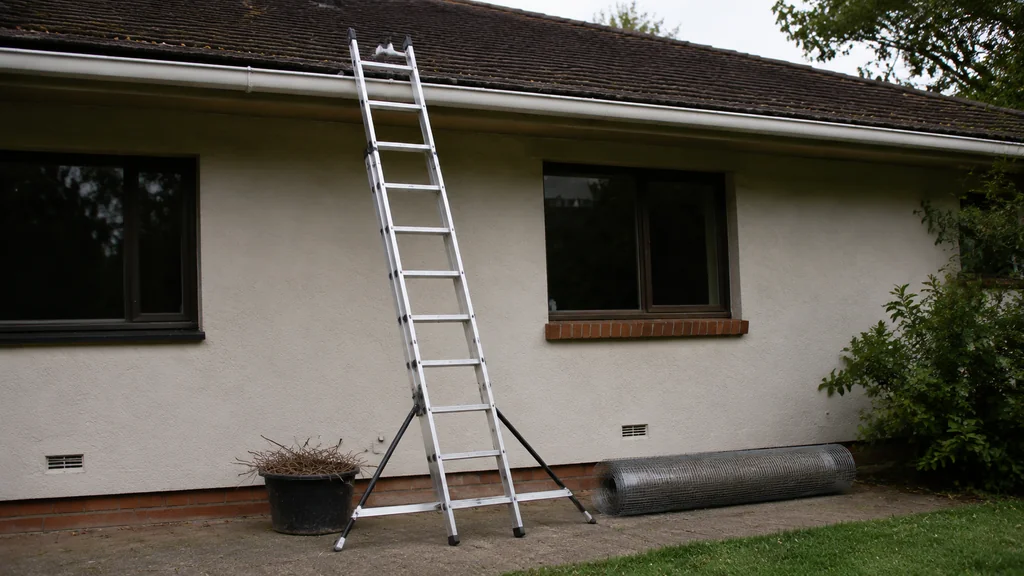
- A ladder with stabilisers, set on firm ground
- Safety glasses
The ladder is the part I take most seriously. A ladder fall is the one that ends the DIY year, and a gutter is exactly the height where people get casual. Set the feet on solid ground, keep your hips inside the rails, and never overreach sideways. Move the ladder instead.
On cost, expect to spend modestly on a downspout screen and more on a full mesh run. Price moves with material and length, and it moves with region and season too, so measure your own run and compare at the store. Article figures cannot account for your gutter length. A brush insert sits in the middle of the range.
Before you buy any guard, check the gutter is sized right for the roof. A small channel on a big catchment overflows on its own, guard or no guard, and my notes on sizing rain gutters for your roof area walk through the comparison between the common profiles.
How to fit a bird guard gutter and screen the downspouts
Work in dry weather and do it in the morning, so you are not on a hot roof at midday.
- Clear the channel and the pipe first. Scoop out the nest, twigs and silt by hand into a bucket. Flush the downpipe with a hose from the top and confirm water runs freely at the bottom before you cover anything.
- Check for active nests. If you find eggs or chicks, stop and check your local rules on protected birds before you go further.
- Measure the run and the outlet. Note the internal width of the channel and the diameter of the downspout mouth. Write both down, because kit sizes vary.
- Fit the downspout screen or basket. Push the cap over the outlet and bend the tabs under the gutter lip so wind cannot lift it. Do this one by feel with a gloved hand, then check it from the ground.
- Cut the guard to length. Add a small allowance at each end so the panel sits over the lip rather than dropping into the channel. Deburr metal edges with a file.
- Clip or screw the panel along the run. Start at one end, keep it flat, and fix every clip the kit supplies. Do not skip the middle fixings on a long run.
- Test with water. Run a hose along the channel and watch the outlet. Water should flow out steadily with no pooling behind the guard.
How to fit a bird guard gutter and screen the downspouts1Clear the channel2Check for active nests3Measure the run4Fit the downspout screen or basket5Cut the guard to length6Clip or screw the panel7Test with waterThe steps from this section at a glance.
The trickiest step is always the downspout screen, because the tabs have to hook under a lip you cannot see from above. That is the five minutes people rush, and it is the one that decides whether the job holds through a windy autumn.
While you are up there, look at the joints. A guard does not stop a leaking seam, and a drip into the soffit is a separate repair. The steps in this guide to fixing a leaky gutter yourself cover sealing and re-hanging, and doing both jobs on the same afternoon saves a second ladder day.
Mistakes that let birds straight back in
Mesh too coarse. A wide aperture lets small birds push nesting material through. Use the spec sheet when choosing mesh.
Gaps at the ends and corners. Birds find the one unscreened corner. Cut and fit the end caps.
Covering a gutter that is already blocked. Fit a guard over a full channel and you trap the debris and the water. Clear first, always.
Skipping the downspout outlet. A full mesh run with an open pipe mouth still lets birds nest in the pipe.
Ignoring the downpipe bends. Nests collect at the first elbow. If flow is slow, rod the bend from the bottom before you blame the guard.
Loose fixings. A guard that lifts in wind becomes a bird entrance and a rattle at night.
There is a lifespan argument for doing this properly. A guard fitted flat and fixed at every clip point keeps debris out of the water path, which is the point of the whole exercise. One flapping loose is doing nothing but advertising the gap.
If your roof drops pine needles or seed pods, the choice changes again, because fine debris bridges over coarse mesh and mats into a felt. Go finer, or accept a seasonal clean.
When to call a pro
Get someone in for any of these.
Two storeys or more. Working at height on a ladder against a gutter is where the serious falls happen. A tower or a professional is cheaper than a hospital visit.
Fragile or steep roofing. Walking a steep pitch or a brittle tile roof risks a repair bill far bigger than the guard.
An active nest that wildlife authorities advise you not to disturb. Ask the relevant wildlife authority or a qualified wildlife professional.
Sagging gutters or failed brackets. A guard will not fix a channel that has pulled away from the fascia. That is a repair job first.
Long runs on a complicated roof. Valleys, dormers and multiple downpipes take time, and time on a ladder is the risk.
One more thing on water. If your downpipe discharges into a storm drain, the connection may run through a u-bend holding a 50 mm water seal, and that trap has its own maintenance needs. Check the outlet during a downpour before you assume the guard is the only thing standing between you and a wet wall.
Bird Guard Gutter FAQ
Do gutter bird guards stop nests in downspouts?
A downspout screen or basket over the outlet is the part that stops nests in the pipe, because it closes the opening birds use to enter. A guard along the channel stops birds landing and digging in the gutter itself. Fit both for full protection.
Can I remove a bird nest from my gutter?
An inactive and empty nest is usually removable once you have confirmed nothing is using it. If there are eggs or chicks, leave it alone and check the relevant wildlife authority and your local rules first.
How much does a bird guard for gutters cost?
A downspout screen is the cheapest option and a full mesh run costs more per metre, with the price driven by material and length. Brush inserts sit in the middle. Measure your own run and price it at the store, because figures vary by region and season.
How often should I check the guards?
Lift brush inserts and rinse them at the start and end of the nesting season, and confirm the downspout screens are still hooked under the lip. A quick hose test tells you straight away if flow has slowed.
Will a guard void my roof warranty?
Drilling can affect some manufacturers’ warranty terms, so check the roof paperwork before fixing anything. On shingle and tile roofs, fixing into the fascia avoids drilling the roof surface at all.
Thank you for reading!