
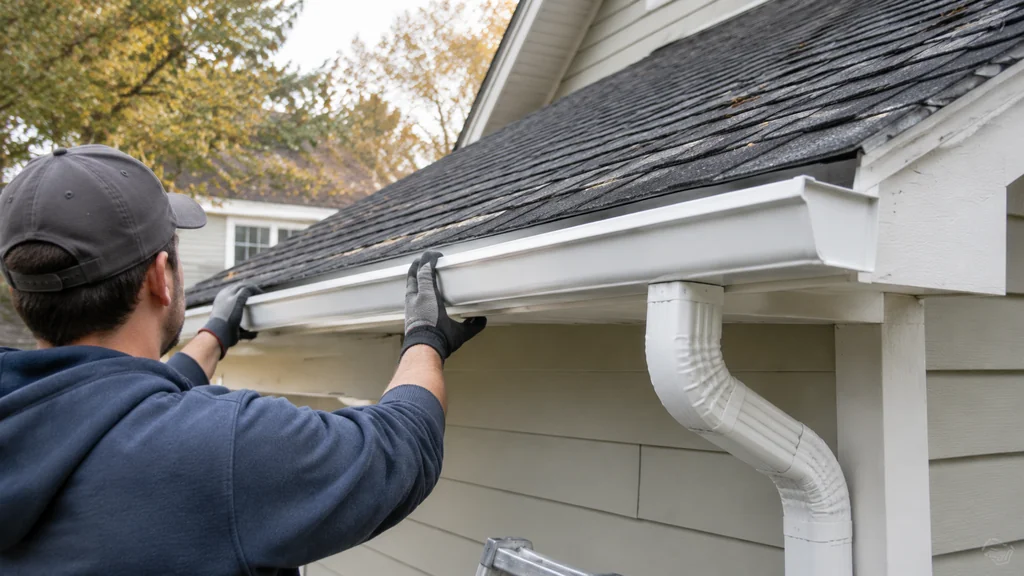
Sizing Rain Gutters for Your Roof Area: 5 Inch and 6 Inch Profiles
By: John Ledford | Date Posted: November 17, 2026
Table of Contents
Measure the roof area that drains into each run, work out the peak flow it has to carry, and choose the smallest profile that clears it with a downspout to match. Most one and two storey houses with short runs do the job with 5 inch gutters and never think about it again. Long unbroken runs, steep pitches and large footprints push the same house into 6 inch gutters.
What Roof Area Has to Do With Gutter Size
A run of gutter is an open channel with a fixed capacity, and the rain reaching it falls on a catchment that is usually much bigger than the gutter itself. The number that decides the size is the plan area of every roof surface draining to that run, measured flat, plus an allowance for pitch, because a steep roof presents more surface than its footprint suggests.
Sizing guides turn that area into a flow. Design tables multiply roof area by an assumed rainfall intensity of 0.0208 litres per second per square metre to get the discharge capacity a gutter has to carry. That figure comes from a design storm, so treat it as a starting point and add margin where summer storms arrive hard.
The catchment is rarely a single rectangle. A valley sends two roof planes into one gutter, and a hip roof sheds onto two runs at once. If a valley dumps onto a run halfway along its length, the section downstream of that point carries roughly twice the water of the section above it, and sizing the whole run from the upstream figure is how a gutter ends up overflowing in the first storm of the season.
Three things cut nominal capacity once the gutter is up. A shallow fall leaves standing water that reduces flow. Moss and grit off a shingle roof gather at the outlet. Brackets spaced too far apart let the channel sag and pool.
Profile shape matters as much as width. A K-Style gutter holds more water than a Half-Round with a similar opening, because the flat back and the shaped face form a deeper channel. The two also behave differently against a fascia board, and the comparison in this piece on K-Style vs Half-Round gutters is the fastest way to see which one your house wants.
How to Size Gutters for Your Roof Area
The whole job fits on one sheet of paper and takes about an hour on a single storey house.
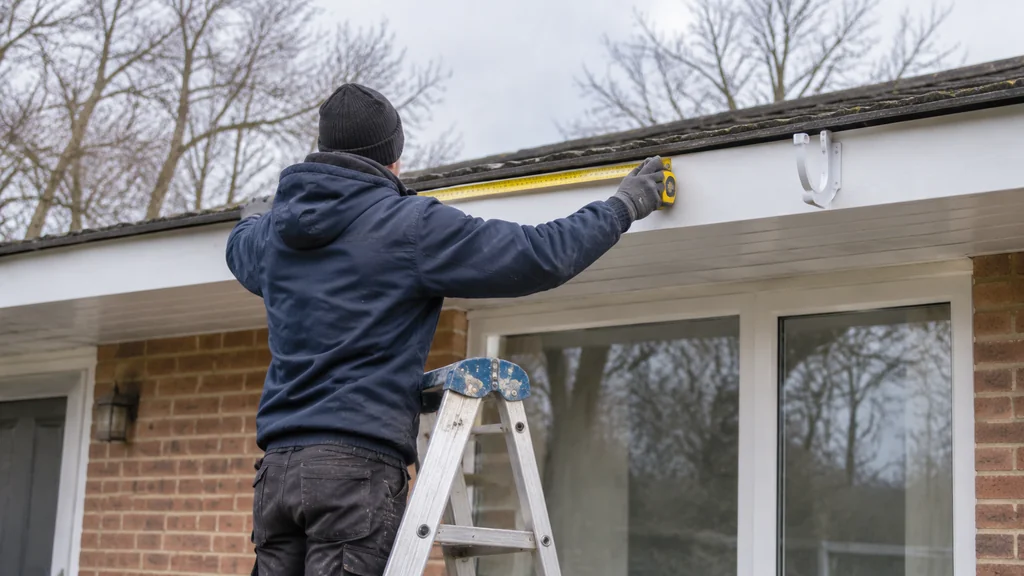
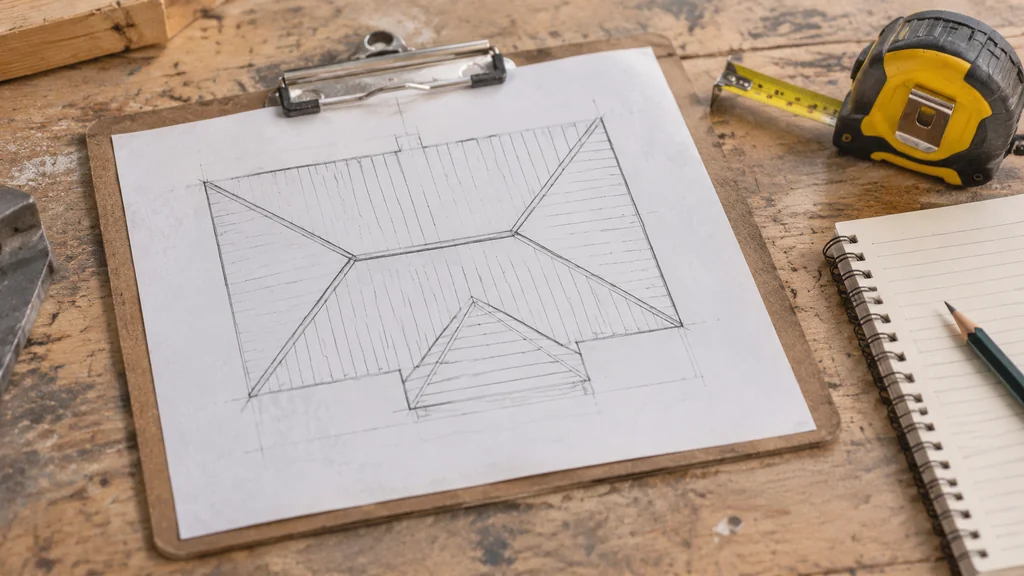
- Sketch the roof plan from the ground and from an upstairs window, marking ridges, hips, valleys and every downspout you already have.
- Draw a line around the area that drains to each run, and split the flow at every valley where two planes meet.
- Measure the flat footprint of each of those areas with a tape and write the figure on the sketch.
- Add the pitch allowance from the sizing table supplied with the profile you are buying, since a steep roof needs a larger allowance than a shallow one.
- Multiply the area by the design rainfall to get the flow the run must carry, then compare that against the capacity chart for 5 inch gutters and 6 inch gutters.
- Count the outlets and try adding one at the low end before you move up a profile, because a second downspout is the cheapest capacity you can buy.
- Check the fascia depth and the hanger type last, since a deeper profile needs a wider board and longer brackets.
I do the sketch with a pencil on the back of an envelope and then check the numbers twice, once on the ladder and once at the bench. The measurement that catches most people is the run length, because a long gutter carries a lot more water at the outlet end than a short one does and the difference only shows up in a real storm.
A simple gable is a ten minute measure. A roof with three valleys, two dormers and a porch tie-in takes three times as long and deserves it, since one missed plane throws the whole comparison between profiles. Write down the number for each run separately and never average them.
Take the figures to the counter as well. Most yards will run them through the manufacturer’s chart while you wait, and doing that in March before the spring rain beats doing it in November with a ladder in the wind.
When 5 Inch Gutters Are Enough
5 inch gutters are the standard residential profile across much of the United States, and the reason is practical. They fit a normal fascia board, they take the widest range of hangers, outlets and end caps, and any lumber yard from Texas to Ohio stocks the fittings on a Saturday morning.
They work when the roof area feeding each run is modest, the run is short, and there are enough downspouts to empty it. A single storey ranch with a simple gable, a garage and a porch roof, each with an outlet at the corner, is the case this profile was made for. They also work on a two storey house where the roof is broken into several small planes, because each run only sees its own share of the rain.
The limit shows up on a long unbroken run along the front of a wide house, on a low pitch shed roof that sheds everything to one side, and anywhere a single downspout serves a whole elevation. In those cases the bottleneck is usually the outlet, and a wider gutter with the same outlets just moves the overflow further along.
The fittings are the other argument. A 5 inch run gives you more choice in outlet styles, including the flat back outlets that sit tight against the fascia, and that choice matters on an old house where the board has been patched and is not perfectly straight. You can walk into a store and rebuild a whole corner without ordering anything.
If you are replacing a run and the old 5 inch gutter only overflowed at one corner, a second outlet will often fix it for a fraction of the cost of new coil, new hangers and a wider profile.
When 6 Inch Gutters Earn Their Keep
6 inch gutters hold more water along their length and tolerate longer spans between outlets, which is why they turn up on large footprints and awkward roofs. They make sense on a big ranch with a single long run, on a steep roof in snow country such as Maine or Vermont, on a metal roof where a whole panel empties at once, and on houses where the downspout positions are fixed by the walls, windows and walkways below.
They also suit a roof with heavy leaf drop, because a wider channel and larger outlets clog more slowly. Guards change that calculation, and whether they help or hurt in a cold climate is covered in this guide to gutter guards and ice dams.
The trade is cost and structure. The coil, the hangers, the outlets and the end caps all cost more per foot, and the fascia has to be deep enough to hang them. On a long seamless run the difference per foot looks small until you multiply it by the length of the house, and then it looks like a real decision.
Hangers deserve a mention because they are where a repower often fails. A deeper profile full of water is heavier, and the strap or screw bracket that held the old run may be spaced for a lighter channel. Read the chart that comes with the bracket, and if the fascia is thin at the top edge, add a backer board before you hang anything.
When I replaced the back run on a low pitch roof I moved from 5 inch to 6 inch, and the overflow at the inside corner stopped, but only after I added a second outlet. The wider gutter bought time in the downpour, and the outlet did the actual work.
Downspouts, Outlets and the Drain End
The gutter is only half the system, and a run of any width will spill if the outlet and the downspout under it cannot take the flow. The commonest sizing error I find on a weekend job is a generous gutter feeding a narrow downspout through a reducer that was easier to fit than the right part.
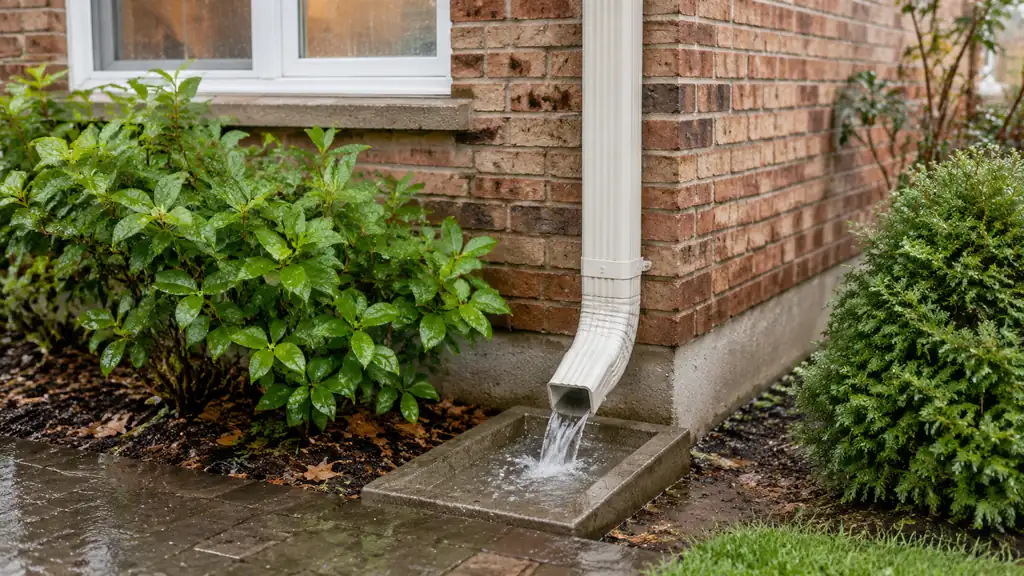
Keep the bends to a minimum. Two 45 degree elbows flow better than two square ones, and every bend costs head that the fall has to make up. Where the downspout ends at ground level, lead the water away from the footing with a splash block or a buried line that finishes in a pop-up emitter well clear of the wall.
Where gutters connect into a combined drain, the connection runs through a storm drain u-bend fitted with a 50 mm water seal, which keeps sewer gas from drifting back up the pipe. That detail belongs with someone who knows the local rules, because the trap has to stay wet and the fall has to be right from the outlet down to the connection.
Downspout count is a design choice you can still make after the gutter is up. Adding one means cutting the channel, dropping in an outlet and sealing it, which is a manageable afternoon with a drill and a tube of sealant. It is also reversible, which is more than you can say for a new coil.
Mistakes That Wreck a Good Sizing Job
The first mistake is sizing on the footprint of the house. A roof overhangs, and pitch adds surface, so the gutter sees more area than the ground plan suggests.
The second is ignoring a valley. Two planes meeting at an inside corner deliver a doubled flow to one short length of gutter, and that is where the overflow starts.
The third is accepting one downspout for a whole elevation because that is where the old one was. Outlets can move, and moving one is cheaper than buying a wider profile.
The fourth is fall. A run that is level, or that falls the wrong way at one end, holds water and silts up, and no amount of extra width fixes a puddle.
The fifth is hanger spacing. Brackets set too far apart let a full gutter sag between them, and a sag is a dam.
The sixth is a mix of profiles on one run. A 5 inch K-Style section spliced into a 6 inch run changes the water level and the flow, and the joint between them never seals properly.
A leak at a joint is a different problem from a sizing problem, and this guide to fixing a leaky gutter covers the seam and the outlet without touching the capacity question.
Tools, Costs and When to Call a Pro
You can do the measuring and most of the fitting with tools you already own. A tape measure, a ladder with a stabiliser, a chalk line, a cordless drill, tin snips, a pop rivet gun and a tube of Silicone sealant cover the job. Add Torx and Phillips bits for the hanger screws, PVC cement if you are joining vinyl sections, and EPDM washers where a screw passes through the gutter face.
Costs run in a straight line with size. A 6 inch run costs more per foot for the coil, the hangers and the fittings, and the labour goes up with the weight of the section being lifted. Get a quote for both profiles before you decide, because the difference on a short run is smaller than most people expect and the difference on a long one is bigger.
Call a pro when the work is above a walkway, when the house is two storeys and the ladder work makes you think twice, when the fascia is soft or the rafter tails are rotted, and when the downspouts tie into a combined drain. Seamless runs also need a machine no homeowner owns, and a long run is where seamless earns its money.
The measurement itself is worth paying for even if you fit the gutter yourself. A roofer will put a pitch allowance on a complicated roof in a few minutes, and getting that number right is the difference between an overflow every spring and a run you forget about.
Rain Gutter Sizing FAQ
How do I work out the roof area draining into one gutter run?
The roof area for one gutter run is the combined flat footprint of every roof plane draining into it, plus the pitch allowance from the profile’s sizing table. A valley doubles the load on the downstream section, so use that adjusted area with the capacity chart.
Will 6 inch gutters fix an overflow that 5 inch gutters could not handle?
A wider profile only helps when the channel itself is the limit. If water is backing up because one downspout is doing all the work, the overflow moves to the next weak point until a second outlet goes in.
Can I mix 5 inch and 6 inch gutters on the same house?
Different profiles work on separate runs when each run is sized on its own catchment and the outlets match the downspouts below them. Splicing the two sizes into one continuous run is where trouble starts, because the joint rarely seals and the flow slows at the change.
Do I need more hangers for a wider gutter?
The bracket spacing comes from the manufacturer’s chart for that profile, and a heavier run full of water wants support at the tighter end of that range. Deeper profiles also need a fascia tall enough to hold the hanger, which is the check people skip.
What happens if I oversize the gutter?
An oversized run still drains, and the cost lands in the coil, the hangers and any fascia work needed to hang a deeper channel. The extra capacity goes to waste when the outlets and downspouts stay small, since the outlet is the narrowest point in the chain.
Thank you for reading!