
Best Gutter Guards Consumer Reports: What Independent Testing Actually Shows
By: John Ledford | Date Posted: October 27, 2026
Table of Contents
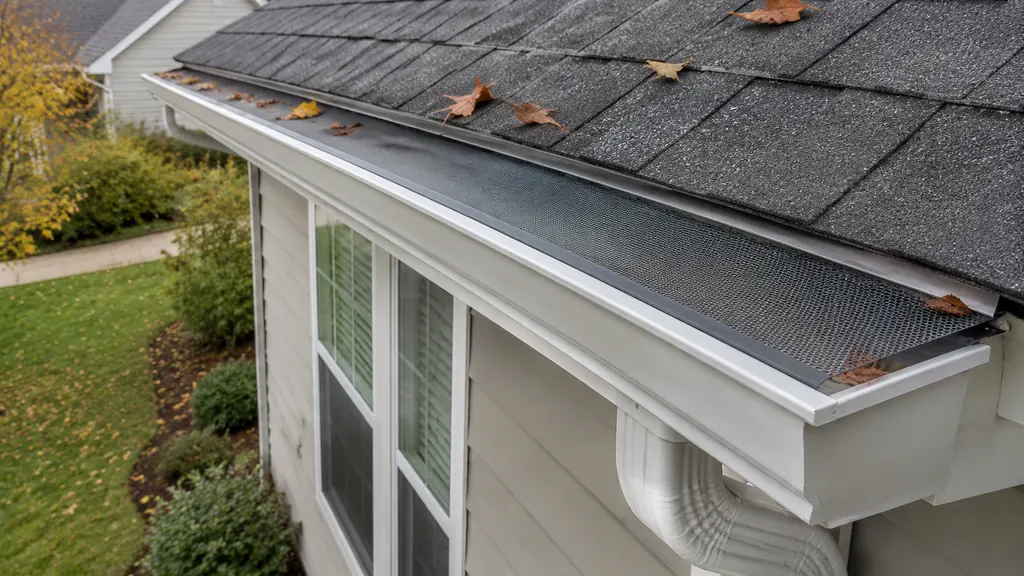
Independent testing of gutter guards points to one clear winner. Fine stainless steel mesh and micro-mesh screens block the most debris and let the most water through, while foam inserts, brushes and reverse-curve designs consistently fall short. How the panels are tested matters as much as the brand name on the box.
Gutter guards are one of those products where the marketing is loud and the honest data is thin. A real test measures debris exclusion, water flow and durability. Pine needles and hardwood leaves are among the debris types used in testing.
How independent labs actually test gutter guards
The best tests try to answer two questions. How much debris does the guard keep out, and how much water does it still drain when it is covered in that debris? A guard that sheds leaves but dams up under a mat of shingle grit has failed.
Testers build a sloped gutter rig, mount each product on top, and then throw real debris at it. Pine needles, oak leaves, seed pods, sand and shingle granules are the usual load. They measure the weight of material that gets through and the flow of water down the downspout before and after the debris load. A product that clogs in the first season scores poorly no matter how good it looks on the shelf.
A second round of testing is the durability test. UV exposure, freeze-thaw cycles and simulated weather show whether polypropylene or PVC parts go brittle and whether a plastic clip cracks off in the first cold snap. Reports should distinguish day-one performance from performance after repeated exposure to ice and weather.
What the testing tends to show, surface by surface
Different surfaces fail in different ways, and the independent results are fairly consistent about it.
- Micro-mesh and fine stainless mesh win most head-to-head comparisons. The openings are small enough to stop pine needles and shingle grit, and the material resists rust and sagging. Water sheds off the fine surface as long as the screen is not painted shut with pollen.
- Coarse mesh and perforated metal handle big leaves well and let needles through. On a roof ringed by pines, that is a losing trade.
- Foam inserts catch the first wave of grit and then stay wet. They work for a season or two, then compress and start holding moisture against the fascia.
- Brushes are cheap and easy to drop in, but debris works into the bristles and the whole thing has to come out to be cleaned.
- Reverse-curve guards rely on surface tension to pull water around the nose, and they can be fussy to install and to tune.
A common test result is that the same guard scores differently on pine needles than on broad leaves. Our guide to the best gutter guards for pine needles treats that debris as its own problem. The gutter guard reviews comparing mesh, micro-mesh, foam and reverse curve break the surfaces down the same way.
What a good test report looks like
A credible report names the debris mix, the test length and the method used to measure water flow. It records which guard clogged and by how much.
Look for these signs:
- The tester describes the rig, the slope and the debris.
- Results are split by debris type, not just one overall star.
- The report states the price at the time of testing and the length of the warranty.
- Failures are named, including a panel that pulled loose or a screen that tore.
- The tester says how the product was installed, because a wavy screen on a crooked gutter will underperform no matter who made it.
A long-term field trial on your exact roof is uncommon. A lab can simulate a season of leaves in an afternoon, but conditions under your trees reveal how the guard performs over time.
The install is half the verdict
An independent test mounts the guard on a clean, straight, well-pitched gutter. Your gutter from 1998 may not be any of those things. A screen that sheds debris in a lab can pond water at home if the gutter has lost its fall toward the downspout.
Before spending money on any guard, clean the gutter out completely and flush it so you can see it drain. Check the pitch with a level over a few feet and fix any low spots. Repair loose hangers so the front lip is firm, because most clips and screws need sound metal to bite into.
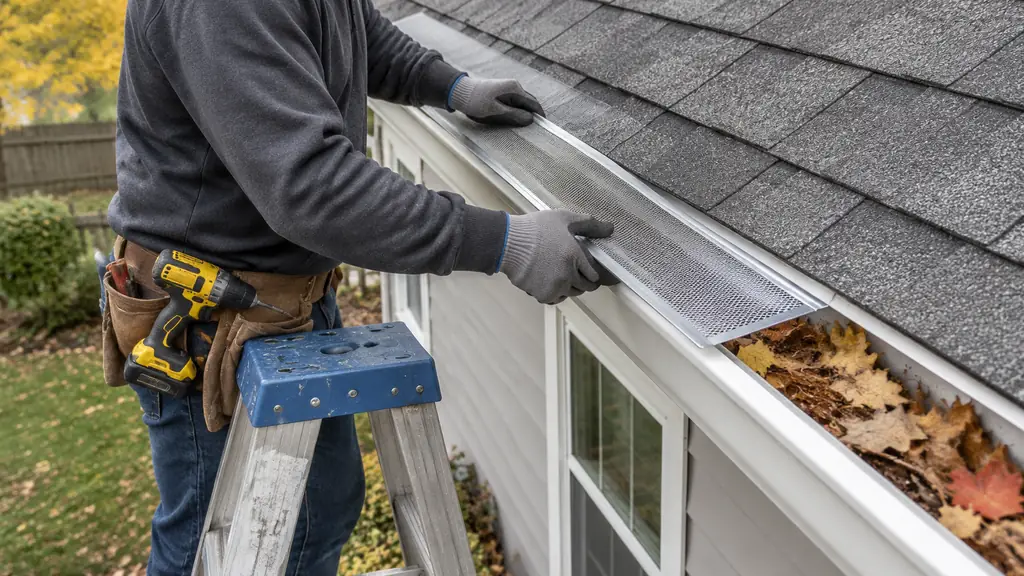
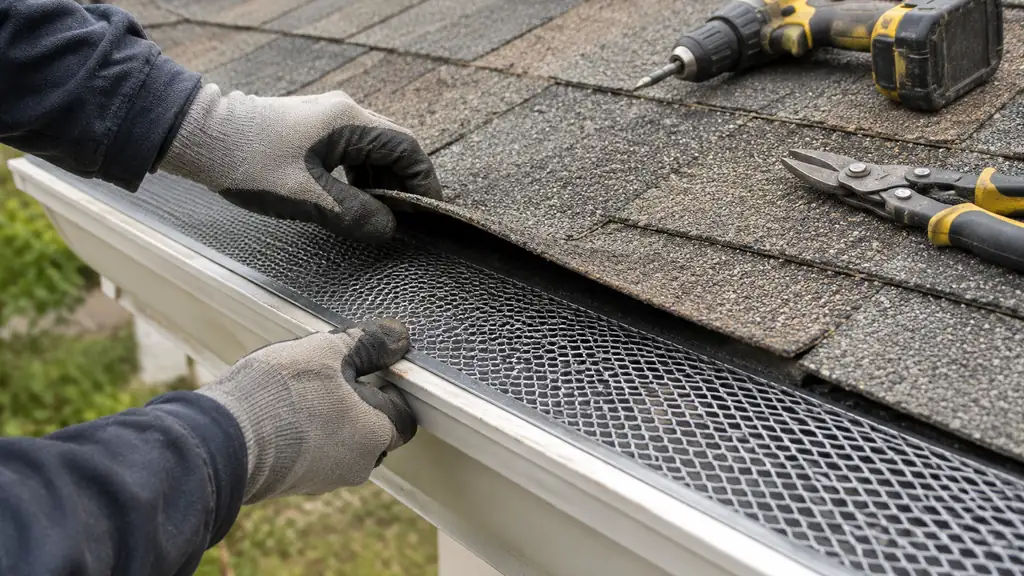
The most slippery step in the whole job is sliding the back edge of a screen under the first row of shingles without tearing the screen or lifting the shingle too far. Work in cool weather so the shingles stay flexible, and set the front edge over the gutter lip so water runs into the channel.
Most of these guards follow this installation sequence:
- Clear the gutter of all debris and flush the downspouts.
- Check and correct the gutter pitch and tighten loose hangers.
- Measure the run and cut the panels to length with tin snips or a fine-tooth blade.
- Lift the first shingle row slightly and slide the back edge of the panel under it.
- Clip or screw the front edge to the gutter lip, keeping the panel flat.
- Join panels with the supplied overlap so water cannot run between them.
- Flush the gutter with a hose and watch for ponding.
Cost, and whether the guard pays you back
A do-it-yourself mesh kit usually costs less than professional installation, and the price per foot climbs as you move from plastic to stainless micro-mesh. Professional installation can cost several times the material price, so compare a whole-house quote with the time and equipment required for the job.
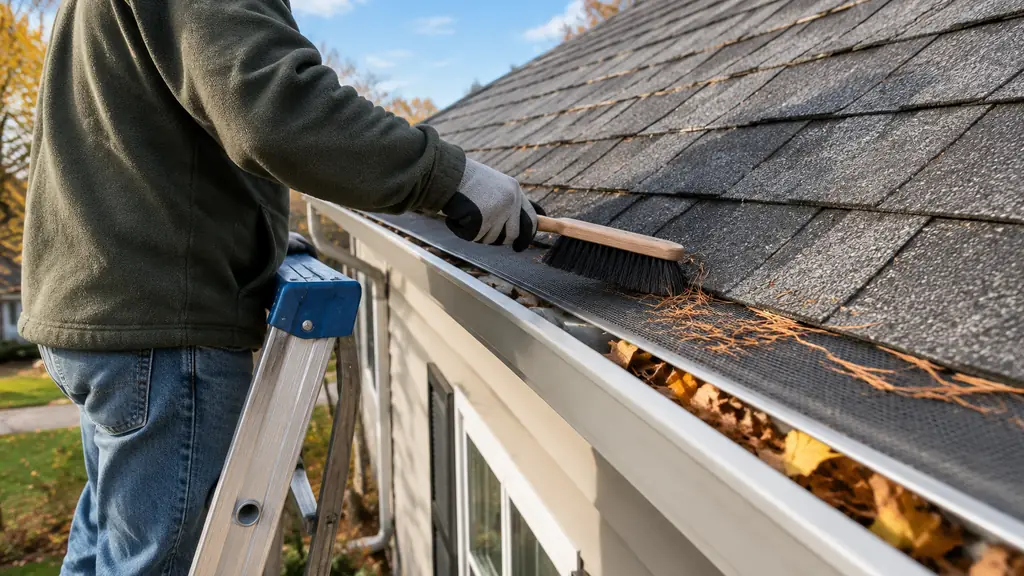
A guard reduces how often you climb up, but it does not make the gutter maintenance-free. Pollen, shingle grit and small seed pods still settle on the screen. On a roof ringed by oaks in Pennsylvania or pines in Georgia, you may still need to brush it off periodically.
Weight matters too. A retrofit screen adds load to the gutter and the fascia it hangs from, so on an older house check the spec sheet for the panel weight and make sure the hangers are sound. Water management at the ground matters as much as the guard, and our guide to concrete splash blocks and moving water away from your foundation covers the last few feet of the job.
Mistakes that show up in the reviews
The most common complaint in any review set is water pouring over the front of the guard in a hard rain. That usually means one of three things. The screen is too fine for the roof pitch, the gutter is already full behind it, or the panel was installed with too little gap at the front lip.
Other failures worth knowing:
- Panels screwed down tight against the lip with no clearance for expansion, so the screen buckles in summer heat.
- Plastic clips used on a gutter that flexes, so the guard works loose in the first ice storm.
- A screen chosen for leaves when the actual problem is pine needles and grit.
- A DIY job done on a steep roof or a two-story run without proper ladder footing.
If your house is more than one story up, if the roofline has valleys and turns, or if the fascia is soft and rotten, call a pro. The guard is the cheap part. A fall from the ladder can cause serious injury.
When to call a professional
Hire out when the job needs roof work, ladder access on uneven ground, or repair to the fascia and hangers before any guard goes on. A pro can also identify cases where a guard is unsuitable for the roof.
Get an itemised quote that lists the guard type, the linear feet, the removal of the old gutter, and the warranty terms in writing. Ask what happens if the guard ponds water in the first season. A good installer will come back and fix the pitch. A bad one will blame the trees.
If you are handy and your house is a single story, the job may take a weekend with a helper, a drill and a pair of snips. A professional can handle a taller house, steep roof or gutter that needs repair before installation.
Gutter Guards FAQ
Do independent tests really favor micro-mesh?
Yes, in most head-to-head comparisons fine stainless micro-mesh comes out ahead on both debris blocking and drainage after debris loading. The catch is that a fine screen also traps pollen and grit, so it needs a brush-off. Coarse mesh and foam score lower mainly because they let needles through or hold water against the fascia.
Why do the same guards score differently in different reviews?
Because debris type changes the result more than brand does. A guard that wins on oak leaves can lose on pine needles and shingle grit. Read the test method and match the guard to the trees on your lot.
Is a gutter guard worth the money if I still have to clean it?
A gutter guard can reduce climbs and hand-scooping of wet leaves. It does not create a maintenance-free gutter. A gutter guard can reduce climbs and hand-scooping of wet leaves, but it does not create a maintenance-free gutter.
Can I install gutter guards myself?
On a single-story house with sound gutters, yes. The work is measuring, cutting and tucking the back edge under the shingles. On a two-story run, a steep roof or a gutter that needs repair first, a professional installer is the safer and often cheaper call once you count the risk.
What should I check before buying any guard?
Check the gutter pitch, the hanger condition and the warranty terms, and confirm the panel weight against your gutter with the spec sheet. Then match the screen type to your debris, coarse for big leaves and fine for needles and grit. If a seller cannot give you those numbers, keep looking.
Thank you for reading!