
Gutter Guard Reviews: Mesh, Micro-Mesh, Foam and Reverse Curve Compared
By: John Ledford | Date Posted: October 26, 2026
Table of Contents
Gutter guards keep leaves, grit and pine needles out of the trough while letting rain in. The four common types are mesh, micro-mesh, foam inserts and reverse curve covers. None means you never clean a gutter again. The rigid parts are usually Aluminum, Galvanized Steel or Stainless Steel; inserts are usually Polyurethane.
The right type depends on the debris your roof sheds. Coarse mesh lets pine needles through. Maple seeds can sprout in foam. Plan installation for late autumn after most leaves have fallen.
How the four main types actually work
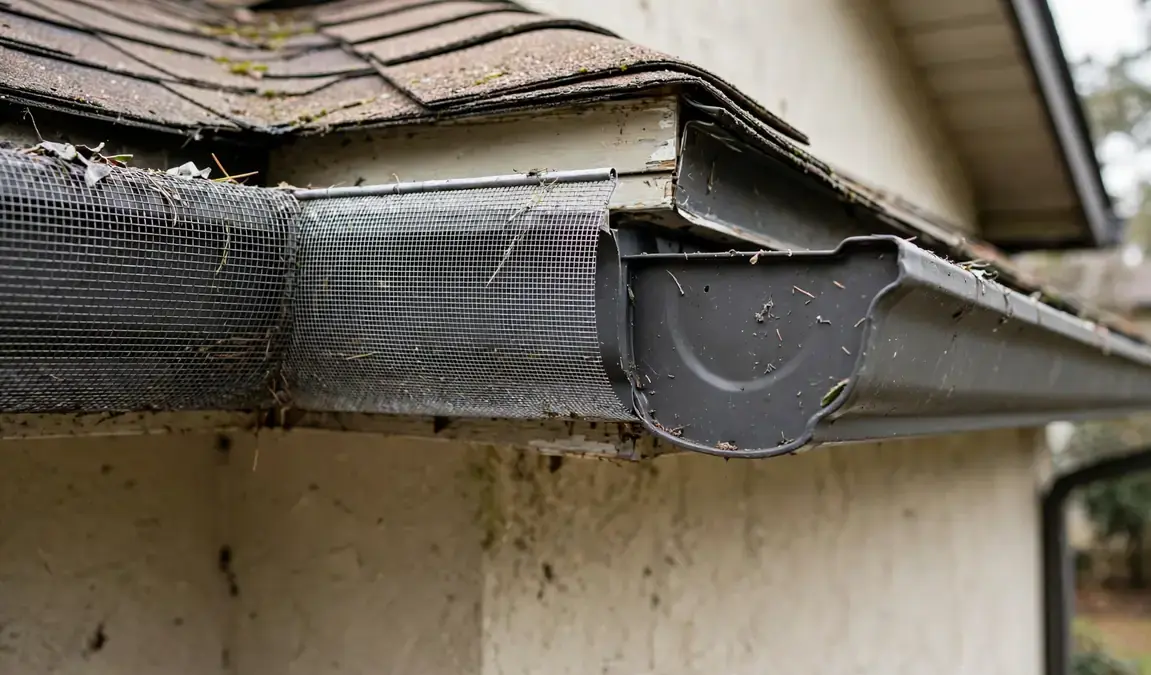
Mesh guards are sheets of expanded metal or woven wire, usually aluminum or galvanized steel, that snap or screw onto the gutter lip. Water rolls through the openings and leaves slide off the top. The opening size is the whole story here. Coarse mesh passes water fast but catches everything bigger than the hole, which means shingle grit and small seeds work their way in and stay. A galvanized steel sheet is the cheaper buy, and it is the one that rusts first.
Micro-mesh uses a fine stainless screen bonded to a metal frame, with openings small enough to block grit and most seeds. Stainless steel resists rust. Galvanized steel eventually corrodes. A 316 Stainless Steel grade holds up in coastal air where salt speeds corrosion on lesser metals. Aluminum frames cost less, and the price gap to a stainless screen shows up most on long runs. The screen costs more and passes slightly less water per square foot, which matters on long roof runs and steep pitches. On a big storm the water can sheet right over the top if the pitch is wrong.
Foam inserts are wedge-shaped pieces of polyurethane that sit inside the trough. Polyurethane Foam is the standard insert material, and it breaks down under ultraviolet light over a few seasons. Water soaks through the foam and debris sits on top to dry and blow away. Foam is the cheapest option per foot and the quickest to fit, and it is the worst choice under trees that drop seeds, because the foam becomes a seedbed.
Reverse curve guards are solid metal covers, usually aluminum, that curve back on themselves. Water clings to the curve by surface tension and drops into the gutter while leaves shoot off the front edge. They handle heavy leaf loads. Tiny debris can get past them, and they need the right roof pitch. Aluminum is the usual material because it bends without cracking. Galvanized Steel is the other common choice for the solid panels.
Matching the guard to your trees
- Pine needles and tiny seed pods. Fine micro-mesh blocks more needles than coarse mesh or reverse curve covers.
- Big leaves, oak and maple. Coarse mesh and reverse curve covers shed leaves; a leaf blower can clear the surface.
- Shingle grit. Micro-mesh keeps more grit out of the trough. Foam can trap it, while asphalt shingles shed grit throughout their service life.
- Heavy snow and ice. Mesh sheds snow in many cases. Ice dams can form at the eave regardless of the guard, so clear the roof edge after heavy snowfall.
Walk the roof line in daylight and look at the gutter itself before you buy anything. Sagging hangers, a loose downspout or a joint that drips will undo a new guard in one season. Fix the hangers and seal the joints first; a guide to every part of a rain gutter system covers hangers, ferrules and outlets. Check the fascia board for soft wood at the same time, since rot behind the gutter shows as bubbling paint or a loose spike.
Step-by-step: installing mesh or micro-mesh guards
Plan the work for late autumn, once the leaves have mostly fallen and the roof is dry.
- Clear the gutter completely. Scoop out debris by hand, then flush the trough with a hose and check that water runs to the downspout. A guard over a clogged gutter just hides the problem.
- Check the hanger spacing and the gutter pitch. Push down on the front lip. If it flexes, add hangers before the guard goes on.
- Measure each run separately. Gutters are rarely square, and corners and end caps eat length. Write the numbers down.
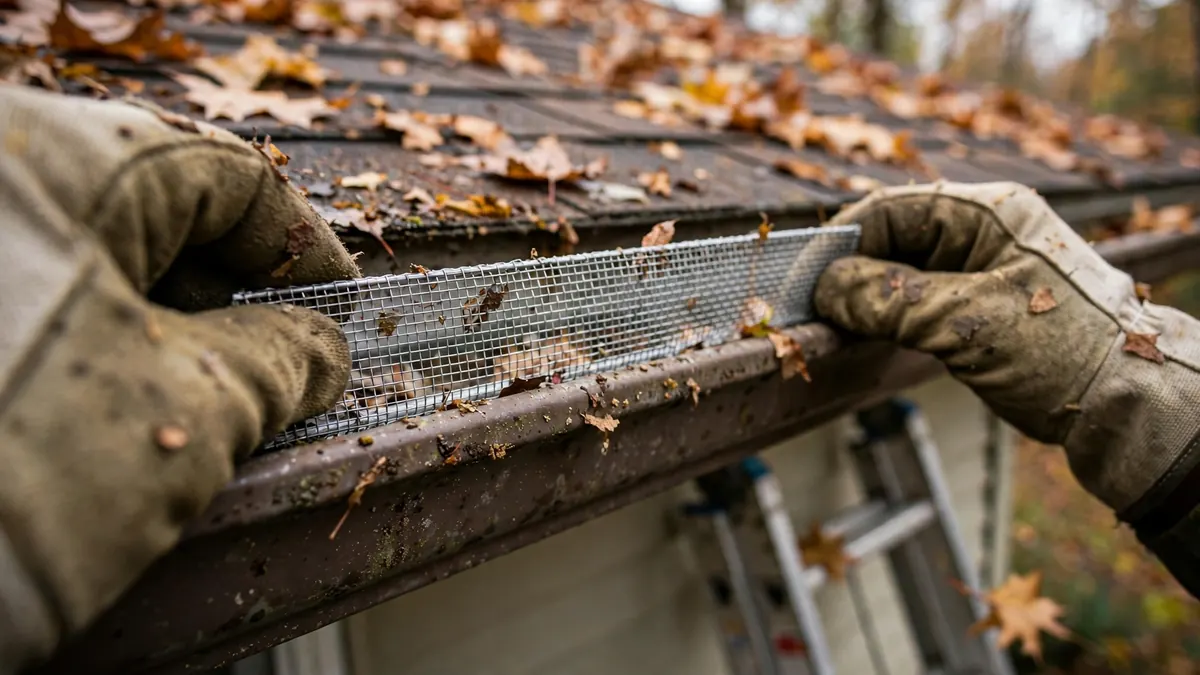
- Cut the panels outdoors with tin snips or a hacksaw. Wear gloves, because cut mesh edges are the sharpest thing on the job. File or bend the cut edge over before it goes near the roof, and sweep up the aluminum filings so they do not stain the driveway.
- Fit the back edge under the first row of shingles where the design allows. Never lift shingles more than needed, and never nail through the roof surface. Check the label for the manufacturer’s fastening method.
- Fasten the front edge with the supplied screws or clips. Use a driver with a clutch so you do not crush the guard or strip the gutter lip.
- Test with a hose at full flow. Watch for water sheeting over the top at the high end of a run. If it does, the pitch or the guard profile is wrong, and tightening the screws will not fix it.
Step-by-step: installing mesh or micro-mesh guards1Clear the gutter completely2Check the hanger spacing3Measure each run separately4Cut the panels outdoors5Fit the back edge6Fasten the front edge7Test with a hoseThe steps from this section at a glance.

Costs, tools and time budget
Foam inserts are the cheapest per foot and the fastest to fit, often a single afternoon for a whole house. Mesh sits in the middle. Micro-mesh and reverse curve are the priciest, and professional installation of either can run several times the material cost, so get a written quote and check what it covers.
Tools the job needs:
- Tin snips or a hacksaw with a fine blade
- A cordless driver with a clutch and the right bit
- Work gloves and safety glasses
- A sturdy extension ladder and a ladder stabilizer
- A hose with a nozzle for the flow test
- A leaf blower for the annual surface clean
- A file for dressing cut aluminum and stainless edges
A run with several corners, a valley and a downspout outlet takes longer than its length suggests. Downspout accessories include extensions and leaf strainers.
Mistakes I see on almost every DIY job
Installing guards over a sagging gutter lets water pool and debris collect. Other common mistakes include leaving end caps open, over-tightening screws until the gutter lip is crushed, mixing guard types with different maintenance needs, and ignoring the downspout outlet. A strainer at the top of the downspout can catch debris. Wide mesh openings can also pass asphalt shingle grit into the trough.
For a dripping joint, apply butyl or silicone seam sealer to a dry, scuffed surface. Scuff aluminum with abrasive paper and clean galvanized steel first. See this guide to sealing gutter joints.
When to call a pro instead
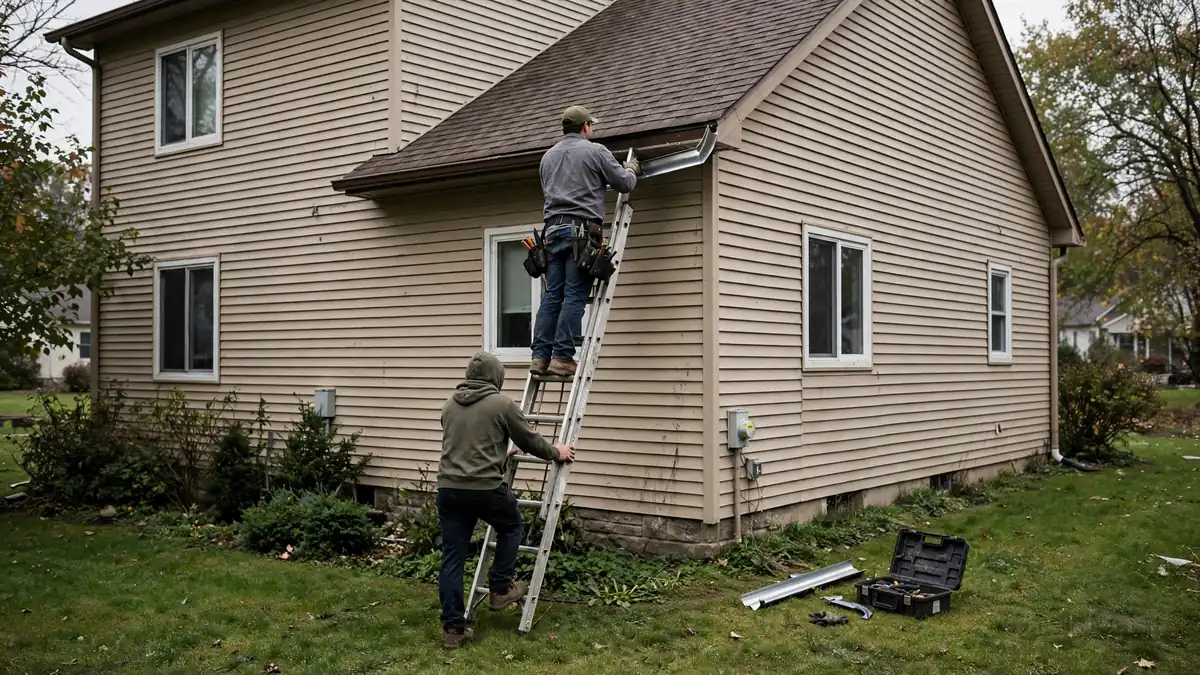
Call a professional if the house is more than one story, the roof is steep, or the gutter is beyond the safe reach of your ladder. Ask what screen grade they fit. Galvanized steel mesh and a 316 stainless screen differ. Soft fascia or a gutter pulling away from the roof also needs repair before a guard is installed.
Gutter Guard FAQ
Do gutter guards mean I never have to clean my gutters again?
No. Every type needs the top surface blown or brushed off at least once a year, and micro-mesh needs a rinse to clear pollen and grit from the screen. Guards cut the frequency and the mess of a full trough clean, and the rinse is easiest in spring after the pollen drop. A polyurethane foam insert needs the most attention of the four, because it stays wet and breaks down in sunlight.
Which type is best for pine needles?
Micro-mesh is common under pine trees. Its fine stainless screen blocks needles that pass through coarse mesh. Even then, needles pile up on top and hold moisture, so plan on clearing the surface after a heavy drop.
Are foam inserts a waste of money?
They are fine under open sky with big leaves and no seed-bearing trees nearby. Foam traps debris and stays wet under maples, pines and other trees that drop small seeds. These conditions shorten its service life. Polyurethane foam also breaks down under ultraviolet light, so a sunny south-facing run ages fastest.
Can I install gutter guards myself?
Yes, on a single-story house with a stable ladder and a helper. The work is cutting, fitting and screwing, and the tricky part is the flow test at the end. Above the first story, the risk shifts and hiring the job is the sensible call.
Do guards work with an existing downspout?
They do, but the outlet is where clogs move next. Fit a strainer at the top of each downspout and check the run after the first big storm of the season. A downspout extension carries the water away from the foundation, where it would otherwise soak the soil. Check the outlet again after the autumn leaf drop. A splash block at the end of the run spreads the flow so it does not gouge a trench in the soil.
Thank you for reading!