
Gutter and Downspout Accessories Worth Adding
By: John Ledford | Date Posted: October 14, 2026
Table of Contents
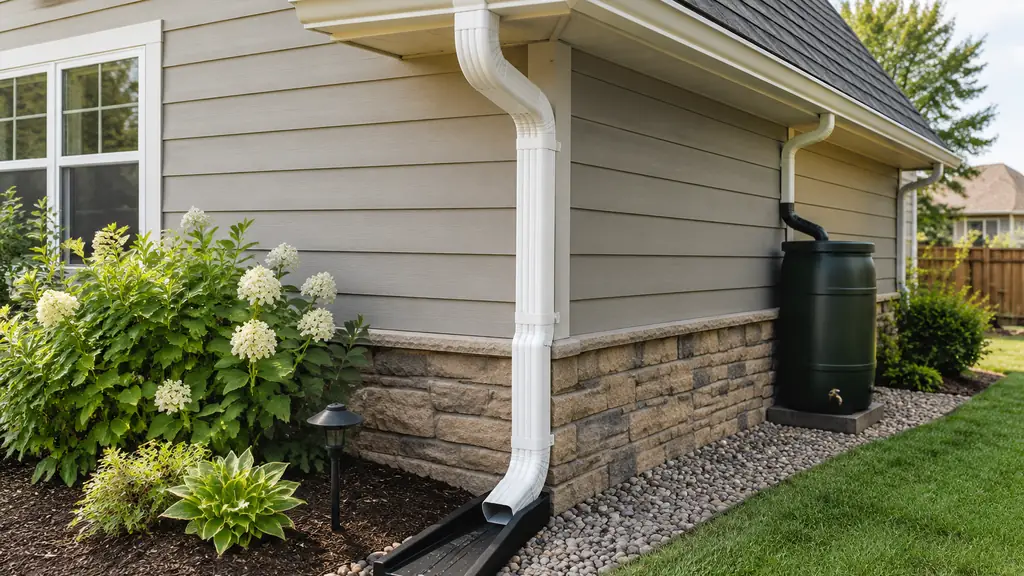
The accessories worth adding are the ones that fix a specific problem you can see: water pooling at the foundation, debris clogging the run, or a downspout that dumps right beside the wall. Start with downspout extensions and splash blocks, then add leaf protection and hangers if your gutters fill up or sag. Everything else is optional until you spot the symptom it solves.
I have hung gutters on a garage in Ohio and patched a run on a rental in Georgia, and the pattern holds. The cheap plastic parts fail first, and the metal ones outlast the roof. Let me walk through what earns its place on the wall.
Start With Water Diversion, Because That Is the Whole Point
A gutter that collects water and drops it at the foundation has done half a job. The downspout is where most of the damage happens, and the fix is usually an extension or a splash block.
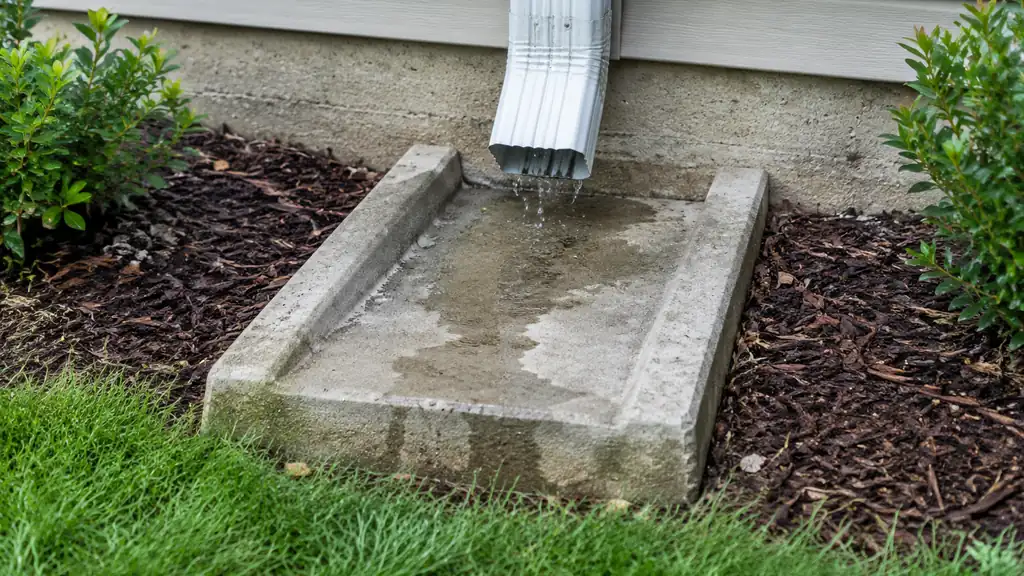
A splash block sits under the outlet and spreads the flow across the ground so it does not dig a crater. They come in concrete, resin, and molded plastic. Concrete lasts decades and weighs enough to stay put in a storm. Resin is lighter and cheaper, and it will crack if you drop it on a cold day in January.
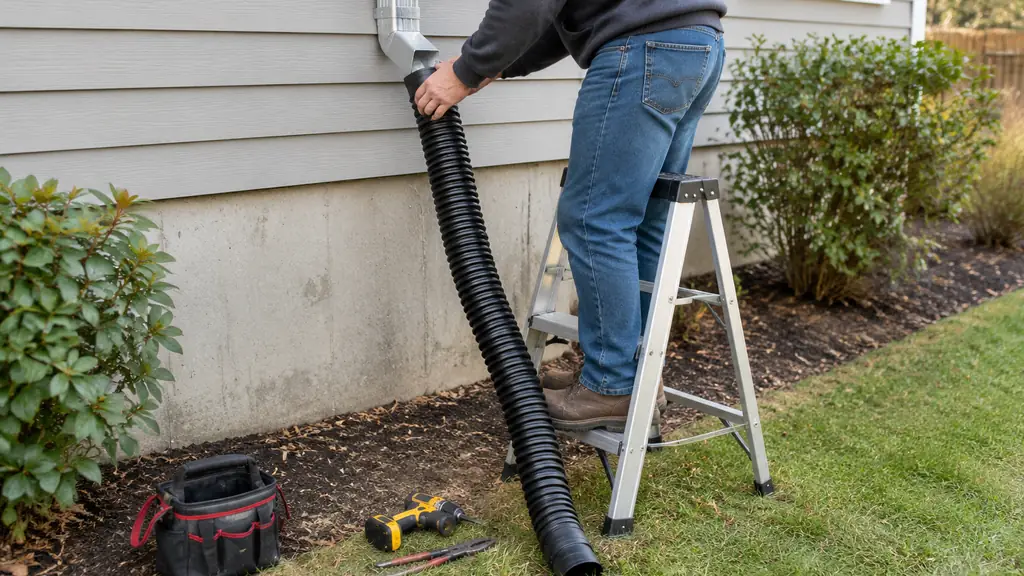
A downspout extension goes further. The flexible corrugated kind rolls out and buries easily, and the rigid kind looks tidier against a wall. Either way, the goal is to move water several feet from the foundation before it soaks in. Check the label on any buried extension for the size it fits, because downspout outlets come in a couple of common profiles and a loose fit leaks at the joint.
If your downspout empties into a bed of mulch, add a pop-up emitter at the end of the buried line. It stays closed until water pushes it open, which keeps grass clippings and soil out of the pipe.
Leaf Protection: Screens, Guards, and When They Actually Help
Leaf guards are the accessory people buy first and regret most often, because the wrong one makes things worse. A screen that sits flat over the gutter catches pine needles and roof grit, and then you have to lift the screen to clean under it.
The styles that work best in my experience are the ones that let water in through a curved or raised profile while shedding debris off the top. Fine mesh handles pine needles better than wide slots. Wide slots handle maple helicopters and oak tassels better than fine mesh, which clogs with seed pods.
Two things decide whether a guard is worth the money. First, how close are your trees to the roof line. Second, what falls from them. A house with two maples overhead needs a different guard than a house with one pine at the corner.
Whatever you buy, check that it fits your gutter profile before you cut anything. Guards are sold for specific widths, and a guard that overhangs the lip will lift in wind. On a long run, plan to fasten it at the hangers rather than between them, so it does not drum in a storm.
Hangers, Brackets, and the Hardware That Keeps the Run Straight
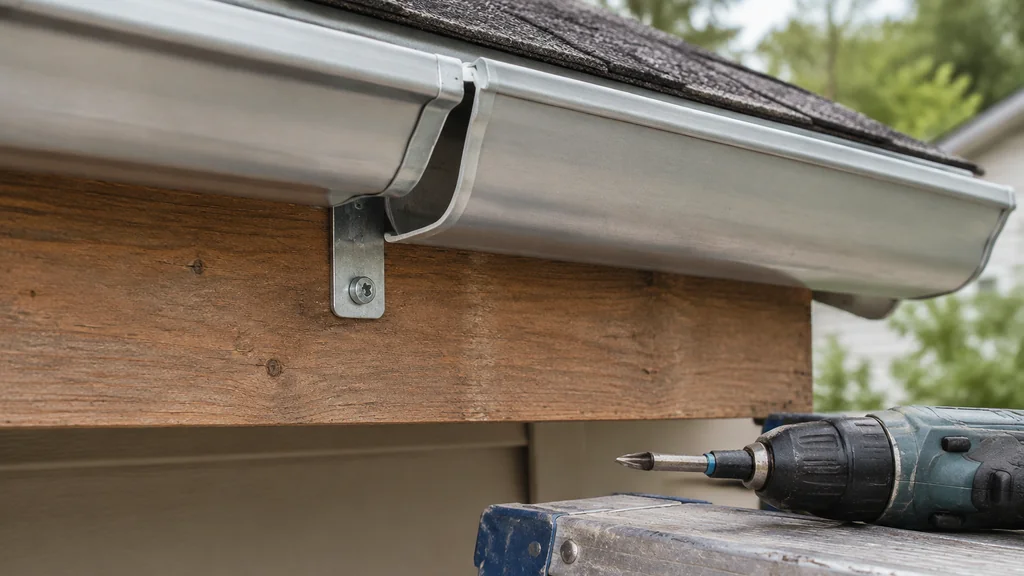
Sagging gutters are almost always a hanger problem, not a gutter problem. The old spike-and-ferrule setup pulls loose over time, especially where a ladder has leaned on the run. Hidden hangers with a screw into the fascia hold far better, and they are what I reach for on a repair.
If you are replacing hardware, match the metal to the gutter. Aluminum hangers on a steel gutter will corrode at the contact point. The same goes for mixing fasteners. A stainless screw into an aluminum hanger is fine. A galvanized screw into a copper gutter is not, and you will see the stain within a season.
For a comparison of the three common hanger types and where each one belongs, this breakdown of gutter nails, spikes and hidden hangers is a good place to start before you buy a box.
While you are up there, check the slope. Water that sits in the middle of a run means the fall is wrong, and no accessory fixes that. The correct rain gutter slope is a small drop toward the outlet, and it is worth setting before you add anything else.
Downspout Accessories Beyond the Extension
The extension is the headline, but a few small parts make the whole system behave.
- Downspout elbows. You need them to bring the run back to the wall and then out at the bottom. Buy the same profile as your downspout, or the crimp will not seat.
- Downspout brackets. These hold the pipe against the wall so it does not swing in wind. Space them per the manufacturer’s instructions, and check the label for the spacing it wants.
- A downspout diverter. This sends roof water into a rain barrel and switches back to the outlet when the barrel fills. Handy if you garden, and useless if you do not.
- Leaf strainers at the outlet. A small basket at the top of the downspout keeps the worst debris out of the pipe. It needs cleaning, but it is easier than snaking a clog.
- Gutter sealant and touch-up paint. Not glamorous, but a tube of sealant and a can of matching paint handle most of what goes wrong at a joint.
On corners, the seal matters more than the part. If you are joining two runs at an inside or outside corner, the method in this guide to gutter miters and corners makes the difference between a dry joint and a drip that stains the fascia.
Tools and a Realistic Time Budget
You can do most of this with a drill, a screwdriver, a hacksaw or tin snips, a tape measure, and a ladder. Add a pair of gloves, because the cut edge of a downspout is sharp and the inside of a gutter is filthy.
Here is the order I use when I add accessories to an existing run.
- Clean the gutter and flush the downspout with a hose.
- Check the slope and the hanger spacing, and fix any sag before adding parts.
- Fit the leaf guard or strainer, fastening at the hangers.
- Attach elbows and brackets to route the downspout down the wall.
- Add the extension or splash block at the outlet.
- Run water and watch every joint for a drip.
Tools and a Realistic Time Budget1Clean the gutter2Check the slope3Fit the leaf guard or strainer4Attach elbows and brackets to route5Add the extension or splash block6Run water and watch every jointThe steps from this section at a glance.
Most of a Saturday goes to the cleaning and the hanger work. The accessories themselves go on fast once the run is sound. If the fascia behind the gutter is soft or the run is more than one story up, that is where I stop and call someone with the right ladder and insurance.
Gutter and Downspout Parts FAQ
Do I need leaf guards on every gutter?
No. Put them where debris actually lands, which is usually under trees and near valleys where roof water concentrates. A short run with no overhanging branches does not need a guard, and adding one just gives you another thing to clean.
How far should a downspout extension carry water?
Far enough that it does not soak back to the foundation, which in most yards means several feet from the wall. If the ground slopes toward the house, go further. Check the label on the extension for the length it comes in, and add a second section if you need more.
Are plastic or metal accessories better?
Metal lasts longer and holds up to sun and cold. Plastic is cheaper and easier to cut, and it is fine for splash blocks and short extensions. For hangers and anything under load, I use metal.
Can I add a rain barrel to an existing downspout?
Yes, with a diverter that switches flow back to the outlet when the barrel is full. You will need to cut the downspout and fit the diverter per its instructions, and you should check the label for the barrel size it is rated for.
What is the most common mistake when adding these parts?
Mixing metals and skipping the slope check. A corroded joint or a run that holds water will undo every accessory you bolt on, so fix the run first and match your hardware to the gutter.
Thank you for reading!