
Gutter Seam Sealer: How to Seal Joints That Drip
By: John Ledford | Date Posted: October 19, 2026
Table of Contents
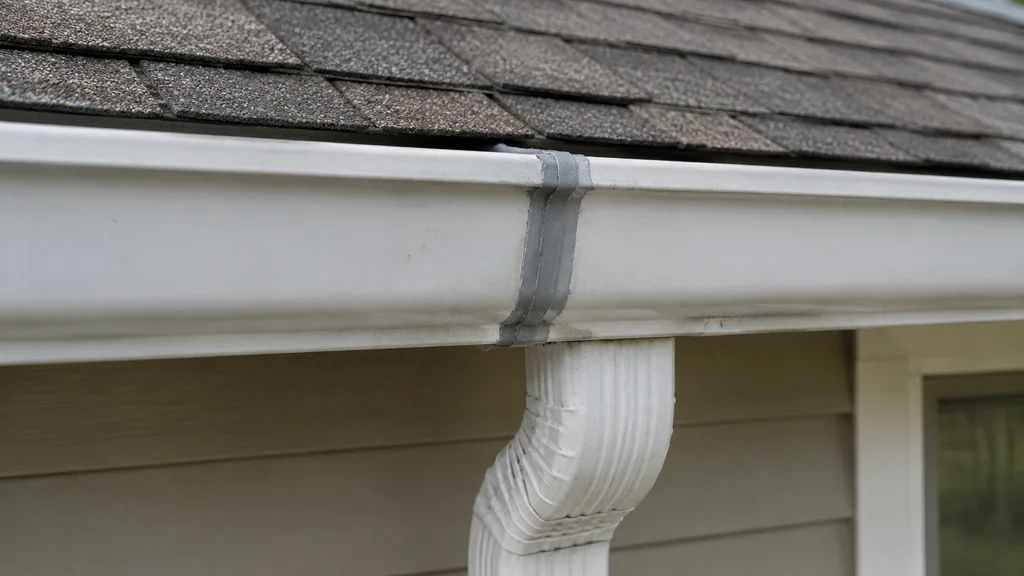
A dripping gutter joint usually has a failed seal. The gutter itself may still be sound. Clean the joint down to bare metal, dry it completely, then bed a bead of gutter seam sealer into the seam and smooth it with a wet finger. A clean, dry surface helps the sealer bond to the joint.
What Gutter Seam Sealer Actually Does
A gutter is a long metal channel, and every place two pieces meet is a seam. On a K-style run you get seams at the corners, at the outlets, and wherever two lengths of gutter are joined with a connector or a slip joint. Water sits in that joint, the metal expands in July and contracts in January, and whatever was in there eventually lets go.
Gutter seam sealer is the flexible material that bridges that gap. It has to stick to aluminum or steel, stay rubbery through freeze and thaw, and resist standing water.
That last point is where most failures start. Silicone skins over fast, but it does not like dirty metal or a joint that is still moving. A proper seam seal stays slightly tacky longer, soaks into the lap, and cures into a rubbery plug.
A joint that drips only during heavy rain may have a seam problem. A joint that drips hours later may point to slope or a clog; see why a gutter leaks by location.
Tools and Materials
You do not need much, and none of it is expensive.
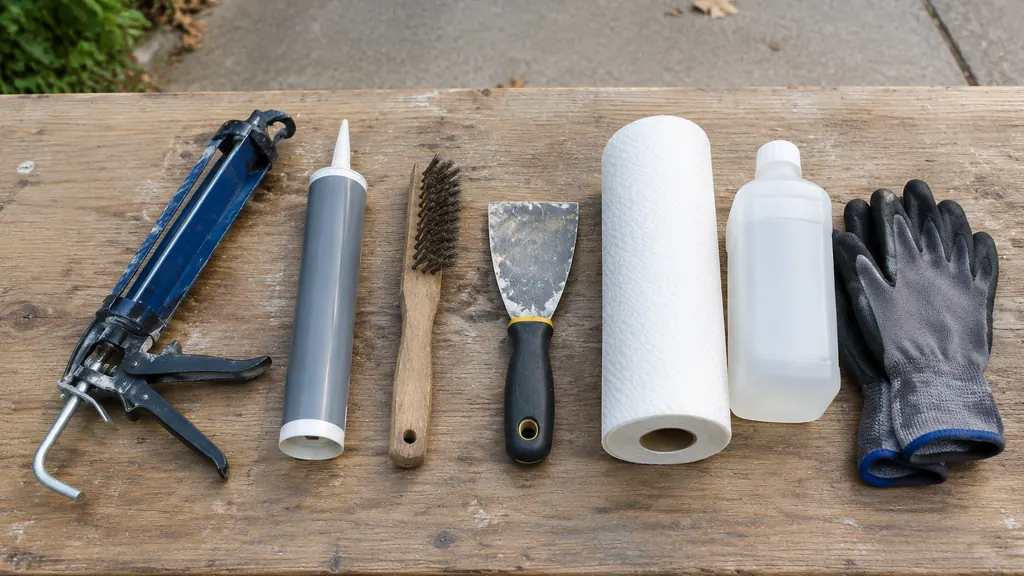
- Gutter seam sealer in a cartridge, or a small can with a brush cap for tight corners
- A caulk gun that fits the cartridge
- A wire brush, plus a scraper or putty knife
- A clean rag and a small bottle of rubbing alcohol or mineral spirits
- A heat gun or a hair dryer for stubborn damp
- Nitrile gloves and a ladder with a stabilizer
Most gutters in North America are aluminum, while some older runs are galvanized steel or copper. Copper needs a light scuff; galvanized steel benefits from a solvent wipe because the zinc surface can hold mill oil. Check the label to confirm the sealer suits your gutter material.
How to Seal a Dripping Gutter Joint
Work on a dry day, ideally in the morning before the sun bakes the metal. Warm metal is fine. Wet metal is not.
- Wait for a dry stretch. Make sure the seam is not holding water in the lap. If you can see standing water in the channel, scoop it out first.
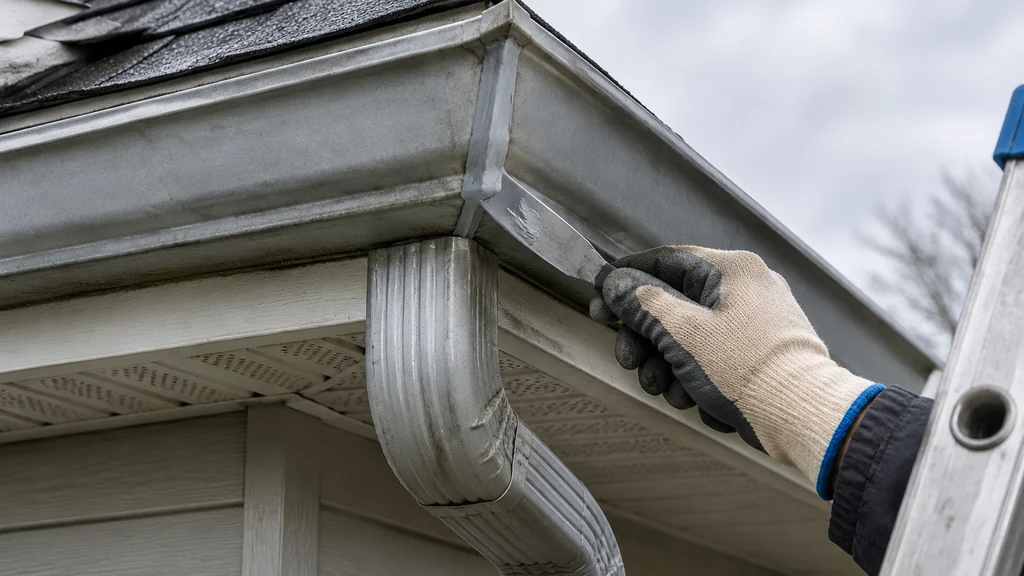
- Scrub the joint clean. Run a wire brush along the seam, inside and out, and scrape off the old sealer with a putty knife. Get down to bare metal along the whole lap.
- Wipe it down. Dampen a rag with rubbing alcohol or mineral spirits and wipe the seam until the rag comes away clean. Let the joint air-dry.
- Let it dry. If the joint still feels cool or damp, let it air-dry before applying the sealer.
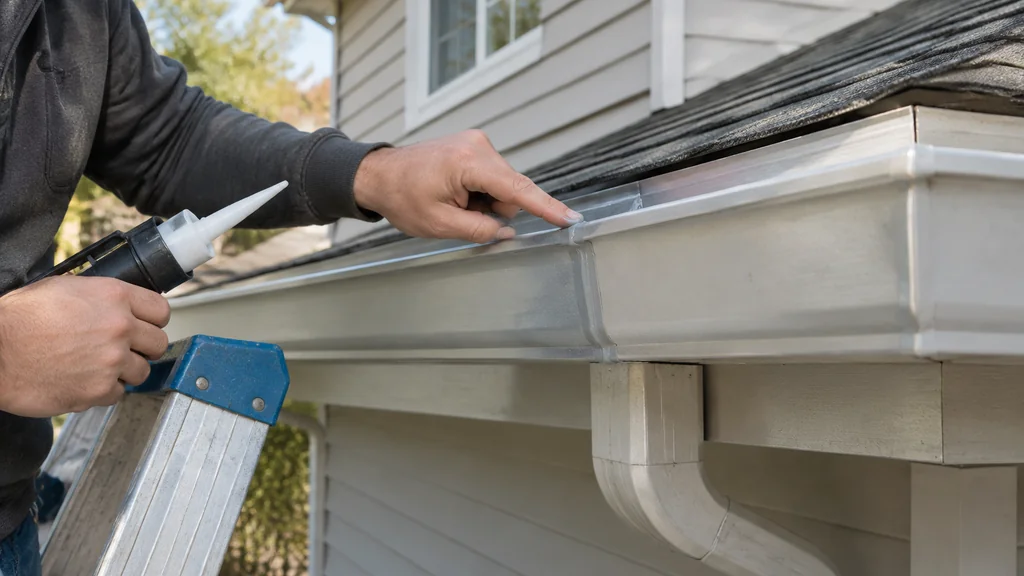
- Run the bead. Cut the nozzle at a slight angle and push a bead into the seam rather than dragging it across the surface. Push, do not pull. You want the sealer forced into the lap, not sitting on top of it.
- Tool it smooth. Wet your finger or a putty knife and draw it along the bead once, in one pass. This presses the sealer into the metal and gives you a slightly concave fillet that sheds water.
- Let it cure. Leave it alone and follow the product label for drying and cure times.
How to Seal a Dripping Gutter Joint1Wait for a dry stretch2Scrub the joint clean3Wipe it down4Let it dry5Run the bead6Tool it smooth7Let it cureThe steps from this section at a glance.
Most of the work is preparation. Applying the bead is a small part of the job.
The Step Most People Get Wrong
Good preparation helps the sealer bond to the joint. Sealer fails because it went onto a surface with a film of oxidized aluminum, old tar, or a thin layer of water hiding in the lap.
Run your finger along the seam after you wipe it. If it feels chalky or leaves a grey smear, keep brushing. Aluminum oxidizes fast, and that white powder is what the sealer actually bonds to if you skip the scrub. Same story with an old repair: fresh sealer over old sealer is a bond between two flexible materials, and the bottom one is already failing.
Temperature matters almost as much. Most products want the metal above roughly room temperature and below the point where it is too hot to touch comfortably. In a cold snap, warm the joint first. In full August sun, wait for shade or work early.
Choosing the Right Seam Sealer for Gutters
Solvent-based seam sealers bond to metal and stay flexible, though they need ventilation and may take longer to cure in cool weather.
Butyl rubber sealers stay tacky and can accommodate movement in a lap joint.
Hybrid polymer sealers resist UV exposure and may bond to slightly damp surfaces. Check the product label for its application conditions.
Silicone can work for a trim joint above the waterline, but standing water and movement can cause problems at a gutter seam.
Match your pick to the gutter material and check the label for cure time and temperature range. If seams are failing in several places, compare repair and replacement costs with this guide to leaky gutter repair materials and costs.
When to Stop and Call a Pro
Sealing a joint is a homeowner job. Replacing a rotten fascia board behind it is not, and neither is anything that requires you on a roof above a certain height.
Call someone if the fascia behind the gutter is soft, if the gutter has pulled away from the house, or if the same joint keeps reopening. A seam that reopens is usually telling you the gutter is moving because a hanger is loose or the run has lost its slope. Sealer cannot fix a structural problem, and you will keep buying tubes until someone looks at the hangers.
Also step back if you are not comfortable on a ladder. A gutter joint is not worth a fall. Consider a pro if you are not comfortable on a ladder. For an indoor project, see this guide to fixing a running toilet.
Gutter Seam Sealer FAQ
How long does gutter seam sealer take to cure?
Follow the product label for drying and cure times.
Can I apply seam sealer to a damp gutter?
The seam should be clean and dry before application. Water in the lap can prevent the sealer from bonding properly.
Which sealer works on metal gutters?
Solvent-based, butyl rubber, and hybrid polymer seam sealers are used on gutters. Check the label to confirm compatibility with aluminum, galvanized steel, or copper.
When should I call a professional?
Call a professional if the fascia is soft, the gutter has pulled away from the house, or a repaired seam keeps opening. These problems may involve the gutter’s support or slope.
Thank you for reading!