
Leaky Gutter Repair: Materials, Cost and When to Call a Pro
By: John Ledford | Date Posted: October 5, 2026
Table of Contents
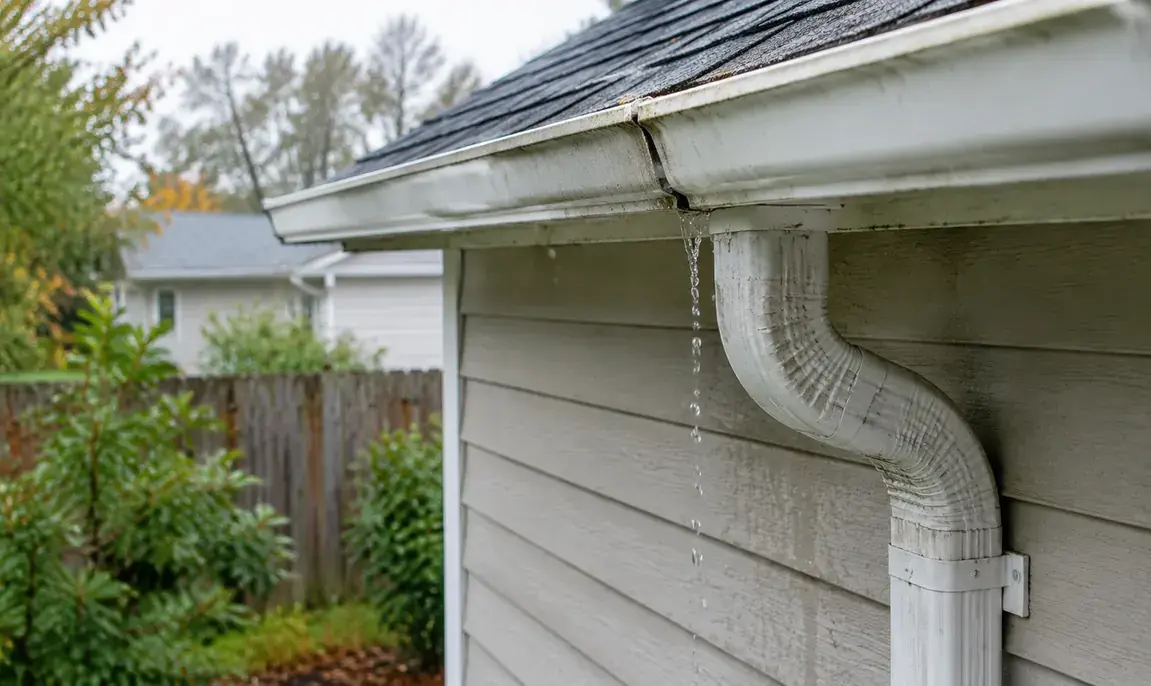
A leaking gutter is almost always a joint problem, a pitch problem or a hole problem, and each one has a different fix. Most rain gutter leak repair jobs are a Saturday morning of work with a ladder, a scraper and a tube of sealant. The moment the gutter is cracked through, pulled off the fascia or sagging along its whole run, you are looking at replacement, and that is a different job with a different price.
Find the leak before you buy anything
Water lies. It runs along the underside of a gutter, drips off a bracket and lands two feet from the actual failure, so the wet spot on your siding is rarely the hole.
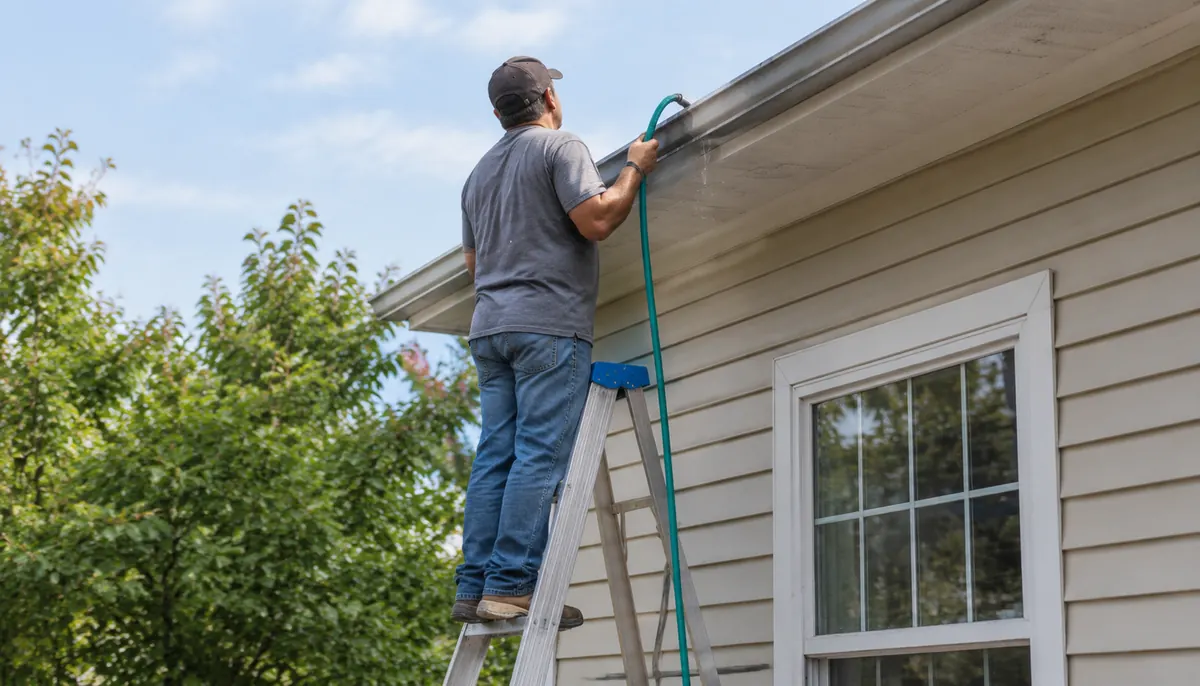
Wait for rain, then go out with a flashlight and watch. If the weather is dry, run a hose into the gutter at the high end and follow the water. Look at four things in order.
- Joint seams and corners. The sealant shrinks over time and pulls away from the metal. This is the most common leak by a wide margin.
- End caps. Same story, same fix.
- Hangers and spikes. A loose hanger lets the gutter sag, water pools, and the seam opens up.
- Holes and rust-through. Small pinholes in steel gutters, or a crack at a fold, especially on older aluminum.
Check the downspout too. If water pours over the front lip during a hard rain, the outlet is blocked or undersized, and no amount of sealant will fix that.
Materials that actually hold up
The single biggest mistake is buying the cheapest caulk on the shelf. Silicone and Butyl Rubber sealants stay flexible, which matters because Aluminum and Vinyl move with temperature. A rigid, brittle patch cracks within a season.
Here is what works, and where each one belongs.
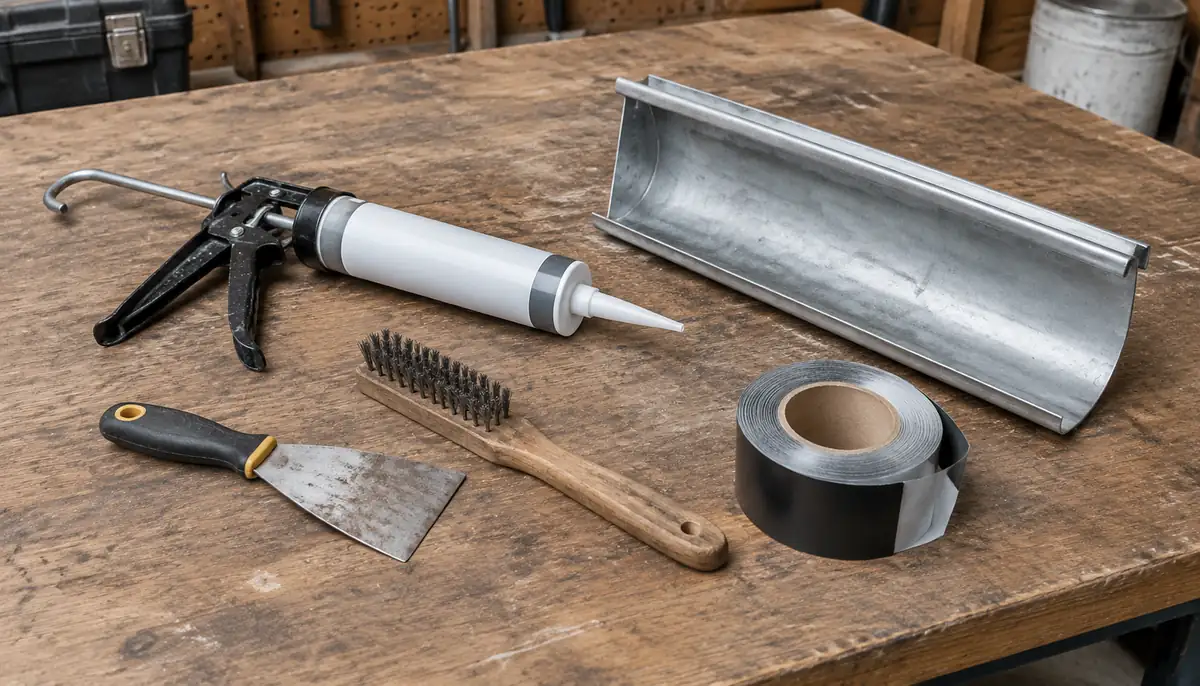
- Silicone gutter sealant. The default for seams, corners and end caps. It skins over fast and stays rubbery. Clean and dry the surface or it will not bond, and that is not a suggestion.
- Butyl rubber sealant. Sticky, slow-curing, excellent underwater and in cold weather. Good for a repair you have to do in November.
- Self-adhesive flashing tape. For pinholes and small cracks on a flat gutter bottom. Press it down hard, then coat the edges with sealant.
- Roofing cement. Fine for a metal patch over a hole, messy everywhere else.
- Replacement sections and hangers. Sometimes the honest answer. A short length of matching gutter, two connectors and a pair of hangers cost very little and outlast any patch.
- Splash blocks and downspout extensions. Not a repair, but they stop the water from digging a trench next to the foundation, which is the damage people actually care about.
Match the material to the gutter. Vinyl gutters take a different sealant than Aluminum, and Copper needs a product that will not react with it. Check the label for the material you have.
Step by step: sealing a leaking seam
This is the repair that covers most leaking gutter calls, and it takes about an hour once the ladder is set.
- Scrape the old sealant out. A putty knife and a wire brush. Get down to bare metal or bare vinyl. Old sealant is the reason new sealant fails.
- Dry the joint completely. A rag, then a few minutes of sun. Sealant over a damp seam is wasted money.
- Clean the surface. Isopropyl Alcohol on a rag works. Let it flash off.
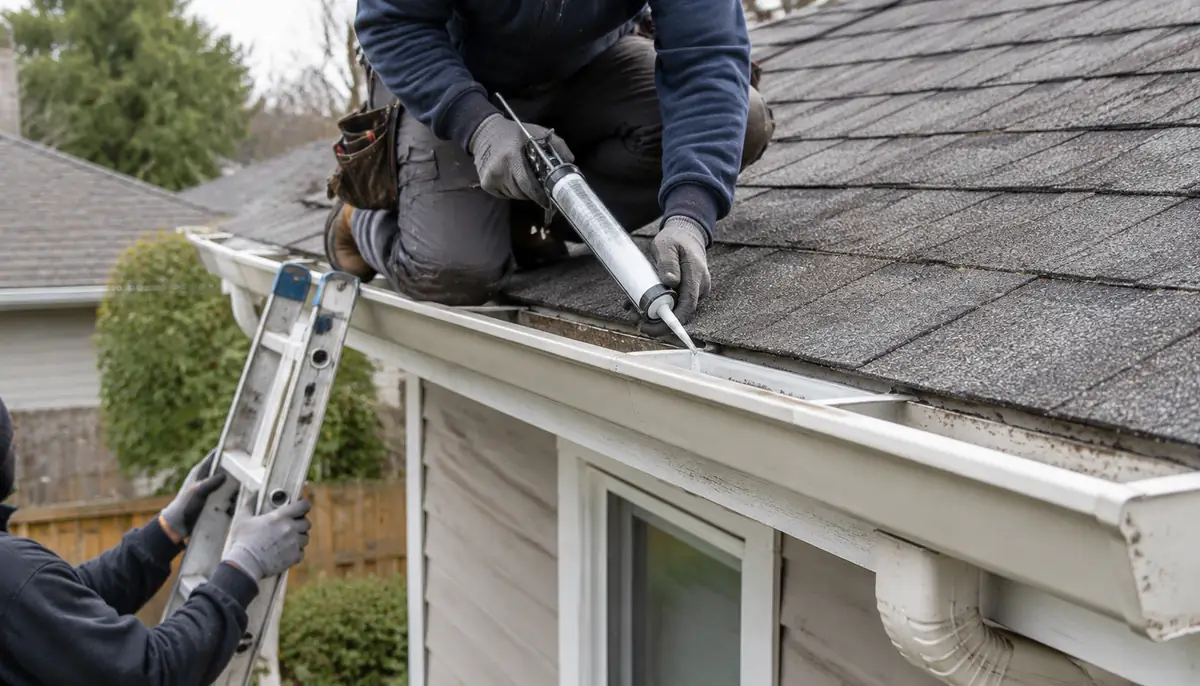
- Run a bead of sealant into the seam, then smooth it with a wet finger or a small tool so it pushes into the gap instead of sitting on top.
- Extend the bead past both ends of the joint, an inch or two, so water cannot creep back in at the edge.
- Let it cure per the label before you test with water. Testing early is how people ruin a good repair.
- Re-secure the hangers while you are up there. A gutter that sags will leak again at the same seam.
For a pinhole or a small crack, clean and dry the area, press flashing tape over it, then seal the tape edges. For a hole bigger than a coin, cut a metal patch from a scrap of matching gutter, bed it in sealant and rivet or screw it down, then seal the perimeter.
What a gutter repair costs
Costs vary by region and by how high the roof is, so treat any number you read online as a starting point and get a local quote.
- DIY seam repair. A tube of quality sealant, a scraper and a brush. This is the cheapest path by a wide margin, and for a single seam it is the right one.
- DIY section replacement. A length of gutter, connectors, hangers and sealant. Still a modest spend, plus an afternoon.
- Hiring a handyman. Priced per job or per hour, usually with a minimum. Good for one or two problem seams on a single-story house.
- Hiring a gutter company. More expensive, but they arrive with the right sealant, the right hangers and insurance. Worth it on a two-story house or a steep roof.
- Full replacement. Priced per linear foot of gutter, plus downspouts and any fascia repair. If more than a few sections are failing, patching is throwing money at a losing battle.
Ask for the quote in writing with the linear footage listed, and ask whether fascia repair is included. That is where surprise charges appear.
Mistakes that turn a small leak into a big one
- Sealing over wet or dirty metal. The number one cause of a repair that fails in a month.
- Using the wrong sealant for the material. Vinyl, aluminum and copper each want something different.
- Ignoring the pitch. Gutters need to slope toward the downspout. If water stands in the channel, the seam will keep opening no matter how well you seal it.
- Patching a rusted-through steel gutter. Once steel is rusting through in one spot, it is thin everywhere.
- Skipping the downspout. A clogged downspout backs water up to the seams and makes them leak. Clear it first, then repair.
- Working off a ladder you have not footed. Set the ladder on firm ground, keep three points of contact, and stay off the top two rungs.
When to call a pro
Call someone if any of these are true.
- The leak is on a second story, or the roof pitch is steep enough that you are not comfortable up there.
- The gutter has pulled away from the fascia, or the fascia itself is soft and rotting.
- The gutter is cracked, split or rusted through in multiple places.
- You have sealed the same seam twice and it still leaks.
- The leak is causing water to enter the basement or pool against the foundation.
A pro will also tell you whether the real problem is the gutter or the roof edge above it, which is worth knowing before you spend another Saturday on a ladder.
Leaky Gutter Repair FAQ
Can I repair a leaking gutter from the ground?
No. Sealant has to go into a clean, dry joint, and you cannot see or reach the seam from below. Telescoping tools exist for clearing debris, but a proper repair means getting up to the gutter safely.
What is the best sealant for a leaking gutter?
A flexible gutter sealant made for the material you have. Silicone is the general-purpose choice, and butyl rubber is better in cold or damp conditions. Avoid rigid patching compounds, which crack as the gutter expands and contracts.
How long does a gutter repair last?
A properly cleaned and sealed seam can hold for years. A repair done over old sealant or a damp surface may fail within a single season. Surface preparation matters more than the brand on the tube.
Should I repair or replace a leaking gutter?
Repair if the leak is at one or two joints and the rest of the run is sound. Replace if the gutter is cracked, heavily rusted, sagging along its length, or more than about two decades old. Check the spec sheet on any new gutter for the material and gauge.
Do I need to fix a small gutter leak right away?
Yes. A small leak soaks the fascia board, which is what the gutter is screwed to, and rotted fascia turns a cheap sealant job into a carpentry job. Water at the foundation is the other reason not to wait.
Thank you for reading!