
Best Gutter Guards for Pine Needles
By: John Ledford | Date Posted: October 26, 2026
Table of Contents
- Why pine needles beat ordinary gutter guards
- What actually works: micro mesh with a solid frame
- How to choose a guard for a pine-heavy roof
- Installing micro mesh guards: step by step
- Tools, materials and what it costs
- Mistakes that clog a new guard
- When to call a pro
- Best Gutter Guards for Pine Needles FAQ[+]
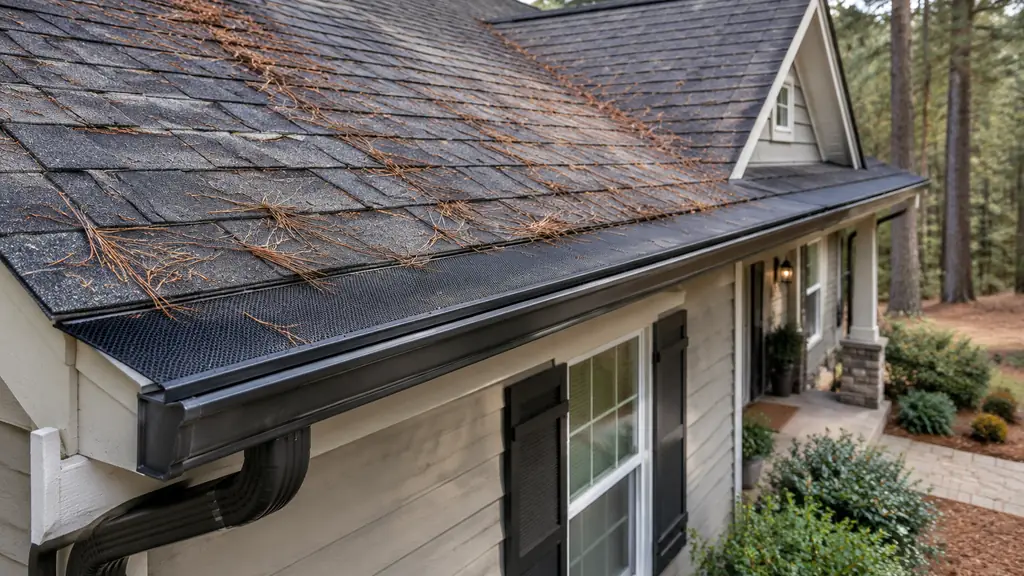
Pine needles are the one debris that defeats most gutter guards. They are thin enough to slip through mesh with wide openings, stiff enough to knit into a mat, and heavy when wet. The guards that work are fine micro mesh panels with a solid frame and a steep, smooth surface, fitted tight to the shingles so needles slide off instead of catching on the lip.
I have cleaned gutters under White Pine and Loblolly Pine on the same property for years, and the difference between a guard that sheds needles and one that turns the gutter into a planter is mostly the mesh size and the fit. Here is what to buy, how to install it, and where the job stops being a weekend project.
Why pine needles beat ordinary gutter guards
A pine needle is a long, slick, tapered leaf. On a screen with wide openings it pokes through, and the barbed end catches. The next needle grabs that one, and within a season you have a woven mat that water rolls straight over.
Reverse-curve guards collect needles on their curved surface, while foam and brush inserts hold them in place and stay wet.
What actually works: micro mesh with a solid frame
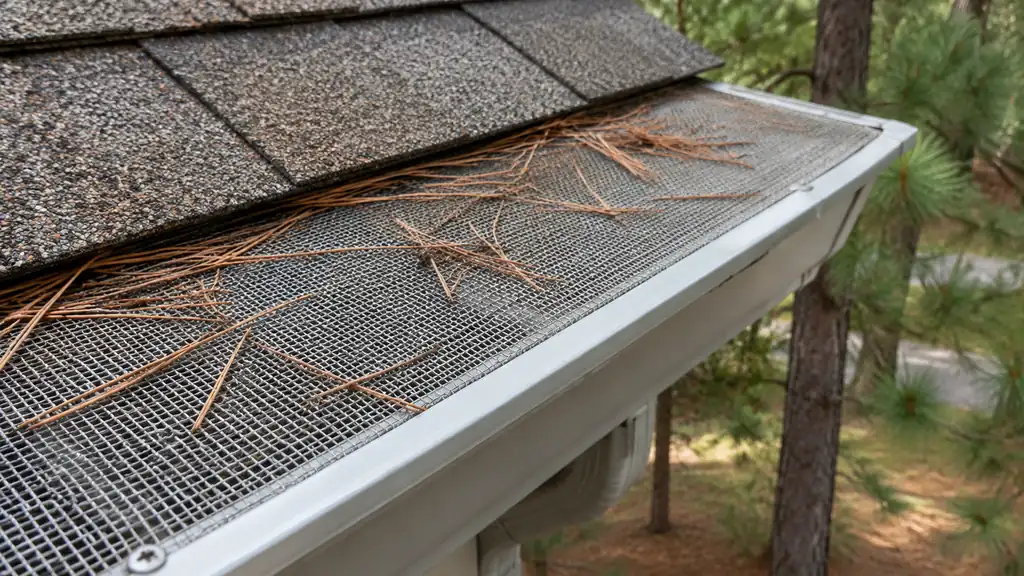
Micro mesh gutter guards for pine needles are the only category I have seen hold up over multiple seasons. The mesh is fine enough that a needle cannot push through, and the panels are stiff enough that they do not sag into the trough under the weight of wet debris.
Check that the mesh opening blocks needle tips, the frame stays flat, and the back edge tucks under the shingles.
Stainless steel mesh outlasts galvanised in wet climates, and it does not rust through where needles sit on it all winter. Powder-coated aluminium frames hold up better than bare steel in coastal states like Oregon and Washington, where salt air and constant damp eat cheap hardware.
How to choose a guard for a pine-heavy roof
Measure the roof pitch and gutter runs, and check the hangers before fitting panels. Plan joints over rafter tails and choose a design with a lift-out section or removable outlet screen. Loose spikes or ferrules need fixing first. The guide to gutter parts explained shows how the assembly fits together.
Installing micro mesh guards: step by step
This is a half-day job on a single-story ranch and a full weekend on a two-story with valleys.
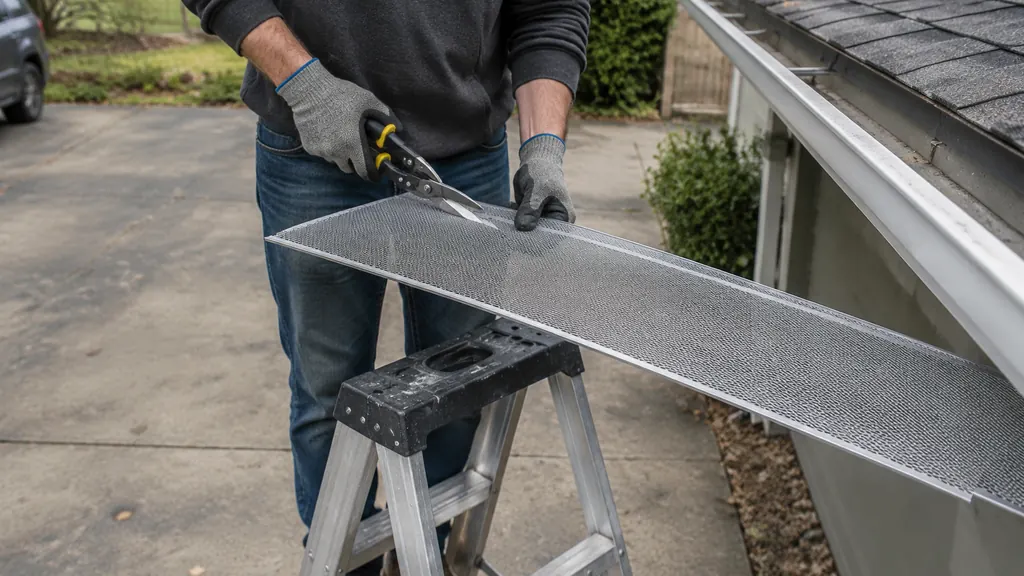
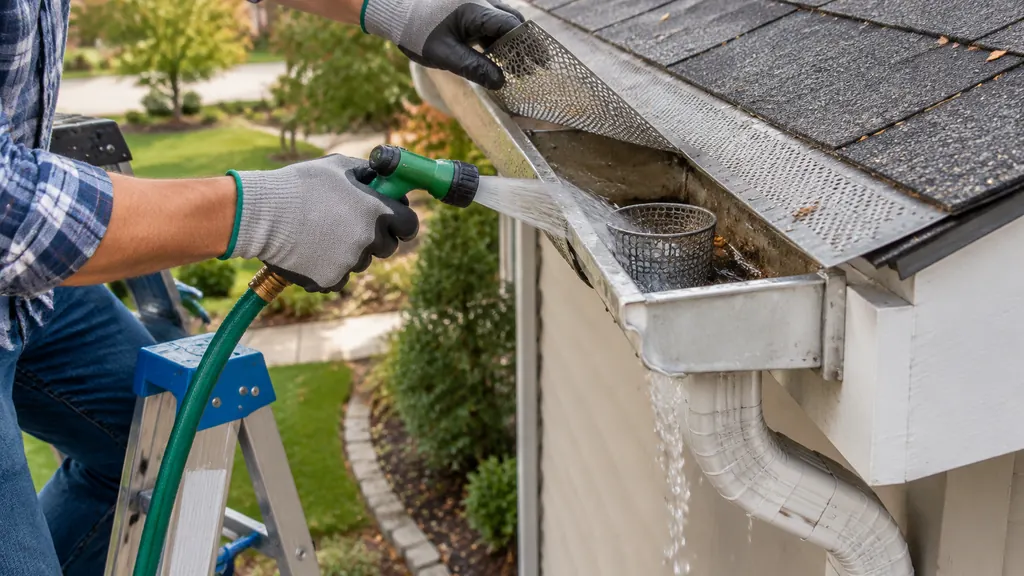
Clear and flush the gutter, check the slope and hangers, then measure and cut the panels. Tuck the back edge under the shingles, fasten the front edge, and fit end caps and removable outlet screens. Test the run with a hose and reseat any panel where water sheets over the mesh.
If a joint still drips after the panels are on, the seam is the problem, not the guard. This piece on gutter seam sealer covers how to clean and seal a joint so it stops weeping.
Tools, materials and what it costs
You need a sturdy stepladder or a ladder standoff, work gloves, tin snips, a tape measure, a pencil, a hose, and a scoop. A cordless drill with a nut driver bit covers the fasteners. Safety glasses matter when you cut mesh, because the snipped ends fly.
Guard prices vary by material, length, and supplier. Stainless micro mesh sits at the top of the range, aluminium mesh in the middle, and plastic panels at the bottom. Get local quotes per linear foot from two suppliers and compare them with the cost of a professional cleaning twice a year.
Buy a few spare clips and end caps with the panels. They are cheap, and you will lose one off a ladder in the leaves at least once.
Mistakes that clog a new guard
A short back edge lets needles enter behind the guard, while a sagging panel can become a dam. Keep the outlet screen removable so it can be rinsed. Finally, do not skip the splash path at the ground. Water leaving a clean gutter still lands at the foundation. Set concrete splash blocks under the outlets so the runoff moves away from the wall instead of soaking the soil against it.
When to call a pro
Call a gutter contractor if your roof is steep, above two stories, or has multiple valleys where panels need custom bends. Working off a ladder at that height with sharp mesh is how people get hurt.
Call one too if the fascia is soft or the hangers are pulling out of rotted wood. A guard screwed to failing fascia will not last a season, and the repair is a carpentry job before it is a gutter job.
And if the downspouts run underground to a dry well or a storm line, have someone check that line before you cover the gutters. A buried line full of pine needles will back up no matter how good the guard is.
Best Gutter Guards for Pine Needles FAQ
Do gutter guards really stop pine needles?
Fine micro mesh stops most needles, but brush the panels and rinse outlet screens after the fall drop and again in spring.
Can pine needles get under the guard?
They can enter through gaps at the back edge, corners, or valleys. Tuck the panel under the shingles and cap cut ends.
Thank you for reading!