
Why Is My Gutter Leaking? Causes by Location
By: John Ledford | Date Posted: October 5, 2026
Table of Contents
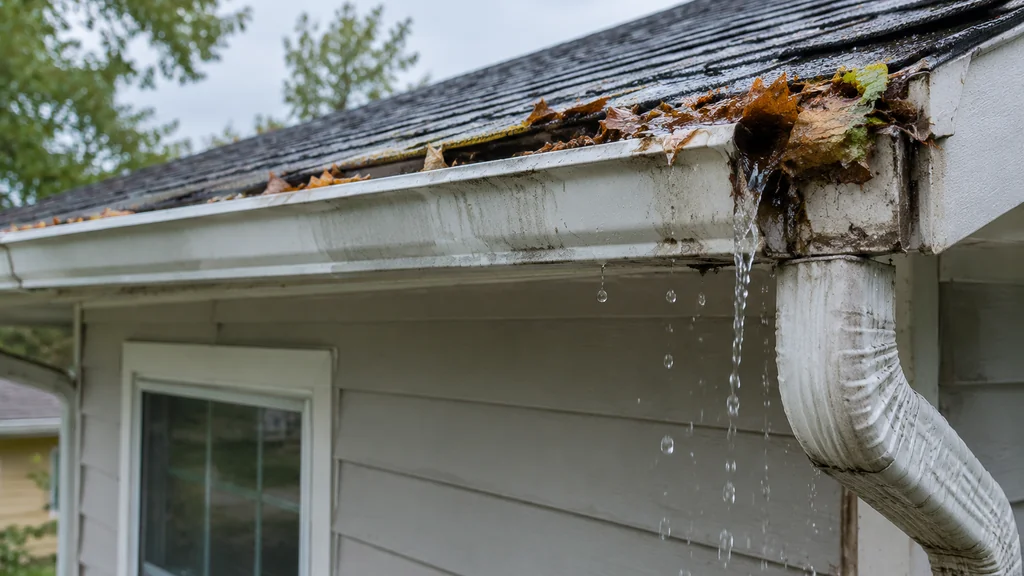
A gutter leaking at a seam and a gutter leaking at an inside corner are usually two different failures, and the repair changes with the spot. Water that shows up under a hanger means the gutter has lost its slope. Water that pours over the front lip during a hard rain means the gutter is blocked or undersized. Find where the drip starts, and you have already solved most of the diagnosis.
Start With Where the Water Actually Shows Up
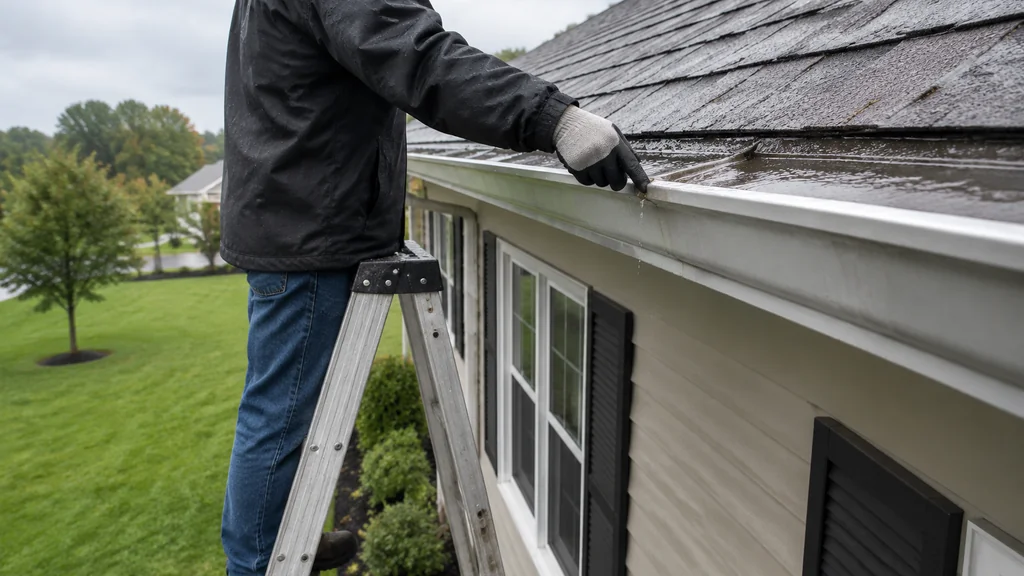
Get on a ladder in dry weather and look, then run a hose into the channel with a helper watching from below. The location of the drip tells you the failure mode before you touch a tool.
- Drip at a seam or joint: the sealant has let go, or the joint was never sealed and relied on a slip fitting.
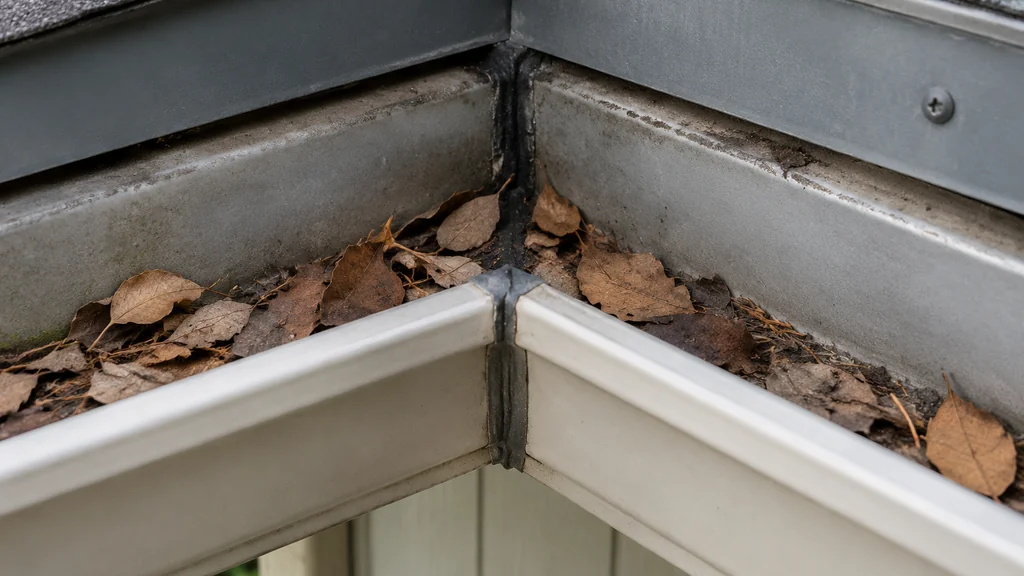
- Drip at a corner, especially where two runs meet: the corner piece has cracked or the miter has opened.
- Drip along the underside of the run, no obvious joint: pinholes or rust-through in the metal, most often on older steel.
- Water running down the fascia behind the gutter: the back edge has lost its tilt or the gutter has pulled away.
- Water sheeting over the front lip during rain only: a blockage or a capacity problem, not a hole.
- Water in the basement or at the foundation: the downspout is discharging too close to the wall.
A leak that only appears in a downpour is a different animal from a leak that drips on a dry afternoon. Note the timing.
Leaks at Seams and Joints
Seams are where most rain gutters leaking complaints start. Two pieces of metal, a bit of movement from thermal cycling, and the sealant film eventually cracks.
Dry the seam completely with a rag, then scrub it with a scouring pad or a wire brush. Sealant will not bond to a wet or dirty surface, and this is the step people skip. Let it dry again.
For an open joint, apply a bead of gutter sealant, the kind that stays flexible, and press it into the joint with a finger or a small putty knife. Silicone products work on metal but pick up dirt; a Butyl rubber or Polyurethane gutter sealant generally holds up better outdoors.
A cleaner repair on a metal gutter is a lap patch. Bed a strip of aluminum or PVC flashing in sealant over the joint, then seal the edges. It looks like a patch, because it is one, and it lasts.
Corner Leaks
Corners take the most stress of any point in the system. A miter joint is two cuts meeting, and every expansion cycle works that joint.
If the corner drips but the metal looks intact, re-seal it as you would a seam and give the sealant a full day to cure before the next rain. If the corner is cracked or the metal is thin, cut the corner out and rivet in a new corner piece. Pop rivets in Aluminum or Stainless steel work fine. Check the spec sheet on the rivet for the material pairing so you do not set up galvanic corrosion between dissimilar metals.
Corners on older steel gutters are where I have found the most rust, and once rust takes a corner the metal has to go.
Hangers, Sag, and Water Running Backwards
When a gutter sags, water pools instead of running to the outlet. Pooled water finds every weak seam, and standing water eventually rusts through the base metal.
Walk the run from the outlet end and sight along the front lip. A steady downhill line toward the downspout is what you want. If the line dips between hangers, the hanger spacing is too wide or the wood behind it has rotted.
Fixing the slope means loosening the hangers, resetting the run, and tightening them again. On a long run that is a two-person job, and it is the step where you will most want a second set of hands. Check the fascia first. If the board is soft when you push a screwdriver into it, the hanger has nothing to bite, and the gutter work is pointless until the fascia is replaced.
End Caps and Outlets
End caps fail in a specific way. The sealant around the cap dries out and shrinks, and the drip appears at the very end of the run.
Re-seal the cap the same way as a seam. If the cap is riveted, drilling the rivets and replacing the cap with a new one is quick. On a run that ends at a wall, check that the cap is not the thing holding water against the siding.
Downspout outlets leak at the point where the tube meets the gutter floor. That connection flexes every time the downspout fills and empties. Clean it, seal it, and if it drips again after one season, replace the outlet.
Blocked Gutters and Water Over the Front
When rain gutters leak only in heavy rain, the hole is usually not a hole at all. The gutter is full, and water is going over the front lip because it has nowhere else to go.
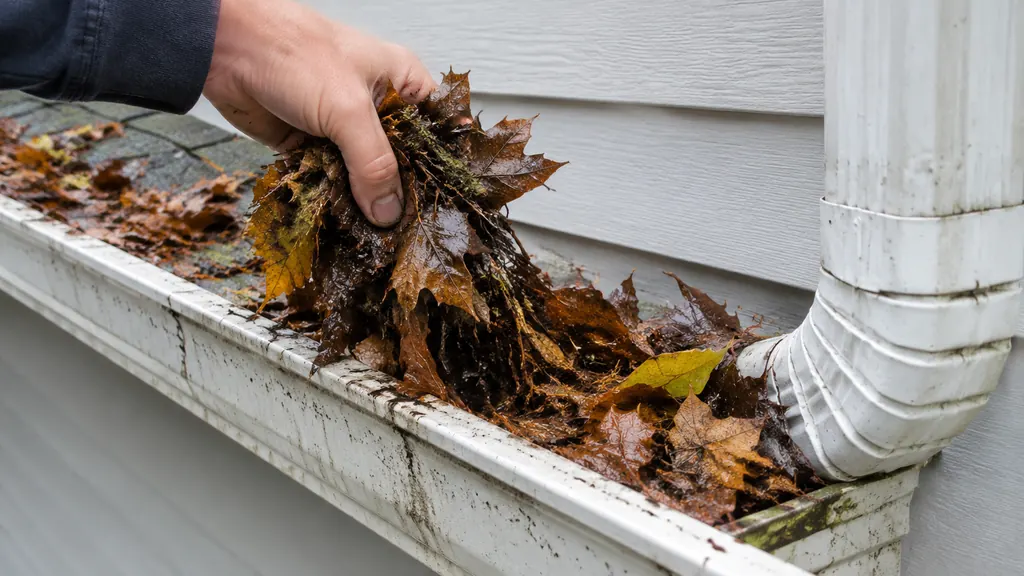
Clear the channel by hand with a scoop or a gloved hand. Do not use a pressure washer at full force on an aluminum run. Debris in the channel is the most common cause I see, followed by a downspout that is clogged at the elbow.
Check that each downspout actually drains. Pour a bucket of water into the gutter near the outlet and watch what comes out at the bottom. If nothing comes out, the blockage is in the tube, and a plumber’s snake or a garden hose with a nozzle works it loose.
If the gutter is clean and the water still sheets over the lip, the run is undersized for the roof area. That is a sizing problem, and adding an outlet or a second downspout is the fix.
Leaks That Come From Somewhere Else
Not every drip at the gutter started there. A roof flashing failure, a missing drip edge, or failed step flashing can send water down the fascia, and it shows up at the gutter line. Look for stain trails on the siding above the gutter before you spend an afternoon on sealant.
The same goes for the ground end. A downspout that discharges right at the foundation puts water into the basement, and homeowners often blame the gutter. Extend the discharge away from the wall, or tie it into a drain line.
When to Call Someone
DIY gutter repair is a ladder job on a one-story house or a low two-story. It becomes a scaffolding job on a steep pitch or a tall wall, and that is where the risk stops being worth the savings. Hire it out.
Call a pro when the fascia or roof sheathing behind the run is rotted, when the gutters need to be re-pitched across a long run with hangers into new wood, or when you find that the entire system is undersized. If the gutter was installed wrong in the first place, patching a seam just buys a season.
Also call when the leak is coming from the roof rather than the gutter. Flashing work on a roof is a different trade and a different insurance conversation.
Gutter Leaking FAQ
Why does my gutter only leak when it rains hard?
A leak that appears only in heavy rain usually means the gutter is blocked or too small for the roof area it serves. Water backs up and spills over the front lip, which looks like a leak. Clear the channel and check that each downspout actually discharges before you blame the metal.
Can I seal a gutter leak from the inside?
You can, and on a small seam it works. Dry the area, clean it, and press sealant into the joint from both the inside and the underside if you can reach it. The outside face is where water sits, so the exterior bead matters more.
Why is my gutter leaking at the corner?
Corners carry the most movement in the system, and the miter joint opens as the metal expands and contracts. Re-seal it if the metal is sound. If the corner is cracked or rusted, cut it out and rivet in a new piece.
How do I know if the leak is the gutter or the roof?
Look above the gutter for stain trails on the siding, rust streaks, or damaged flashing. Roof leaks often track down the fascia and only show up at the gutter line. If the stains start at the roof edge, the gutter is a symptom.
Should I just replace the gutters?
Replace when the metal has rusted through in several places, when the run is sagging and the fascia behind it is soft, or when the system is undersized and adding outlets is not practical. One failed seam on otherwise sound metal is a repair, not a replacement.
Thank you for reading!