
Hiring a Gutter Installer: Sectional vs Custom Seamless
By: John Ledford | Date Posted: November 23, 2026
Table of Contents
- What Sectional and Custom Seamless Gutters Actually Are
- Sectional vs Seamless: The Cost and Lifespan Trade-Off
- How to Hire a Gutter Installation Contractor
- Tools and Skills the Job Demands
- Common Mistakes When You Hire Out Gutter Work
- When to Call a Pro Instead of DIY
- Gutter Installation Contractor FAQ[+]
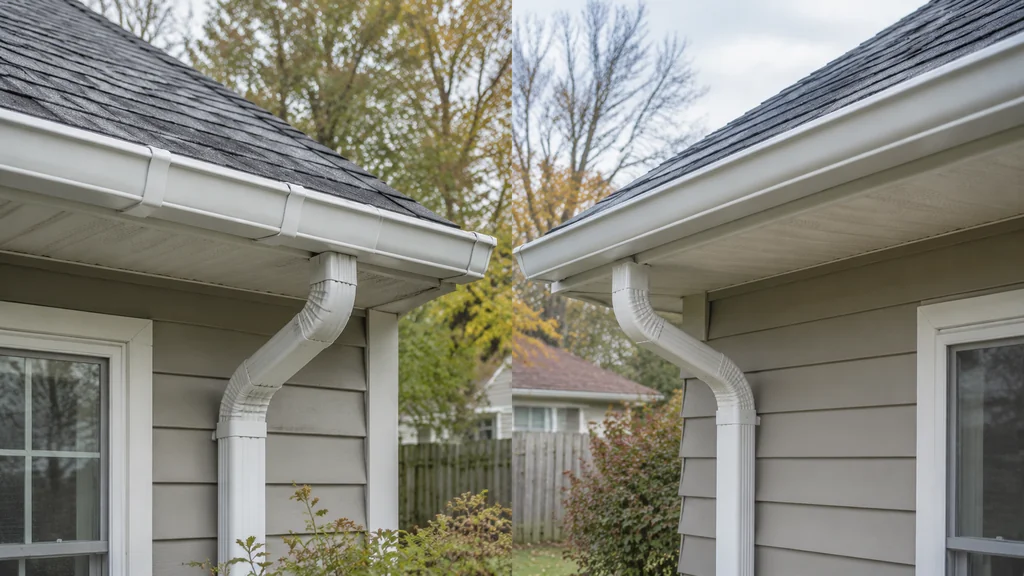
A gutter installation contractor can hang sectional gutters you buy in lengths at a home center, or run custom seamless gutters on site from a coil of metal. Sectional pieces cost less in labor and suit a confident DIYer on a straight run. Seamless gutters cost more up front because the installer brings a forming machine to your driveway, but they cut the number of joints where leaks start.
I have hung both kinds on my own house and on a neighbor’s shed, and the difference shows up in the first hard rain. Here is how to weigh the two, what to ask a gutter installer, and where the job crosses the line from a weekend to a phone call.
What Sectional and Custom Seamless Gutters Actually Are
Sectional gutters arrive as pre-formed lengths, usually PVC or aluminum, and you join them with slip connectors and sealant at every seam. You or a gutter installer cut them to length with a hacksaw or tin snips and fasten them with hangers. The joints are the weak point, and every corner and long run adds one.
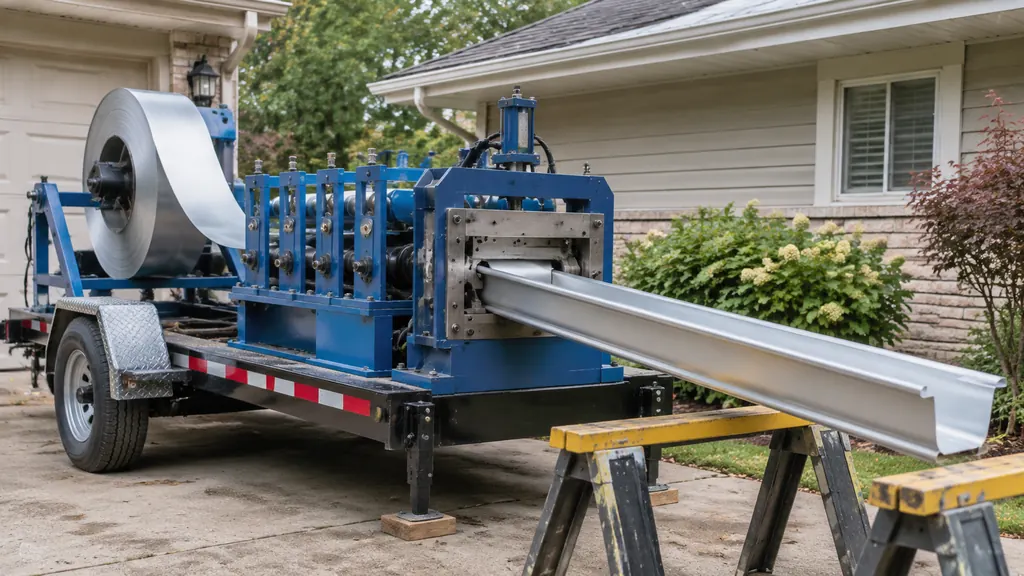
Custom seamless gutters are formed on site. The installer feeds a flat coil of metal through a roll-forming machine that sits on a trailer, and the gutter comes out as one continuous piece cut to the exact length of each wall. Fewer seams means fewer places for water to find a gap.
The material matters as much as the method. PVC is light and easy to cut but sags over long spans in summer heat. Aluminum is the common middle ground, and galvanized steel is heavier and stiffer. Each has a lifespan worth knowing before you commit, and I get into that below.
Sectional vs Seamless: The Cost and Lifespan Trade-Off
Money is where most people start, and the labor split tells the story. According to Bob Vila, labor for sectional gutters runs $2 to $6 per foot, while seamless gutter labor ranges from $3 to $10 per foot. The seamless premium buys the machine, the coil, and the crew’s time to form each run.
Material cost sits on top of labor. Vinyl gutter materials cost about $3 to $6 per linear foot, which makes PVC the budget pick for a shed or a short run you plan to replace. Aluminum and steel cost more per foot, and the installer quotes those by the job.
Lifespan is the other half of the math. Aluminum gutters typically last 20 to 40 years or more, according to This Old House, while galvanized steel gutters generally last two decades. A seamless aluminum run that lasts decades can beat a cheap sectional job you redo twice.
Here is how I think about it. If the run is short, straight, and easy to reach, sectional is fine. If the house has long walls, several corners, and tall eaves, the seamless premium pays back in fewer leaks and less ladder time.
How to Hire a Gutter Installation Contractor
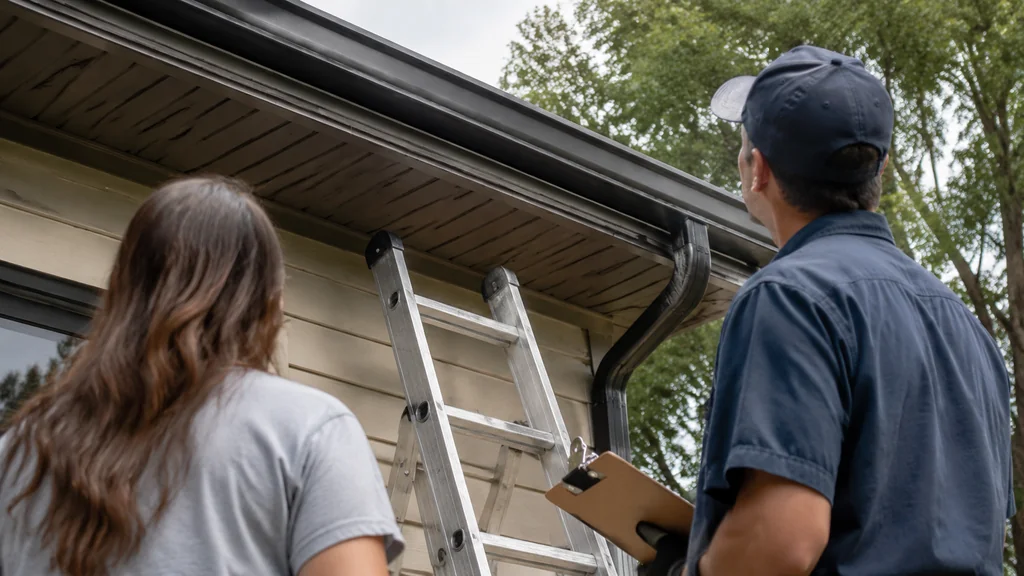
The hiring steps matter more than the material choice, because a bad install leaks whatever you buy. Work through these in order.
- Measure the run yourself first, wall by wall, so you can sanity-check the quote. Our guide to sizing rain gutters for your roof area walks through the catchment math for the common profiles.
- Ask each gutter installer whether they form seamless on site or hang sectional, and get the answer in writing on the quote.
- Request proof of insurance and a license if your state requires one, and check the local rules for permits on downspout tie-ins.
- Get two or three written quotes with the same scope, including hangers, downspouts, and disposal of old material.
- Ask how they handle corners and whether they seal or caulk the end caps, since that is where most callbacks come from.
- Confirm the warranty covers labor and leaks, and how long it runs.
- Schedule the work for dry weather and walk the run with the crew before they leave.
That last walk matters. Run a hose on the roof or wait for rain and watch the downspouts. If water sheets over the back edge, the pitch is wrong and the installer owes you a fix.
Tools and Skills the Job Demands
A sectional job is within reach of a careful DIYer. You need a ladder rated for the height, tin snips or a hacksaw, a drill with the right bits, a level, and gutter sealant. Hangers go into the fascia, so a stud finder or a quick probe helps you hit solid wood.
Seamless is a different animal. The roll-forming machine is the installer’s capital equipment, and you cannot rent the skill that comes with it. What you can do is prepare the site, clear the old gutter, and make sure the crew can reach every wall.
The profile choice affects the tools too. K-style and half-round take different hangers and outlets, and our comparison of K-style vs half-round gutters covers which profile suits which roof. Pick the profile before you price hangers, because the brackets are not interchangeable.
If a joint does leak after the install, a tube of sealant and a dry afternoon fix most of it. Our walkthrough on how to fix a leaky gutter yourself covers the cleanup and the patch, and it is the same repair whether the gutter is sectional or seamless.
Common Mistakes When You Hire Out Gutter Work
The biggest mistake is comparing quotes that cover different scopes. One contractor prices hangers every couple of feet, another spaces them wider, and the cheap quote looks better until the gutter sags. Ask for the hanger spacing and the downspout count on every bid.
The second mistake is skipping the pitch check. Gutters need a slight slope toward the downspout, and a crew in a hurry can hang a run dead level. Water pools, mosquitoes breed, and the fascia rots from the back. Watch the install or check it with a level after.
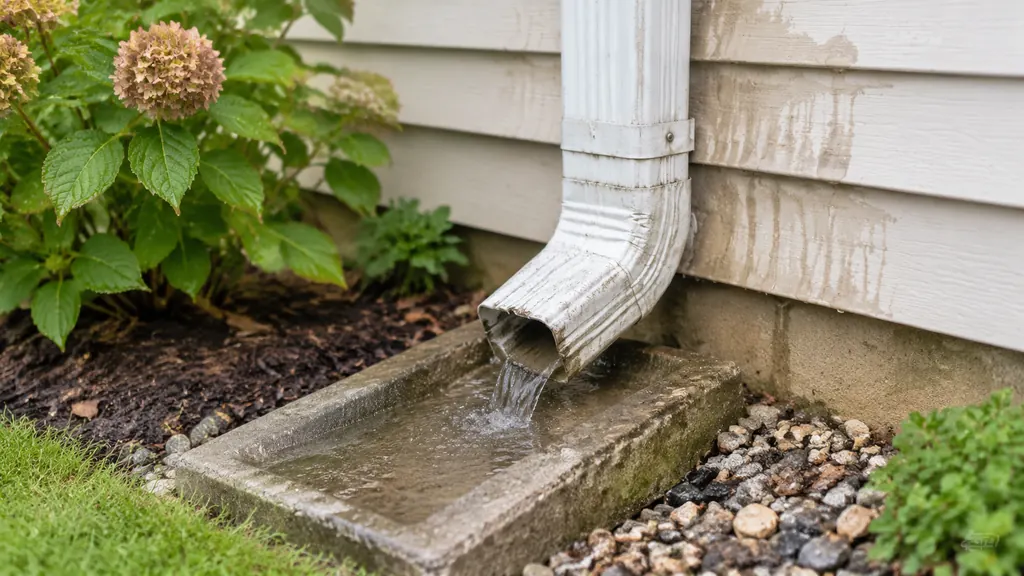
The third is ignoring the downspout exit. A gutter that dumps water at the foundation undoes the whole point. Ask where the water goes and whether the installer extends the downspout away from the wall.
The fourth is paying in full up front. A deposit is normal, but hold back the balance until you have watched the run in rain. That single habit catches most problems while the crew is still motivated to return.
When to Call a Pro Instead of DIY
Call a pro when the roof pitch is steep, the house is two stories or more, or the run has multiple inside and outside corners. Ladder work at height is where DIY gutter jobs turn into hospital visits, and no saved labor is worth that.
Call a pro for seamless, full stop. The machine and the coil are the trade, and a homeowner cannot form a continuous run in the driveway. If you want seamless, you are hiring, and the quote should say so plainly.
Call a pro if the fascia is soft or the old gutter pulled loose. Rotted fascia means the hangers have nothing to bite, and that repair comes before any new gutter goes up. A good installer will flag it on the estimate.
Call a pro if your local rules require a permit for the downspout tie-in or if the run drains to a storm sewer. The rules vary by town, and a licensed installer knows the local code. Ask before you sign, and get the permit question answered in writing.
Gutter Installation Contractor FAQ
Is seamless gutter worth the extra cost over sectional?
Seamless gutters cost more in labor, at $3 to $10 per foot versus $2 to $6 per foot for sectional, but they eliminate the seams where leaks start. On a long run with several corners, the seamless premium usually pays back over the life of the gutter.
How long do aluminum and steel gutters last?
Aluminum gutters typically last 20 to 40 years or more, while galvanized steel gutters generally last two decades. The lifespan depends on climate, maintenance, and whether the hangers keep the run tight to the fascia.
Can I install sectional gutters myself?
Yes, if the run is short, straight, and reachable from a stable ladder. You need snips, a drill, a level, hangers, and sealant, and you should check the local rules for downspout discharge before you start.
Do I need a permit to install gutters?
Permit rules vary by town, and many places do not require one for a simple gutter replacement. Downspout tie-ins to a storm sewer often do, so ask your local building department before the crew starts.
What should a gutter installation quote include?
A complete quote lists the material, the profile, hanger spacing, downspout count and placement, disposal of the old gutter, and the labor warranty. Ask for the hanger spacing in writing, because wide spacing lets the run sag.
Thank you for reading!