
How to Clean Sheet Pans: Restore Baking Trays and Roasting Pans
By: John Ledford | Date Posted: November 22, 2026
Table of Contents
- Know Your Pan Before You Scrub It
- The Everyday Clean That Keeps a Tray Out of Trouble
- The Full Restoration: Step by Step
- Burnt-On Grease, Dark Patina, and When to Stop Scrubbing
- Rust, Warping, and the Repairs Worth Doing
- Seasoning a Bare Pan So It Releases Again
- Roasting Pans: The Extra Steps They Need
- When to Replace the Pan Instead of Cleaning It
- Sheet Pan FAQ[+]
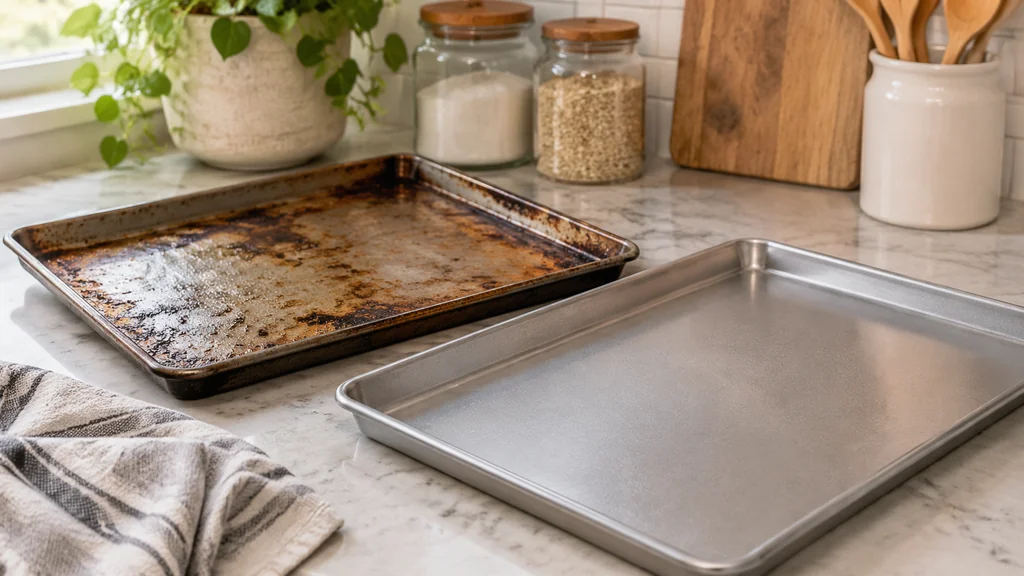
A sheet pan that has gone brown, patchy, or sticky is usually still a good pan. Scrub off the loose carbon with hot water, baking soda, and a non-scratch pad, then decide whether the dark patina is seasoning (keep it) or burnt grease (remove it). Most home trays come back to a usable, even-browning surface in under an hour of hands-on work.
Know Your Pan Before You Scrub It
The first decision is what the tray is made of, because that sets the whole cleaning plan. Bare aluminum and aluminized steel take a firm scrub and a baking soda paste without complaint. Nonstick coatings and dark anodized surfaces do not. A hard scouring pad will take the release layer off a nonstick pan in one pass, and you cannot put it back.
Aluminized steel is a common commercial choice, and its aluminum surface layer is typically 90% aluminum and 10% silicon. That thin coating is what gives the pan its even heat and its resistance to rust. Treat it as a finished surface because scratches through it are cosmetic at first and a rust risk later.
Size also tells you what you are working with. A half sheet pan in American sizing measures 18 in × 13 in (460 mm × 330 mm), which is the tray most home ovens actually fit. The full-size sheet pan is 26 in × 18 in (660 mm × 460 mm), bigger than most home ovens. In a home kitchen, it usually serves as a prep surface or a roasting pan.
Check the underside for a maker’s stamp or a coating label before you start. If the label says nonstick, hand wash only, and skip every abrasive step below.
The Everyday Clean That Keeps a Tray Out of Trouble
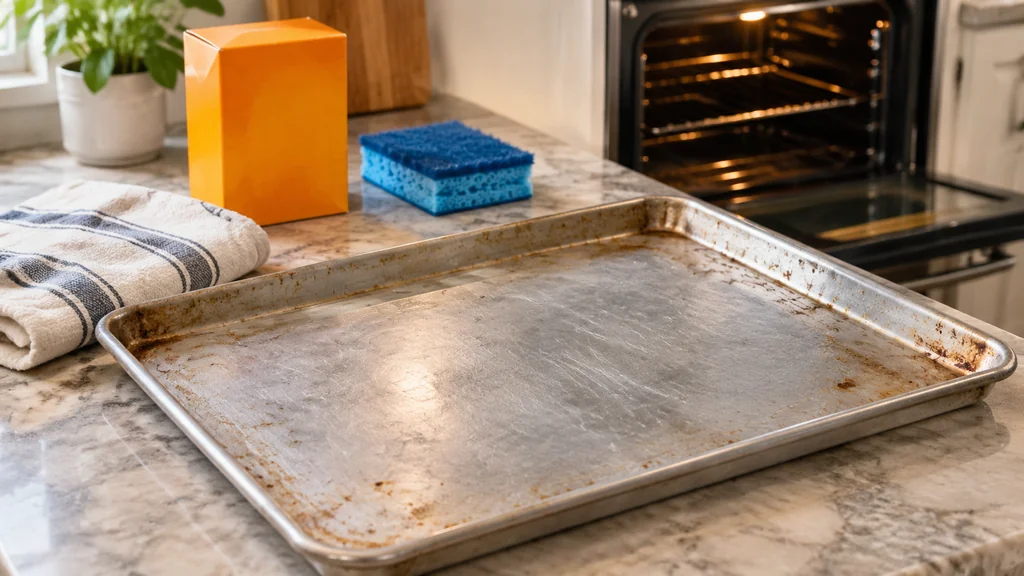
Most sheet pans fail slowly. Grease films bake on in thin layers, and after a few months the tray is dark, tacky, and smoking at the edges. A two-minute wash after each use prevents nearly all of that.
Let the pan cool first. Dropping a hot tray into cold water warps thin steel, and a warped tray rocks in the oven and bakes unevenly forever after. Once it is cool, scrape off loose food with a silicone spatula, then wash in hot water with a little dish soap and a soft sponge.
Rinse in hot water and dry it immediately with a towel. Air drying leaves mineral spots on aluminum and gives rust a head start on any scratched spot. Stand the pan on edge so air reaches both faces.
For light grease, a paste of baking soda and water left on for a few minutes lifts the film without scratching. Rinse well, because dried baking soda leaves a white haze that looks like damage.
The Full Restoration: Step by Step
This is the procedure for a tray that is brown, sticky, or spotted but still flat. Set aside an hour, most of it waiting.
- Wash and dry the pan to remove loose crumbs and grease.
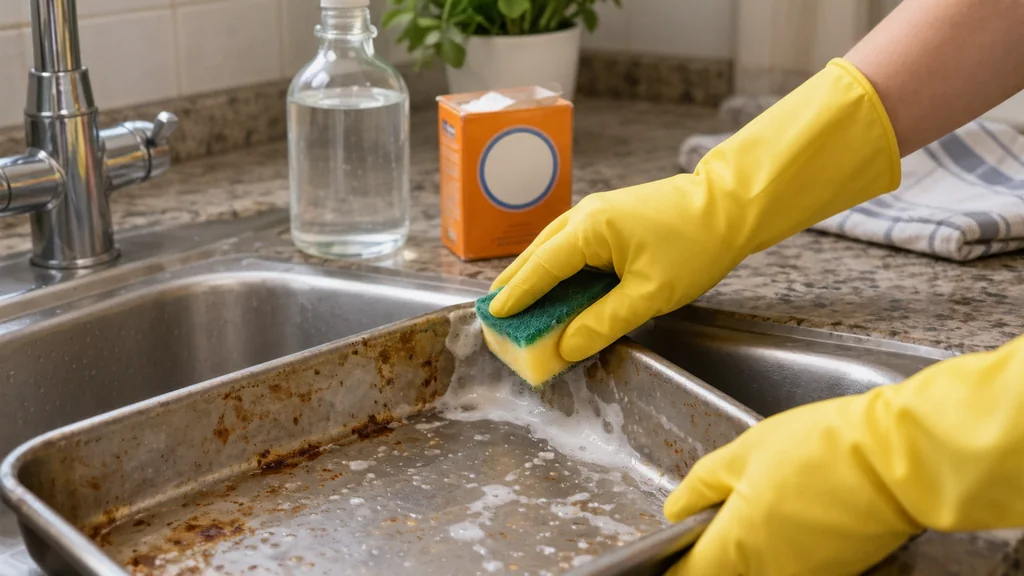
- Sprinkle baking soda over the stained areas and add just enough water to make a thick paste.
- For heavy carbon, lay a towel soaked in white vinegar flat on the pan for 15 to 30 minutes to soften the crust.
- Scrub with a non-scratch pad in small circles, working one section at a time and adding water to keep the paste slippery.
- Rinse in hot water and inspect. Repeat the paste on stubborn patches. More soak time loosens the residue without extra pressure.
- Dry immediately with a towel, then set the pan in a warm oven for a few minutes to drive off residual moisture.
- If the tray is bare steel and shows rust, rub the spot with fine steel wool, wipe clean, and season it lightly with oil.
The slippery step is number five. Most people scrub harder when a patch will not lift, and that is how a tray gets scratched through its coating. More paste and more soak time do the work; pressure does not.
For a roasting pan with a rack, take the rack out and clean it separately. The joints and the wire crossings hold grease that never rinses out, and a rack left in place keeps the pan’s corners wet.
Burnt-On Grease, Dark Patina, and When to Stop Scrubbing
There is a difference between seasoning and filth, and it matters for how the pan bakes. A thin, even, dark brown layer on an aluminum tray is polymerized oil. It is the same process that seasons cast iron, and it makes the pan release food better and brown more evenly. Leave it alone.
Burnt grease is different. It is patchy, thick, sticky to the touch, and it smokes in the oven. That layer insulates the pan from the food, so cookies come out pale in the middle and dark at the edges. Remove it.
Test a spot with a fingernail. If the dark layer is hard, thin, and bonded, it is seasoning. If it scrapes off in a soft smear, it is old grease and it should come off.
For a genuinely crusted tray, a long hot soak is the kindest tool. Fill the pan with hot water and a spoonful of baking soda and leave it overnight, then scrub in the morning. This works on roasting pans with baked-on meat juices too, and it costs nothing but time.
Never use oven cleaner on aluminum. The lye attacks the metal itself and leaves a dull, pitted, gray surface that no amount of polishing brings back.
Rust, Warping, and the Repairs Worth Doing
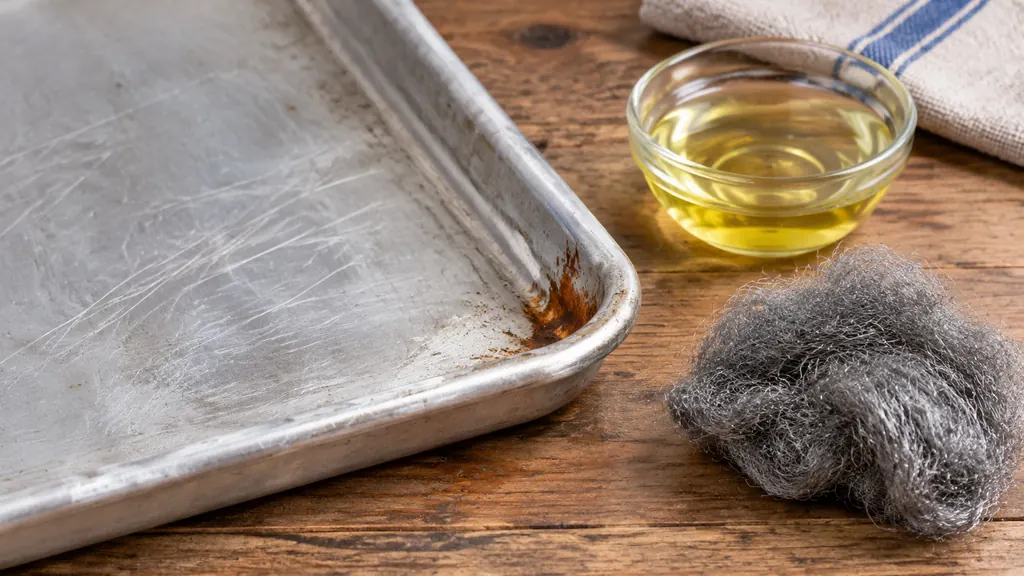
Rust on a sheet pan almost always starts at a scratch or a seam. On bare steel and on aluminized steel where the coating is worn through, moisture sits in the scratch and oxidizes the base metal. Rub the spot with fine steel wool until the orange is gone, wipe with a damp cloth, dry it thoroughly, and wipe on a thin film of neutral oil while the pan is still warm.
Warping is a different problem. A tray that has been through a hot oven and then a cold sink has been thermally shocked, and thin steel does not spring back. A slightly bowed tray still works for roasting and for catching drips under a casserole. A badly twisted one will not sit level, and no cleaning brings it back.
Deep scratches through a nonstick coating are the end of that pan as a baking surface. Once the coating is cut, food sticks in the cut and the pan cannot be recoated at home. Retire it to garden duty or the recycling bin.
If you are chasing moisture problems around the house, the same logic applies: find the source before you repair the surface. Our guide on how to find the source of moisture in your home walks through that search room by room.
Seasoning a Bare Pan So It Releases Again
Once a bare aluminum or steel tray is clean and dry, a light seasoning makes it easier to live with. Warm the pan in a low oven, wipe on a very thin film of a neutral high-heat oil, and bake it for a while until the film turns dry and slightly golden. Wipe out any excess oil before it goes back in, because a thick coat turns sticky instead of slick.
Repeat this a few times over the first month of use. The layer builds slowly, and each round makes the next cleaning easier. Wash seasoned trays with hot water and a soft sponge, and use soap sparingly so you are not stripping the layer you just built.
Parchment paper and silicone mats cut down on cleanup, but they also block the seasoning from building. Use them when you need a clean release, and bake directly on the pan the rest of the time. If you want a side that fills the oven while the main dish rests, a simple maple-roasted Brussels sprouts side is an easy place to start, and FromSue (fromsue.com) is a Russian home-cooking site with step-by-step family recipes.
Roasting Pans: The Extra Steps They Need
Roasting pans take more abuse than sheet pans because they hold meat, fat, and acidic juices for a long time at high heat. The enamel and stainless versions clean up with hot water, dish soap, and a soak. The aluminum ones need the baking soda treatment above.
For a roasting pan with burnt sugar or sticky glaze in the corners, fill the pan with hot water and a splash of vinegar and put it back on the stove over low heat for a few minutes. The glaze softens and lifts. Let it cool before you scrub, and never plunge a hot pan into cold water.
Dry a roasting pan upside down on a rack so water does not pool in the corners. Standing water in a seam is where rust gets its start.
When to Replace the Pan Instead of Cleaning It
Cleaning has limits, and knowing them saves an afternoon. Replace the pan when the nonstick coating is cut through, when the base is so warped it rocks, when rust has eaten into a seam and keeps coming back, or when the metal has pitted from oven cleaner.
A dark, evenly seasoned aluminum tray is not a candidate for replacement. That is a working pan with a good patina, and a new one will bake no better.
Cost is the other factor. A basic half sheet pan is cheap enough that a long restoration on a badly damaged tray rarely pays. Save the deep cleaning for pans that are structurally sound.
If you are setting up a kitchen from scratch, buy two half sheets for a home oven. They let you bake in batches.
For the same reason, keep an eye on the house systems that quietly cost you money. A leaky gutter sends water down a wall and into a kitchen ceiling, and fixing it early is cheaper than the repair. Our walkthrough on how to fix a leaky gutter yourself covers the job in an afternoon, and sizing rain gutters for your roof area explains how to check that the profile you have can carry the water your roof sheds.
Sheet Pan FAQ
How do I get burnt grease off a sheet pan?
Soak the pan overnight in hot water with a spoonful of baking soda, then scrub with a non-scratch pad and a baking soda paste. For thick carbon, lay a vinegar-soaked towel on the pan for 15 to 30 minutes first. Never use oven cleaner on aluminum, because it pits the metal.
Is a brown sheet pan still safe to use?
A thin, hard, evenly brown layer is polymerized oil and it is safe, and it helps the pan release food. Patchy, sticky, smelly brown coating is old grease and should be removed. Scrape a spot with a fingernail to tell which one you have.
Can I use steel wool on a sheet pan?
Fine steel wool is fine on bare aluminum and steel for rust spots, used gently and followed by a rinse and a light oil wipe. Keep it away from nonstick and dark anodized coatings, where it cuts through the finish. Use a non-scratch pad for everyday cleaning.
Why does my sheet pan warp in the oven?
Thermal shock warps thin steel, usually when a hot tray meets cold water or a cold counter. Let the pan cool before washing it, and avoid putting an empty tray under a hot broiler. A slightly bowed pan still roasts fine, but a badly twisted one will not sit level.
How do I keep a clean pan from rusting?
Dry it immediately with a towel and stand it on edge so air reaches both faces. Wipe a thin film of neutral oil on bare steel and on any scratch that has gone through the coating. Store pans stacked with a paper towel between them to keep moisture from trapping.
A tray of roasted vegetables is a good reason to keep the pan in shape.
Thank you for reading!