
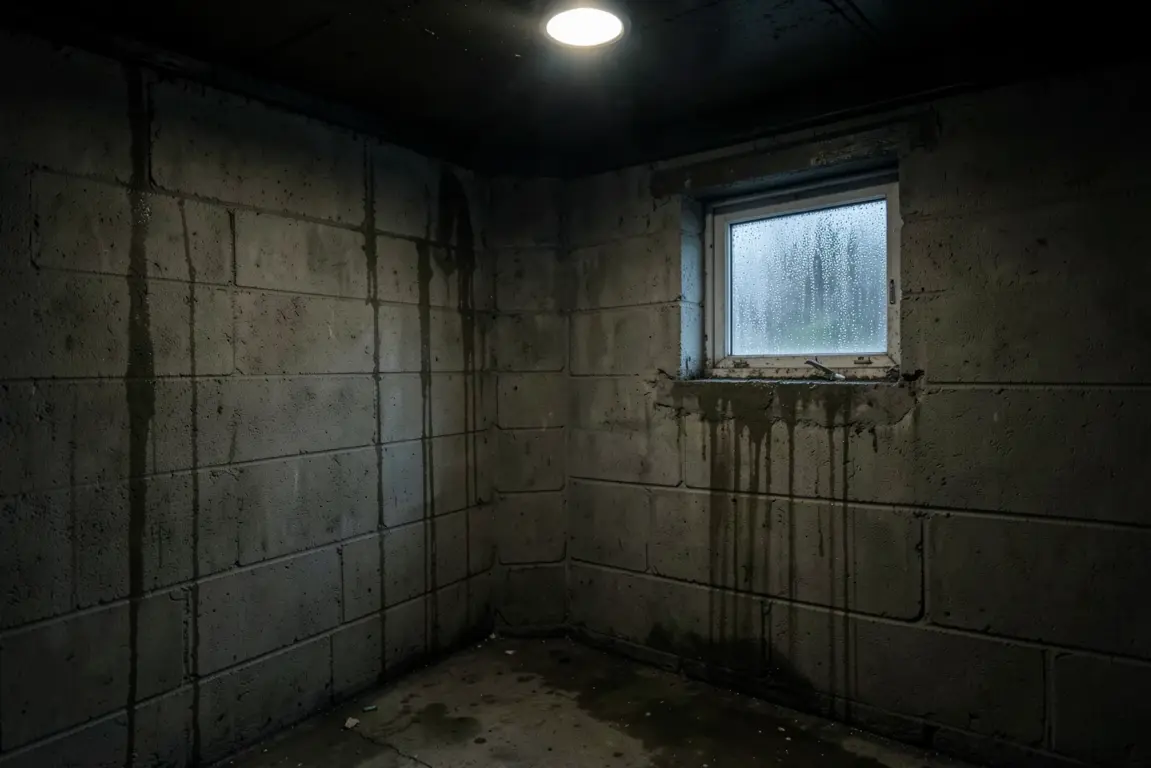
Why Does My House Smell Musty After Rain? 8 Causes and Fixes
By: John Ledford | Date Posted: June 30, 2026
Table of Contents
- How to Trace the Smell (Do This First)
- The 8 Most Common Causes (and Their Fixes)[+]
- Products That Actually Help
- Prevention: Stop It Before the Next Rain
- Not Just Musty? Other Rain-Triggered Smells[+]
- Frequently Asked Questions[+]
- Why does my house only smell musty during or right after rain, but not otherwise?
- Is the musty smell after rain dangerous?
- How do I know if the musty smell is mold or just damp soil?
- Can an air purifier get rid of the musty smell after rain?
- How long does it take to get rid of the musty smell once you’ve fixed the source?
Updated June 2026. A musty smell after rain usually means moisture is getting somewhere it shouldn’t — roof, walls, basement, or crawl space. The smell itself comes from mold spores or actinobacteria (a soil bacteria that activates in damp conditions and smells distinctly earthy) triggered by rising humidity. Here are the 8 most common causes and what actually fixes each one.
I had this exact problem last autumn after a run of heavy rains. The house started smelling like a damp cellar within 20 minutes of a downpour. Took me three separate afternoons of sniffing around before I found the real source — a cracked foundation joint near a basement window. This guide is what I wish I’d had on day one.
How to Trace the Smell (Do This First)
Before blaming anything specific, do a quick sniff-test walkthrough. Close all windows and doors, run the HVAC on fan-only for 5 minutes to circulate air, then turn it off. Wait 10 minutes. Now walk through the house slowly and note where the smell is strongest.
- Strongest near floor level? Basement, crawl space, or slab issue.
- Smell hits when HVAC turns on? Ductwork or drain pan is the culprit.
- Worse near one wall? Window seal failure or blocked gutter outside that wall.
- Comes from the ceiling or upstairs? Roof leak or attic condensation.
- Smell fades after 30–60 min indoors? Likely a ground-level source (soil bacteria), not active mold.
Write down where it’s worst. That narrows the list below to 2–3 candidates instead of 8.
The 8 Most Common Causes (and Their Fixes)
1. Poor Basement Waterproofing
This is the single most common source. When it rains, hydrostatic pressure forces water through tiny cracks in the basement walls or floor slab. You don’t always see standing water — often it’s just damp concrete and humid air that smells like wet soil within minutes of rain starting.
How to identify it: White mineral staining (efflorescence) on the lower half of basement walls is a dead giveaway. Run your hand along the base of the wall after rain — if it feels cold and slightly damp, water is seeping through. The smell concentrates near the floor.
DIY fix: Clean the affected area with a stiff brush and dry it thoroughly. Apply hydraulic cement to any visible cracks (DryLok Fast Plug works well — about $15 a tub). Then coat the entire wall surface with a masonry waterproofer like DryLok Extreme or RadonSeal. Two coats, let each dry 24 hours. Cost: $60–$120 for a standard basement.
Call a pro when: Water is coming up through the floor rather than the walls, or you have significant horizontal cracking (a structural signal). Interior French drains with a sump pump are a bigger job but fix it permanently — budget $3,000–$8,000.
2. Leaking Roof or Attic Condensation
Rain-triggered musty smells that are strongest upstairs or in rooms directly below the attic usually point here. A slow roof leak doesn’t always create visible ceiling stains immediately — water can travel along rafters for weeks before dripping.
How to identify it: Go into the attic during or just after rain with a flashlight. Look for dark staining on the sheathing, damp insulation (it clumps together), or actual water drips along rafters. If attic insulation is wet, you’ll smell it the moment you open the hatch.
DIY fix: Minor flashing issues around vents or chimneys can be resealed with roofing caulk (Geocel 2300 is reliable). Also check that attic ventilation is adequate — soffit vents blocked by insulation trap humid air and cause condensation even without a leak. Clear them and add a ridge vent if there isn’t one.
Call a pro when: You can’t identify the leak source, sheathing is blackened (active mold growth), or the insulation is saturated. Roofing repairs average $300–$1,500 depending on scope.
3. Window Seal Failure
Older double-pane windows lose their edge seal over time. When it rains, water can wick between the panes or seep past the exterior frame where caulk has cracked and shrunk. The moisture sits in the wall cavity right there and grows mold quietly.
How to identify it: Stand close to each window during or after rain. A localized musty smell that’s noticeably stronger near one or two windows is a strong indicator. Also look for fogging between panes (the seal is gone) or visible gaps in the exterior caulk line.
DIY fix: Recaulk the exterior window frame with a silicone-based exterior caulk (GE Supreme Silicone lasts longer than acrylic latex — about $8 a tube). If the wall cavity already got wet, you’ll need to pull the interior trim to dry it and treat with a mold-inhibiting spray before reclosing.
Call a pro when: The fogging is between panes — that window unit needs replacement. Double-pane window replacement runs $300–$700 per window installed.
4. Foundation Cracks
Hairline cracks in poured concrete or mortar joints in block foundations are entry points for ground water during heavy rain. The smell tends to be earthy and strongest in the corner of the basement or against the foundation wall.
How to identify it: After rain, run a dry paper towel along foundation cracks. If it picks up moisture or goes visibly wet, water is actively seeping. Vertical hairline cracks are common and often DIY-fixable. Horizontal or stair-step cracks can signal structural movement — those need professional evaluation.
DIY fix: Inject epoxy or polyurethane foam into vertical cracks (Simpson Strong-Tie makes a good DIY crack injection kit for about $40). Polyurethane foam is flexible and handles minor movement better than rigid epoxy. Clean the crack, inject from the bottom up, cap it off.
Call a pro when: You see horizontal cracking, bowing walls, or gaps at the top where the wall meets the sill plate. These are structural issues.
5. Blocked Gutters Causing Wall Saturation
This one surprises people. When gutters clog, rainwater overflows along the roofline and runs down the exterior wall instead of being channeled away. Brick and siding absorb that water, and eventually it migrates inward — especially around window frames and where wall meets foundation.
How to identify it: Stand outside during rain and watch where the water goes. If it’s sheeting over the gutter edge rather than flowing through the downspout, you’ve found it. Also check that downspouts discharge at least 6 feet from the foundation — if the extension is missing, water pools right against the house.
DIY fix: Clean gutters twice a year (spring and late autumn after leaves fall). Add downspout extensions if needed — a $15 plastic extension beats $300 of interior waterproofing any day. For persistent overflow, gutter guards (LeafGuard style) reduce maintenance significantly.
Call a pro when: The wall cavity is already saturated. At that point you need the wall dried out professionally before mold sets in.
6. HVAC Spreading Moisture
Air conditioning systems produce condensate as they cool the air. The condensate drain pan under the evaporator coil sits in a dark, humid space — perfect conditions for mold and mildew. When it rains and humidity spikes outside, AC units work harder, produce more condensate, and if the drain pan or drip line is even slightly clogged, you get stagnant water and that musty smell every time the system kicks on.
How to identify it: The smell arrives noticeably through the vents rather than having a room-specific source. Turn the system to fan-only mode for 10 minutes. If the smell increases when the fan runs but wasn’t there before, the duct system or drain pan is the source.
DIY fix: Pour a cup of diluted bleach (1:16 ratio) or white vinegar into the condensate drain line access port (usually a T-shaped PVC fitting near the air handler) once a month during cooling season. Clean the drain pan if you can access it — a shop vac pulls out standing water easily. Replace the air filter if it’s overdue; a clogged filter reduces airflow and lets coils stay wet longer.
Call a pro when: The drain pan has rust, cracks, or standing water that doesn’t clear after cleaning the line. A clogged evaporator coil needs professional cleaning.
7. Old Carpets Absorbing Humidity
Carpet padding is a humidity sponge. In older carpets — anything more than 8–10 years old — the padding has likely absorbed enough moisture over time that it never fully dries out between rain events. The smell is distinctly sour or musty and strongest when you walk across the carpet or when the room warms up after rain.
How to identify it: Get close to the carpet, ideally sniff at the edge where it meets the wall. Old carpet smell is distinctive — it’s flat, slightly sour. You can also do the “lift test”: pull up a corner and smell the padding directly.
DIY fix: For surface mildew, sprinkle baking soda generously, leave it 30 minutes, then vacuum. Spray lightly with white vinegar solution (1:1 with water) and let it air dry fully — fans help a lot. Odor neutralizers like Zep Carpet Shampoo or Rocco & Roxie enzyme spray break down the actual bacteria rather than just masking the smell.
Call a pro when: The smell returns within a week of cleaning, or the padding is visibly stained black underneath. At that point, replacement is the only real fix. New carpet + fresh padding runs $3–$8 per square foot installed.
8. Plumbing Condensation or Minor Leak
Cold-water pipes sweat heavily when warm, humid rain-air meets them — especially in basements and crawl spaces. That condensation drips onto insulation, wood joists, or the floor, creating exactly the dark, damp conditions that breed musty odor. A slow drip from a supply line fitting is even worse and can go unnoticed for months.
How to identify it: Feel along cold-water pipes in the basement after rain. If the pipe feels wet to the touch and you can see drips or water staining directly below it, that’s condensation. Check pipe fittings and shut-off valves for any actual drips — even a very slow one leaves a mineral ring on whatever it drips onto.
DIY fix: Wrap cold-water pipes in foam pipe insulation (about $0.50 per linear foot at any hardware store) to prevent sweating. For actual leaks at fittings, turn off the water, dry the joint, and apply a plumber’s epoxy stick or replace the fitting entirely if it’s a compression-type connection.
Call a pro when: The leak is on a supply line inside the wall, or you find evidence of long-term water damage (rotted wood, black mold on joists). Scope first — a plumber’s inspection costs $75–$150 and is worth it before opening walls.
Products That Actually Help
Fixing the source is always step one. But while you’re working on it — or after repairs are done — these products address the residual moisture and smell:
Dehumidifiers (the most effective tool): For basements and crawl spaces, a high-capacity unit is worth the investment. The Frigidaire FFAD5033W1 (50-pint) handles up to 4,500 sq ft and has a continuous drain option so you don’t empty the bucket every day — around $250. If you want something quieter for a living space, the hOmeLabs 4,500 Sq Ft Energy Star unit is solid at $180 and has more user-friendly controls. Run the dehumidifier until you’re consistently hitting 45–55% relative humidity — that’s the range where mold doesn’t grow.
Air purifiers with HEPA filters: These capture airborne mold spores that are circulating before they can land and colonize. The Levoit Core 300S handles a standard bedroom well ($100). For larger open areas, the Winix 5500-2 ($200 range) is genuinely effective — it uses a true HEPA plus a carbon pre-filter that also knocks back odors.
Moisture absorbers: DampRid is the classic option — calcium chloride crystals that pull moisture from the air passively. Great for closets, small bathrooms, and enclosed spaces where running a dehumidifier isn’t practical. The refillable hanging bags (~$8 each) are better value than the disposable tubs. For crawl spaces, a proper vapor barrier (6-mil poly sheeting) does more than any absorber product.
Mold-inhibiting sprays: After cleaning affected surfaces, a product like Concrobium Mold Control or RMR-86 helps prevent regrowth. RMR-86 works fast (stains gone in 15–30 seconds on porous surfaces). Concrobium is safer for use near HVAC systems and leaves a residue that inhibits future growth for several weeks.
Prevention: Stop It Before the Next Rain
- Grade the soil away from the foundation — the ground should slope away at about 1 inch per foot for the first 6 feet. A flat or inward-sloping yard funnels every rainstorm directly toward your foundation.
- Clean gutters in late autumn and spring — takes about an hour, prevents a lot of expensive problems.
- Keep indoor humidity between 40–55% — get a cheap hygrometer ($10–$15, Govee makes a decent one with an app) and actually check it after rain. If it’s regularly above 60% indoors after rain, run a dehumidifier proactively.
- Check your crawl space or basement once a year after the first heavy rain of spring. Early detection is everything — catching a slow seep before it becomes a mold colony saves thousands.
- Service your HVAC annually — a technician will flush the condensate line and check the drain pan. Costs $80–$150, prevents the smelly HVAC scenario entirely.
Not Just Musty? Other Rain-Triggered Smells
Musty isn’t the only smell that shows up after rain, and a few of these point to something more urgent than a damp basement.
Smells like urine
Usually a facilities leak or an encapsulated crawl space. Sometimes it’s older pet urine soaked into hardwood, released again as humidity rises.
Smells like rotten eggs
A loose or cracked toilet gas ring can let methane into the house through a gap as small as a pinhole. Replacing the ring is often the whole fix.
Septic tank smell
Heavy rain thickens the air, so methane gas from the septic system struggles to vent. Running water through sinks and drains periodically helps it dissipate.
Sewage smell (house, basement, or yard)
A punctured sewer pipe, a missing drain cleanout plug, or a clogged drain field can all let sewer gas back into the house or yard after rain saturates the ground. A missing cleanout plug is a cheap fix; a punctured pipe or clogged drain field usually needs a professional.
Frequently Asked Questions
Why does my house only smell musty during or right after rain, but not otherwise?
Rain raises outdoor humidity rapidly. That humid air enters your home through gaps and the HVAC system, activating dormant mold spores and soil bacteria (particularly actinobacteria) that produce the musty, earthy smell. If it disappears within an hour, the source is likely mild — residual damp soil or a small moisture pocket rather than active mold growth. If it persists for hours, mold is more likely the culprit.
Is the musty smell after rain dangerous?
The smell itself isn’t directly harmful, but what causes it can be. Mold spores and high humidity contribute to respiratory irritation, especially for people with asthma or allergies. Actinobacteria (the earthy soil smell) is generally harmless. If the smell is consistent and strong, treat it as a sign there’s a moisture problem that needs fixing — both for health reasons and to protect the structure of the house.
How do I know if the musty smell is mold or just damp soil?
Mold tends to have a sharper, more “cheesy” or stale bread quality. Actinobacteria (soil bacteria) smells cleaner and more earthy — like freshly turned garden soil or a forest after rain. If the smell is worst right at ground level and fades within an hour of rain stopping, it’s likely the bacteria. If it intensifies indoors over time, concentrates in one area, and you find visible dark spots on surfaces, that’s mold.
Can an air purifier get rid of the musty smell after rain?
A HEPA air purifier removes airborne mold spores and helps clear the smell temporarily, but it won’t fix the underlying moisture problem. Think of it as managing the symptom while you work on the cause. A purifier with an activated carbon filter (like the Winix 5500-2) will do better on odor than a HEPA-only unit, because the carbon layer absorbs the volatile compounds responsible for the smell.
How long does it take to get rid of the musty smell once you’ve fixed the source?
Once the moisture source is repaired and the affected area is dried out, most musty smells clear within 3–7 days with good ventilation and a dehumidifier running. Deep-set odors in carpets, insulation, or unfinished wood can take 2–3 weeks. If the smell persists beyond 3 weeks despite dry conditions, there may be mold behind a surface (inside a wall, under flooring) that needs professional remediation.
Part of our Moisture Control Guide.
Thank you for reading!