
Bird Guard Gutter: Stopping Nests in Downspouts
By: John Ledford | Date Posted: November 4, 2026
Table of Contents
A bird guard gutter is a mesh, brush or cover fitted over the gutter channel and downspout openings so birds cannot build nests in them. The job takes an afternoon on a single-storey house and costs little in materials.
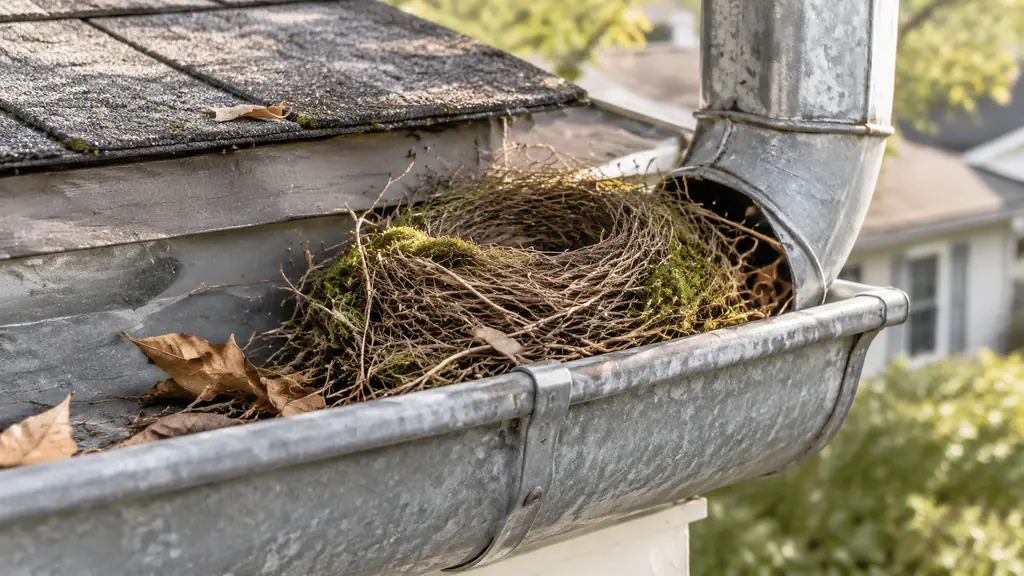
Downspouts can become packed solid with twigs and moss, and the blockage may go unnoticed until the ceiling stains. Birds pick gutter ends and downpipe mouths because they are dry, high and sheltered. A guard closes that door.
Why birds target gutters and downspouts
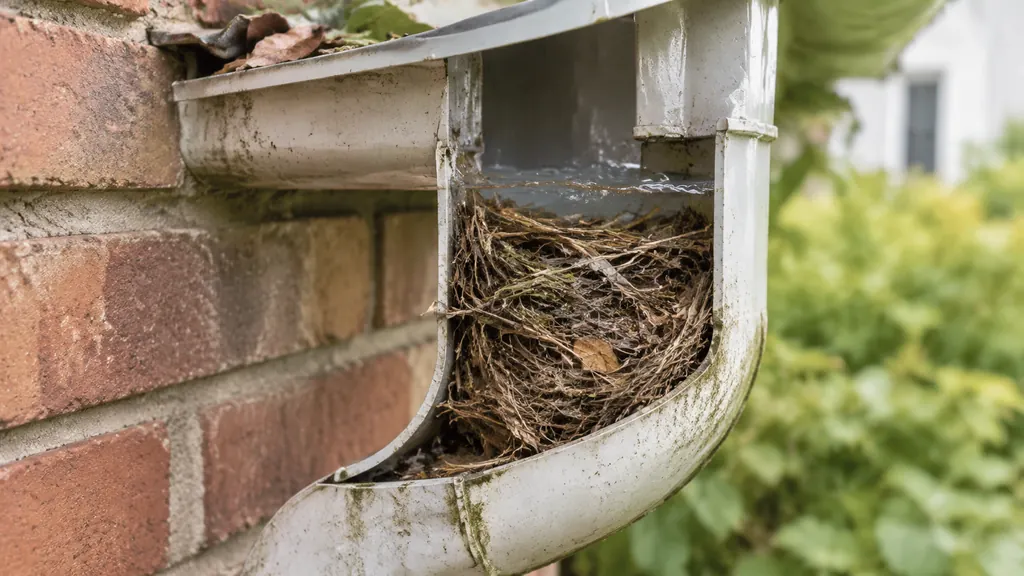
A downspout outlet is an open pipe mouth that can collect nesting material. Once a nest is wedged in the bend, it can obstruct the flow of water. Water backs up the gutter, spills over the back edge, and soaks the fascia board and the wall below.
The nest material itself makes the blockage worse. Small bird species in more than 20 passerine families use considerable amounts of spider silk in nest construction.
Blocked gutters cause problems that go well beyond an overflow. According to Gutterglove, over 90% of new homes experience gutter-related issues within the first year, and over 60% of homes are affected by basement flooding, often due to poor water drainage. A nest in a downspout is one of the simplest ways to create that poor drainage.
There is a legal angle too, and it matters before you start pulling anything out. The supplied source describes the Migratory Bird Treaty Act as covering nearly 1,100 listed migratory bird species and their nests and eggs. A March 2020 update of the MBTA list decreased the number of listed species to 1,093. If you find an active nest with eggs or chicks, stop and check the relevant authority and your local rules before you remove it.
The guard types that actually keep birds out
You have four practical options, and they suit different budgets and roof shapes.
- Mesh gutter guards. A stainless or PVC mesh panel clips over the gutter channel. Check the spec sheet for the aperture size before you buy.
- Brush inserts. A cylindrical brush of stiff bristles sits inside the gutter. Water runs through, birds cannot land and dig in, and debris tends to ride over the top. Cheap and fast to fit, but they need lifting out for a proper clean now and then.
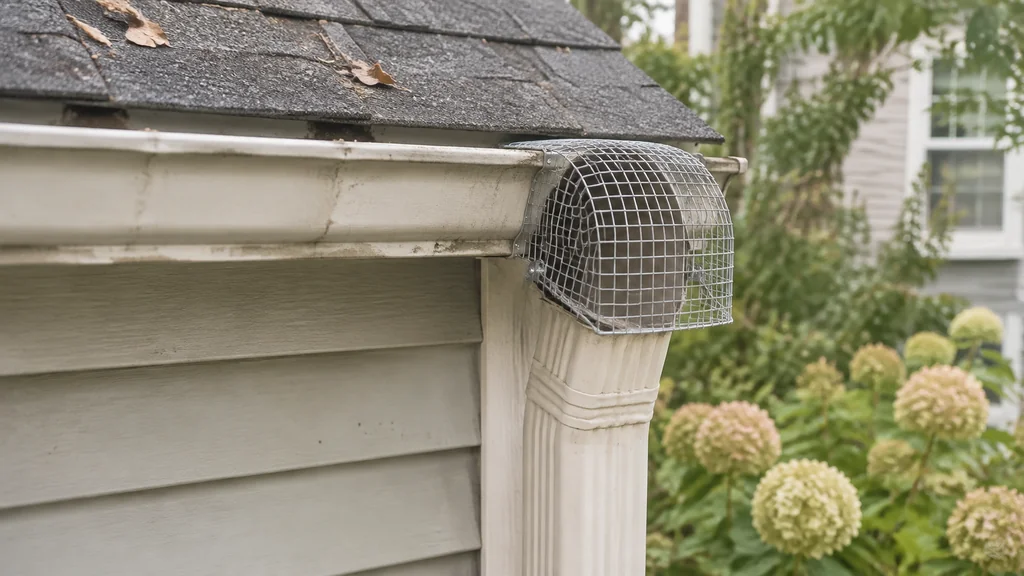
- Downspout screens and baskets. A small mesh cap or basket fits over the outlet at the top of the downpipe. This is the cheapest fix and the most targeted one if your only problem is nests in the pipe.
- Solid covers with a mesh strip. A metal or plastic cover over the gutter with a narrow mesh band along the front edge. Good on steep pitches where a full mesh panel can shed water too fast.
Material choice matters. PVC mesh may become less flexible with prolonged sun exposure. Compare the materials’ outdoor-use specifications, including those for Powder-coated steel, aluminium, EPDM and silicone.
If your roof is metal, the fixing method changes because you cannot drill through a standing seam without a proper clamp. My guide to gutter guards on a metal roof covers the clamp options and the mistakes that void a roof warranty.
Tools and materials for the job
Gather everything before you go up the ladder, because trips up and down are where most of the time goes.
- Tape measure and a pencil
- Tin snips or a fine-tooth hacksaw for mesh and plastic
- Cordless drill with a driver bit
- Self-tapping screws or the clips that come with the guard kit
- Work gloves with a grippy palm
- A bucket and a stiff hand brush for the old debris
- A ladder with stabilisers, set on firm ground
- Safety glasses
The ladder is the part I take most seriously. According to Gutterglove, over 164,000 ladder-related injuries and 300 deaths occur annually in the U.S. Set the feet on solid ground, keep your hips inside the rails, and never overreach sideways.
On cost, expect to spend modestly on a downspout screen and more on a full mesh run. Prices move with material and length. Measure your own gutter run and compare the result with the store’s current price. If you want independent testing data before you choose a brand, the round-up of gutter guards consumer reports is a sensible starting point.
How to fit a bird guard gutter and screen the downspouts
Work in dry weather, and do it in the morning so you are not on a hot roof at midday.
- Clear the gutter and downspout first. Scoop out the nest, twigs and silt by hand into a bucket. Flush the downpipe with a hose from the top and confirm water runs freely at the bottom before you cover anything.
- Check for active nests. If you find eggs or chicks, stop and check your local rules on protected birds before you go further.
- Measure the gutter run and the outlet. Note the internal width of the gutter and the diameter of the downspout mouth. Write both down, because kit sizes vary.
- Cut the guard to length. Add a small allowance at each end so the panel sits over the gutter lip rather than dropping into it. Deburr metal edges with a file.
- Fit the downspout screen or basket first. Push the cap over the outlet and bend the tabs under the gutter lip so it cannot lift in wind. This is the single most effective step against nests in the pipe.
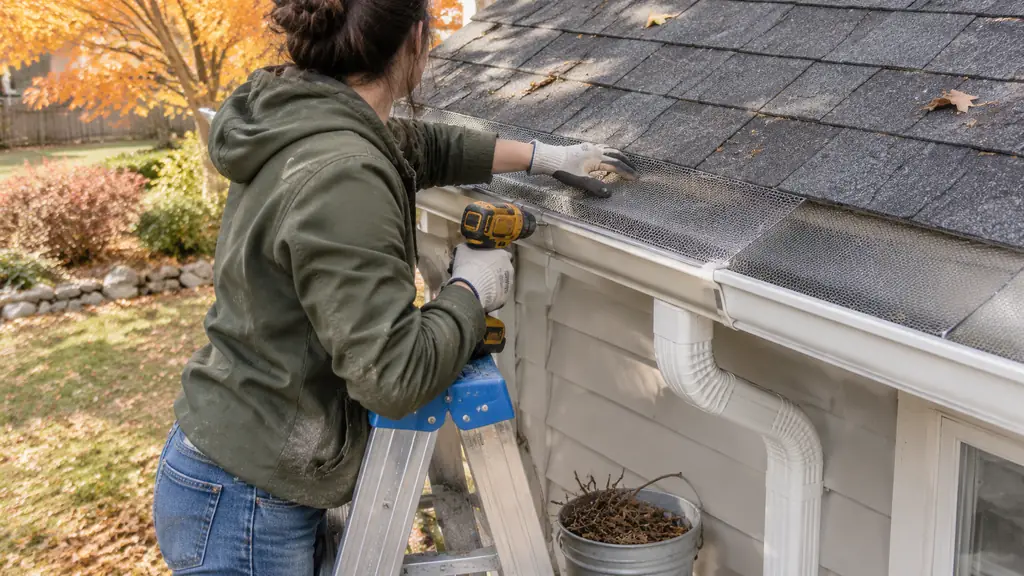
- Clip or screw the gutter guard along the run. Start at one end, keep the panel flat, and fix every clip the kit supplies. Do not skip the middle fixings on a long run.
- Test with water. Run a hose along the gutter and watch the downpipe outlet. Water should flow out steadily with no pooling behind the guard.
How to fit a bird guard gutter and screen the downspouts1Clear the gutter2Check for active nests3Measure the gutter run4Cut the guard to length5Fit the downspout screen or basket first6Clip or screw the gutter guard along the run7Test with waterThe steps from this section at a glance.
The trickiest step is always the downspout screen, because the tabs have to hook under a lip you cannot see from above. Do that one by feel with a gloved hand, and check it from the ground afterwards.
Mistakes that let birds back in
- Mesh too coarse. A wide aperture lets small birds push nesting material straight through. Check the spec sheet.
- Gaps at the ends and corners. Birds find the one unscreened corner. Cut and fit the end caps.
- Covering a gutter that is already blocked. Fit the guard over a full gutter and you trap the debris and the water. Clear first, always.
- Skipping the downspout outlet. A full mesh run with an open pipe mouth still lets birds nest in the pipe.
- Ignoring the downpipe bends. Nests collect at the first elbow. If water is slow, rod the bend from the bottom.
- Loose fixings. A guard that lifts in wind becomes a bird entrance and a rattle at night.
There is a lifespan argument for doing this properly. According to Gutterglove, installing gutter guards can extend the lifespan of a gutter drainage system by 2 or 3 times. A guard that is fitted flat and fixed at every clip point is doing that work. One flapping loose is not.
If your roof drops pine needles or seed pods, the guard choice changes again because fine debris bridges over coarse mesh. My notes on gutter guards for pine needles cover the mesh grades that cope with that load.
When to call a pro
Get a professional in for any of these.
- Two storeys or more. Working at height on a ladder against a gutter is where the serious falls happen.
- Fragile or steep roofing. Walking a steep pitch or a brittle tile roof risks a repair bill far bigger than the guard.
- An active nest that local wildlife authorities advise you not to disturb. Ask the relevant wildlife authority or a qualified wildlife professional.
- Sagging gutters or failed brackets. A guard will not fix a gutter that has pulled away from the fascia. That is a repair job first.
- Long runs on a complicated roof. Valleys, dormers and multiple downpipes take time.
The Act considers about 170 species to be game birds, though fewer than 60 are typically hunted each year. Verify current federal and local requirements before you touch a live nest.
Bird Guard Gutter FAQ
Do gutter bird guards stop nests in downspouts?
A downspout screen or basket over the outlet is the part that stops nests in the pipe, because it closes the opening birds use to enter. A gutter guard along the channel stops birds landing and digging in the gutter itself. Fit both for full protection.
Can I remove a bird nest from my gutter?
An inactive and empty nest may be removable, but verify current requirements with the relevant authority first.
How much does a bird guard for gutters cost?
Downspout screens are the cheapest option and full mesh runs cost more per metre, with price driven by material and length. Price your own gutter run at the store, since figures vary widely by region and season. Brush inserts sit in the middle of the range.
How often should I check the guards?
Lift any brush inserts and rinse them, and confirm the downspout screens are still hooked under the lip. A quick hose test tells you if flow has slowed.
Will a guard void my roof warranty?
Drilling may affect some manufacturers’ warranty terms. Check the roof paperwork before fixing anything. On shingle and tile roofs, fixing into the fascia avoids drilling into the roof surface.
Thank you for reading!