
Do Gutter Guards Cause or Prevent Ice Dams?
By: John Ledford | Date Posted: November 6, 2026
Table of Contents
- What an ice dam actually is, and why gutters get blamed
- Do gutter guards cause ice dams? The honest answer
- Do gutter guards prevent ice dams? What they can and can’t do
- The real causes of gutter ice dams, ranked
- What to do when ice is already there
- Guards, screens, and the downspout problem
- When to call a pro
- Ice Dams and Gutter Guards FAQ[+]
Gutter guards neither cause ice dams nor reliably prevent them. An ice dam forms when heat escaping through the roof melts snow high up, and that meltwater refreezes at the cold eave, where gutters sit. Standard roof-heat and ventilation principles apply when assessing the attic and eave. A guard changes what collects in the trough. The roof temperature drives the whole cycle.
That answer surprises people who bought a mesh cover expecting a cure. I’ve pulled enough frozen leaf mush out of open gutters in January to know the guard is doing one job well and another job not at all. Here’s what actually happens up there, and what to do about it.
What an ice dam actually is, and why gutters get blamed
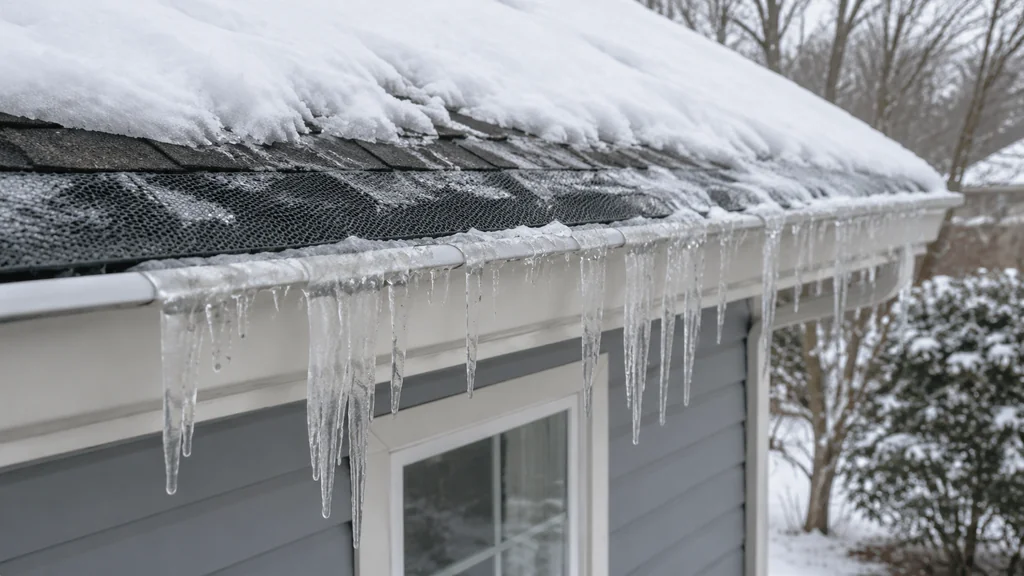
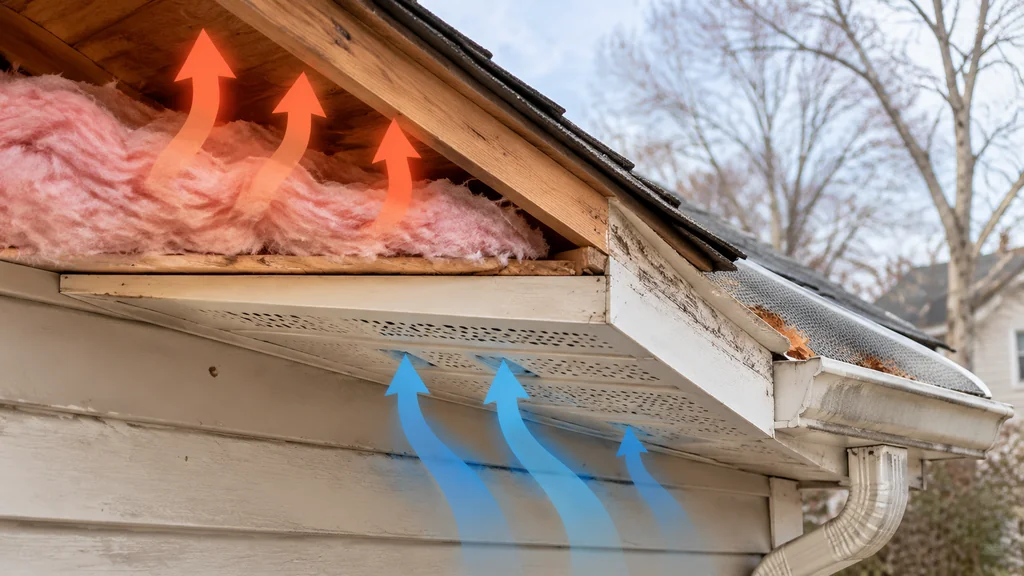
An ice dam is a ridge of ice along the lower roof edge. It forms from the top down. Warm attic air heats the roof deck, snow on the upper slope melts, and the water runs down under the snowpack until it hits the overhang, which stays cold because there’s no heated space under it. The water freezes there and backs up.
Gutters get blamed because that’s where the ice ridge is most visible. The dam is sitting right on top of the trough, or hanging off the fascia, so it looks like a gutter problem. It’s a roof-temperature problem that happens to end at the gutter line.
The damage comes from the backup. The ice itself is not the direct source of the damage. Water pools behind the dam, works under shingles, and shows up as a brown stain on the ceiling or a wet wall a few feet in from the exterior. By the time you see the stain, the ice has been there for a while.
Three things have to line up for a dam to form, and it’s worth knowing all three because each one is a lever you can pull:
- Heat loss through the roof. Poor insulation, warm attic air, or a leaky hatch between house and attic does it. Fiberglass insulation and air sealing address different parts of that heat path. Cellulose insulation is another material used for attic insulation.
- Snow cover that stays put. A deep pack insulates the roof deck and keeps the melt going.
- A cold eave. The overhang has no heat under it, so it stays below freezing while the rest of the roof doesn’t.
Gutters don’t appear on that list. They are where the ice is most visible, while the roof conditions create the dam.
Do gutter guards cause ice dams? The honest answer
No. A guard doesn’t add heat to the roof, and it doesn’t change the dew point or the attic temperature. What a guard can do is change how ice behaves once it’s already there, and that’s where the confusion starts.
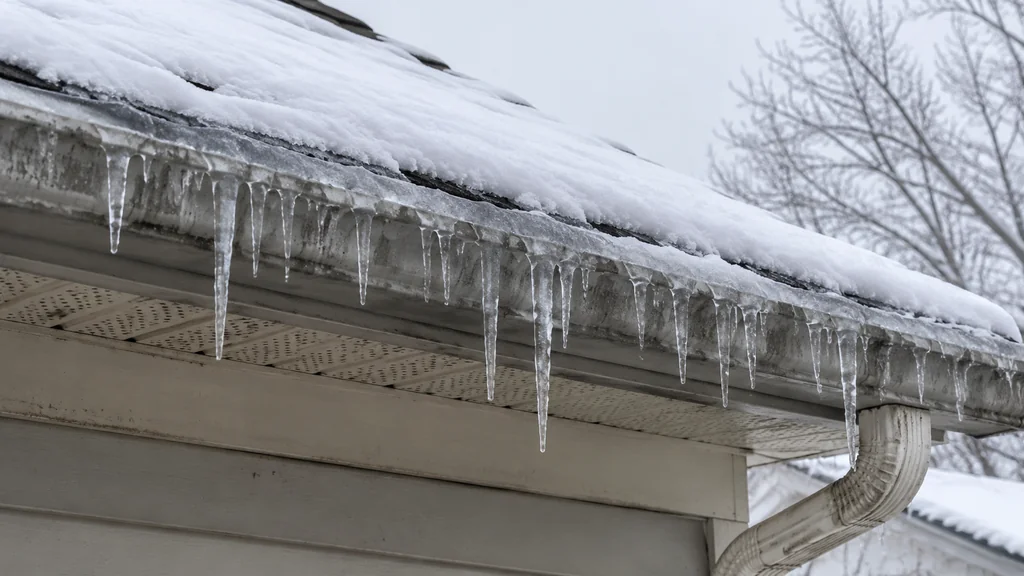
Two things happen with a guard in place. First, the cover keeps leaves and debris out of the trough, so meltwater has a clearer path to the downspout when things are thawing. Second, the cover sits over the trough, and in some conditions snow and meltwater freeze on the guard surface itself, forming a shelf of ice at the eave. That shelf is not a dam the guard created. It’s the same eave freeze that would have happened anyway, just sitting on a different surface.
The one real change a guard makes is access. If you need to chip ice out of a trough, a solid cover makes that harder, and on some profiles you can’t get a tool in without lifting the guard. That is a maintenance inconvenience, with no role in creating the dam.
I’ve also heard the claim that guards trap heat or block drainage. Neither holds up. A metal or PVC cover doesn’t hold meaningful heat, and a properly pitched trough with a clear downspout drains fine under a guard. What blocks drainage is a clogged downspout, guard or no guard.
Do gutter guards prevent ice dams? What they can and can’t do
They can’t prevent the dam, because the dam is driven by attic heat. What a guard can do is keep the trough from filling with leaves that turn into a frozen plug, which makes any backup worse.
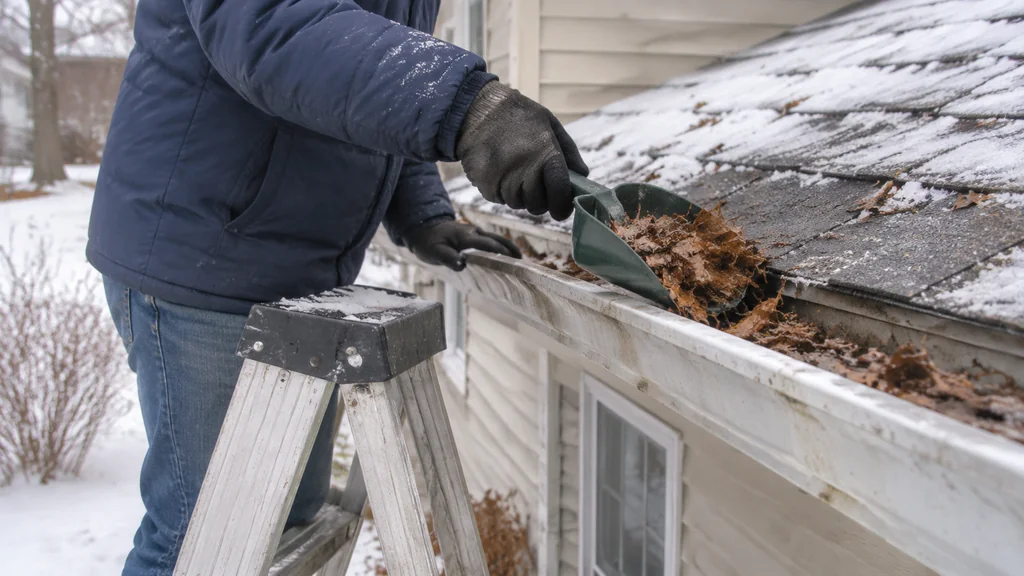
Think about an open gutter in late fall. Leaves collect, rain soaks them, and the first hard freeze turns that mess into a solid block. Now meltwater from the roof has nowhere to go even before a dam forms, and it backs up under the shingles faster. A guard that keeps the trough clear removes that failure mode. That’s a real benefit, just not the one on the box.
Where guards genuinely help:
- Keeping the trough clear so meltwater has a path during a thaw.
- Reducing debris in the downspout, which is the actual choke point on most houses.
- Cutting the number of times you’re up a ladder in cold weather, which matters more than people admit.
Where they don’t help at all:
- Attic heat loss. A guard does nothing about the warm air melting snow from below.
- A cold eave. The overhang stays cold regardless of what’s on the gutter.
- An existing dam. A guard won’t melt ice that’s already formed.
If your roof is steep and your gutters are high, the ladder work is the part that scares me, and a guard earns its keep there. On a metal roof, the profile and the snow-shedding behavior change the calculus, and the details in this guide to gutter guards on a metal roof are worth reading before you buy anything.
The real causes of gutter ice dams, ranked
If you want to stop ice dams, address the heat before the gutter. Here’s the order I’d work in, cheapest and most effective first.
- Air-seal the attic floor. Warm air leaking up through gaps around light fixtures, hatches, and plumbing penetrations is the biggest single driver. A tube of sealant and a Saturday morning does more than any gutter product.
- Add insulation to the right level. Check the spec sheet for your climate zone and get the attic floor up to it. Don’t block the soffit vents doing it.
- Keep the soffit vents open. The eave needs to stay cold. If you insulate over the vents, you’ve traded one problem for another.
- Seal and insulate the attic hatch. It’s a hole in the ceiling with a thin lid, and it leaks heat all winter.
- Clear the trough and downspouts before the first freeze. A clear path beats a covered one that’s already plugged.
- Consider heat cable on the eave and in the downspout. It’s a bandage, not a cure, but it opens a channel for meltwater. Check the label for how it’s rated and follow the instructions.
- Call a roofer if ice keeps coming back. Recurring dams after air-sealing and insulation usually mean a ventilation problem that needs someone on the roof.
The real causes of gutter ice dams, ranked
Notice what’s not on that list. A guard. It’s a leaf-management tool, and it’s good at that. It’s just not an ice-dam tool.
What to do when ice is already there
Don’t get on the roof. Ice on a roof is a fall hazard, and people get hurt every winter trying to chip it off.
What’s safe:
- Pull the snow off the lower roof with a roof rake while standing on the ground. Getting the snow off removes the fuel for the melt.
- Open a channel in the ice with a hose on a warm day, working from the ground where you can reach. Don’t use a hammer or an axe.
- Put a box fan in the attic blowing at the underside of the roof deck where the dam is. It can help by cooling the deck from below.
- Call a pro if water is coming into the house. A roofer or a restoration crew can steam the ice off without wrecking shingles.
Steam is the method pros use because it melts the ice without tearing shingles. An axe or a chisel will punch through shingles and leave you with a leak that costs more than the dam did. Roof Rakes remove snow from the ground without putting someone on the roof.
Guards, screens, and the downspout problem
Most of the ice-dam complaints I hear about guards trace back to the downspout, not the cover. A guard keeps leaves out of the trough, but debris still gets into the downspout from the roof surface, and a frozen downspout is a plugged drain. When the thaw comes, water backs up the trough and over the edge.
That’s why bird guards and downspout screens matter as much as the trough cover. If nests or debris are choking your downspouts, this piece on stopping nests in downspouts covers the fix. A clear downspout is the difference between a guard that helps and one that just hides the problem.
On the product side, independent testing is worth more than the marketing copy. Consumer Reports-style testing looks at how much debris a guard actually sheds and how it holds up, and that’s the number that matters. If you’re comparing models, this rundown of what independent testing shows on gutter guards is a better starting point than the box.
One more thing about ice on the guard itself. On some fine-mesh covers, meltwater can freeze across the mesh and form a sheet that sheds nothing until it thaws. That’s a surface freeze. It clears when the temperature rises and does not cause the roof backup.
When to call a pro
Call someone when water is already inside. A ceiling stain, a wet wall, or ice on the inside of a window near the eave means the backup has beaten the roof. That calls for a roofer or restoration crew, beyond a weekend project.
Call a pro also if:
- Ice dams come back every winter after you’ve air-sealed and insulated. That points to a ventilation or roof-assembly problem.
- Your roof pitch is steep or your gutters are high. Ladder work on ice is how people end up in the ER.
- You’ve got a metal roof. Snow sheds differently, and guards need to be matched to the profile.
- The downspouts keep freezing no matter what you do. A pro can check the pitch and the run.
Guards are a leaf tool. Ice dams are a heat and ventilation problem. If you’ve got both, address the heat first, then decide whether a guard suits the leaf problem.
Ice Dams and Gutter Guards FAQ
Do gutter guards make ice dams worse?
No. A guard doesn’t add heat or block drainage in a way that creates a dam. It can hold snow and ice on its surface during a freeze, but that surface ice clears on its own and doesn’t cause the backup that damages a roof.
Will gutter guards stop ice dams from forming?
They won’t stop the dam itself, because the dam is driven by warm attic air melting snow over a cold eave. A guard can keep the trough clear so meltwater drains during a thaw, which reduces the chance of a frozen plug making things worse.
What actually prevents ice dams?
Air-sealing the attic floor and insulating to the level on your spec sheet, while keeping the soffit vents open, is the core fix. Clearing the trough and downspouts before the first freeze and raking snow off the lower roof also help.
Should I remove my gutter guards in winter?
Not usually. Removing them means climbing a ladder in ice and snow, which is the risky part. If the trough is clear and the downspout drains, leave the guard on and deal with the attic heat instead.
Can ice dams form without gutters at all?
Yes. Ice dams form on roofs with no gutters because roof temperature and snowmelt create the dam. The gutter makes the ice more visible and gives the backup a place to pool.
Thank you for reading!