
Best Dehumidifiers for Home (2026 Reviews)
By: Dustin | Date Posted: September 4, 2026
Table of Contents
- Our Top Picks
- Best Overall: Midea Cube 50-Pint with Built-in Pump
- Best for Basements: Frigidaire 50-Pint
- Best for Energy Efficiency: Honeywell TP50AWKNR Smart Dehumidifier
- Best for Large Spaces / Whole Home: hOmeLabs 50-Pint WiFi Dehumidifier
- Best Compact / Small Room: Midea Cube 20-Pint
- Best Budget-Friendly: BLACK+DECKER 30-Pint
- Dehumidifier Comparison Table
- How We Picked These Dehumidifiers
- Also Considered
- What to Consider Before Buying a Dehumidifier[+]
- FAQ[+]
- What size dehumidifier do I need for my room?
- How many pints per day do I need for a basement?
- Is a bigger pint-capacity dehumidifier always better?
- Does an ENERGY STAR dehumidifier actually save money?
- Where should I place a dehumidifier in a room?
- Why do some dehumidifiers list two different pint numbers for the same model?
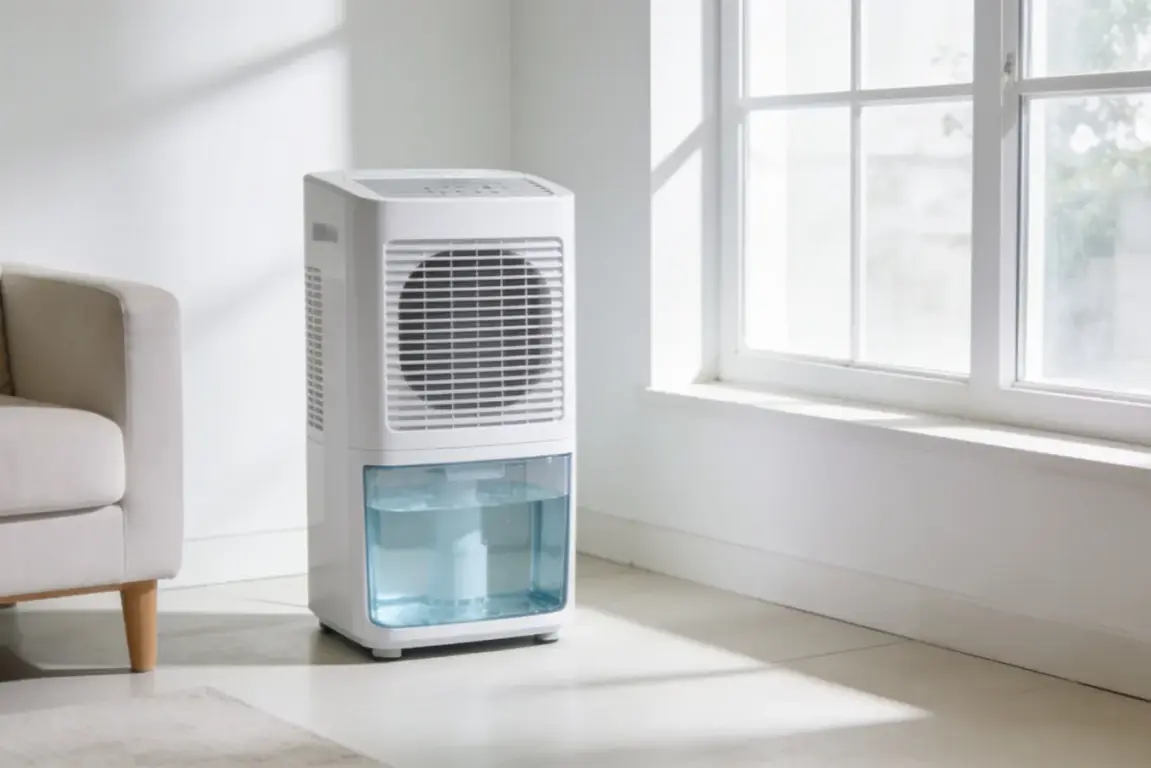
The Midea Cube 50-Pint with Built-in Pump (MAD50PS1QWT) is the best dehumidifier for most homes in 2026 because it pairs a 50-pint-per-day rating with a built-in condensate pump. That pump saves you from emptying a tank in a basement without a floor drain. It covers up to 4,500 square feet, which puts it in range of everything from a damp bedroom to a whole lower level. This guide covers six models chosen on published manufacturer specifications and ENERGY STAR certification data. If you’re not ready to buy yet, see our guide to reducing humidity without a dehumidifier.
Our Top Picks
- Best Overall: Midea Cube 50-Pint with Built-in Pump (MAD50PS1QWT) — the pump makes basement setup genuinely easier
- Best for Basements: Frigidaire 50-Pint (FAD504DUD family) — low-temperature operation and continuous drain
- Best for Energy Efficiency: Honeywell TP50AWKNR Smart Dehumidifier — ENERGY STAR Most Efficient designation
- Best for Large Spaces / Whole Home: hOmeLabs 50-Pint WiFi Dehumidifier — claims coverage up to 7,000 sq ft
- Best Compact / Small Room: Midea Cube 20-Pint (MAD20S1QWT) — the same clever design in a smaller footprint
- Best Budget-Friendly: BLACK+DECKER 30-Pint (BDT30WTB) — the essentials without smart features
Best Overall: Midea Cube 50-Pint with Built-in Pump
The Midea Cube 50-Pint (MAD50PS1QWT) wins the top slot because it’s the only pick in this round that combines a 50-pint rating with a built-in condensate pump. That pump matters more than most spec sheets suggest. It lets you route the hose up and over to a sink or drain, which is the difference between a basement unit you set once and one you keep coming back to empty. Coverage scales from a large bedroom to a full basement or garage — see the spec table below for the exact square footage.
| Spec | Detail |
|---|---|
| Pint rating | 50 pints/24h |
| Coverage | Up to 4,500 sq ft |
| Tank size | Not published |
| Noise | Not published |
| Built-in pump | Yes |
| Notable feature | App + Alexa/Google voice control, nested lift-and-twist body |
| Weight | 41.54 lbs |
| Dimensions | 14.76 × 14.57 × 14.45 in |
| Warranty | 1 year |
| ENERGY STAR | Not stated on the product page |
Pros:
- Built-in pump eliminates manual draining in most basement setups
- 50-pint rating covers large spaces up to 4,500 sq ft
- Smart control via app and voice assistants
Cons:
- At 41.54 lbs, it’s heavy to move between rooms
- Tank capacity isn’t published; we checked Midea’s own spec page and it simply isn’t listed, so you’ll rely on the pump or hose for continuous operation
Who it’s for: Homeowners with a basement, large bedroom, or garage who want a set-and-forget unit with a pump. Not for: Anyone who needs to move a dehumidifier between rooms regularly. The weight makes that a two-hand job.
Best for Basements: Frigidaire 50-Pint
The Frigidaire 50-Pint (FAD504DUD family) is our basement pick because it’s rated for low-temperature operation and supports continuous drain. Those two specs matter when you’re running a unit in a cool, damp lower level.
Cold-weather rating is not optional in an unheated basement.
Frigidaire publishes a noise rating of 53.0 dB on high fan speed, which is useful if the unit sits near a living space. The 16.3-pint tank is generous, but in a basement you’ll likely run the continuous drain hose anyway. If damp drywall is part of the problem, our guide to drywall alternatives for basements covers materials that handle moisture better.
| Spec | Detail |
|---|---|
| Pint rating | 50 pints/24h (24 liters/day) |
| Coverage | Not published |
| Tank size | 16.3 pints |
| Built-in pump | Not stated |
| Notable feature | Low-temperature operation, continuous drain, 35%–85% RH range |
| Noise | 53.0 dB on high fan |
| Power draw | 615 watts / 6.0 amps |
| Weight | 37 lbs |
| Dimensions | 16-1/8 × 24-3/4 × 11-5/16 in |
| Warranty | 1 year full / 5 year sealed system |
Pros:
- Rated for low-temperature operation, so it keeps working in a cool basement
- Large 16.3-pint tank means fewer empties if you don’t run the hose
- Sealed-system warranty covers five years
Cons:
- No built-in pump is listed on the spec page. Plan on a floor drain or a nearby sink for continuous operation.
- Coverage area in square feet isn’t published, which makes sizing less straightforward
Who it’s for: Basement owners with a floor drain or utility sink who need low-temperature operation and continuous drain. Not for: Anyone with a basement that lacks any drain. Without a pump, you’ll be emptying that 16.3-pint tank by hand.
Best for Energy Efficiency: Honeywell TP50AWKNR Smart Dehumidifier
The Honeywell TP50AWKNR earns the energy-efficiency slot because it carries both ENERGY STAR certification and the ENERGY STAR Most Efficient designation. Midea’s spec page confirms it does not carry that designation; Frigidaire and hOmeLabs weren’t verified specifically for it, so treat those two as unconfirmed rather than ruled out.
| Spec | Detail |
|---|---|
| Pint rating (DOE 2019) | 50 pints/24h |
| Coverage | Up to 3,000 sq ft |
| Tank size | 7 pints |
| Built-in pump | Not stated |
| Notable feature | ENERGY STAR Most Efficient, Smart WiFi, Alexa voice control |
| Noise | From 50 dBA |
| Power draw | 490 watts |
| Weight | 35.2 lbs |
| Dimensions | 13.2 × 10.5 × 20.1 in |
Pros:
- ENERGY STAR Most Efficient designation signals top-tier efficiency
- Smart WiFi and Alexa voice control for scheduling and remote monitoring
- Draws 490 watts, less than the Frigidaire, though the Most Efficient badge is the sourced reason it earned this slot
Cons:
- The 7-pint tank is small for a 50-pint unit. Expect frequent emptying without a hose.
- No built-in pump listed, so continuous draining requires gravity to a floor drain
Who it’s for: Energy-conscious buyers who want smart controls and will run a drain hose. Not for: Anyone who needs a built-in pump to drain uphill to a sink or window, or who dislikes relying on an app for the best experience.
Best for Large Spaces / Whole Home: hOmeLabs 50-Pint WiFi Dehumidifier
The hOmeLabs 50-Pint WiFi Dehumidifier is our large-space pick because it’s the only unit in this round with a published coverage claim above 4,500 square feet. hOmeLabs rates it up to 7,000 sq ft, which makes it a fit for an open-plan main floor or a large walkout basement. The listed price was $269.99 at the time we checked. hOmeLabs’ product page does not list noise level, wattage, tank volume, or dimensions.
| Spec | Detail |
|---|---|
| Pint rating | 50 pints/24h at 80°F/60% RH (up to 120 pints max at 95°F/90% RH) |
| Coverage | Up to 7,000 sq ft |
| Tank size | Not published |
| Built-in pump | Not stated |
| Notable feature | WiFi-enabled, ENERGY STAR certified |
| Listed price | $269.99 at fetch time |
Pros:
- Largest coverage claim in this round at up to 7,000 sq ft
- WiFi control for monitoring humidity remotely
- ENERGY STAR certified
Cons:
- No published noise level, wattage, or tank volume. You’re buying on the coverage claim alone.
- No built-in pump listed
Who it’s for: Owners of very large basements or open-plan spaces who want one unit instead of two. Not for: Anyone who needs verified noise or power specs before buying. hOmeLabs simply doesn’t publish them.
Best Compact / Small Room: Midea Cube 20-Pint
The Midea Cube 20-Pint (MAD20S1QWT) takes the compact slot because it brings the same nested lift-and-twist design as its bigger sibling down to a smaller rating that suits bedrooms, bathrooms, and small apartments. It’s still not light at 33 lbs, but the smaller footprint makes it easier to wedge into a bathroom corner or closet than the 50-pint model. Midea rates it for up to 1,500 square feet, which covers most single rooms with margin to spare.
| Spec | Detail |
|---|---|
| Pint rating | 20 pints/24h |
| Coverage | Up to 1,500 sq ft |
| Tank size | Not published |
| Built-in pump | Not stated |
| Notable feature | Nested lift-and-twist body design |
| Weight | 33.07 lbs |
| Dimensions | 13.5 × 13.39 × 13.5 in |
Pros:
- Compact footprint fits tight spaces
- Same clever design language as the larger Cube
- 20-pint rating is enough for most bedrooms and small apartments
Cons:
- No built-in pump listed
- Still heavy for its size at 33 lbs
Who it’s for: Anyone fighting humidity in a bedroom, bathroom, or small apartment. If the bathroom is the problem area, pair it with our bathroom mold removal guide. Not for: Large basements or whole-home setups. You’d need two or three of these to match one 50-pint unit.
Best Budget-Friendly: BLACK+DECKER 30-Pint
The BLACK+DECKER 30-Pint (BDT30WTB) is our budget pick because it delivers the essentials. ENERGY STAR certification, a 2-speed fan, auto shutoff and restart, and a 24-hour timer all come standard, with no WiFi or app layer to pay for. The 8-pint tank is modest, but the included 3-foot drain hose means you can run continuous drainage if you have a floor drain nearby. BLACK+DECKER does not publish a coverage area in square feet for this unit, so sizing comes down to that rating and your room’s dampness level.
| Spec | Detail |
|---|---|
| Pint rating | 30 pints/24h |
| Coverage | Not published |
| Tank size | 8 pints |
| Built-in pump | Not stated |
| Notable feature | ENERGY STAR certified, 2-speed fan, 24-hour timer, auto defrost |
| Humidistat range | 35%–80% RH |
| Weight | 32.7 lbs |
| Dimensions | 13.2 × 19.9 × 9.7 in |
Pros:
- ENERGY STAR certified with no WiFi/app tax
- Auto shutoff, restart, and defrost protect the unit
- Includes a 3-ft drain hose for continuous operation
Cons:
- The 8-pint tank fills quickly in a very damp space
- No published coverage area, so you’re sizing on the pint rating alone
Who it’s for: Budget-conscious buyers with a moderately damp bedroom or small basement who don’t need WiFi or a pump. Not for: Anyone with a very wet space. That rating and the small tank mean frequent emptying.
Dehumidifier Comparison Table
| Model | Pint Rating | Coverage | Tank Size | Noise | Built-in Pump | ENERGY STAR |
|---|---|---|---|---|---|---|
| Midea Cube 50-Pint (MAD50PS1QWT) | 50 pints/24h | Up to 4,500 sq ft | Not published | Not published | Yes | Not stated |
| Frigidaire 50-Pint (FAD504DUD) | 50 pints/24h | Not published | 16.3 pints | 53.0 dB on high | Not stated | Not stated |
| Honeywell TP50AWKNR | 50 pints/24h | Up to 3,000 sq ft | 7 pints | From 50 dBA | Not stated | Yes (Most Efficient) |
| hOmeLabs 50-Pint WiFi | 50 pints/24h | Up to 7,000 sq ft | Not published | Not published | Not stated | Yes |
| Midea Cube 20-Pint (MAD20S1QWT) | 20 pints/24h | Up to 1,500 sq ft | Not published | Not published | Not stated | Not stated |
| BLACK+DECKER 30-Pint (BDT30WTB) | 30 pints/24h | Not published | 8 pints | Not published | Not stated | Yes |
Only the Midea Cube 50-Pint has a confirmed built-in pump, and only three of the six models carry ENERGY STAR certification. Coverage figures are genuinely inconsistent across manufacturers. Two of six don’t publish one.
How We Picked These Dehumidifiers
This selection is based on published manufacturer specifications and ENERGY STAR certification data, the same information available on each maker’s product page. Our picks reflect what manufacturers claim on their spec sheets, with the independent ENERGY STAR certification serving as a third-party check on efficiency claims.
We applied four criteria consistently. First, coverage area versus typical home zones. We looked for units that map to bedrooms, basements, and whole-home spaces across a range of sizes. Second, the presence of a built-in pump, which we consider essential for basements without a floor drain. That single feature eliminated several otherwise strong candidates.
A pump is that decisive.
Third, ENERGY STAR status, because the certification is independently verified and directly affects your electricity bill. Fourth, the spec table marks any manufacturer data point that wasn’t published.
hOmeLabs doesn’t publish noise, wattage, or tank volume for its 50-Pint WiFi model. BLACK+DECKER doesn’t publish a coverage area for the BDT30WTB. Both stayed on the list because their published specs are strong; weigh the missing numbers before buying either one.
Also Considered
The GE APER and APYR series dehumidifiers came up repeatedly in our research, associated with WiFi connectivity and large-room use. They didn’t make this round because official manufacturer specification data wasn’t collected for those models. They’re worth watching for a future update.
It goes on the list once official spec data for it is collected and checked against the same criteria as the six picks above.
What to Consider Before Buying a Dehumidifier
What Pint Rating Do You Actually Need?
The pint rating is the single most important number on a dehumidifier — ENERGY STAR publishes sizing guidance by room dampness and size.
| Room condition | Small-to-medium room | Large room |
|---|---|---|
| Slightly-to-moderately damp | 20–30 pints/day | 30+ pints/day |
| Very damp | 25–40 pints/day | 40+ pints/day |
| Wet (active leaks/standing water) | 30–50 pints/day | 50+ pints/day |
Most bedrooms and living rooms sit at the smaller end of that table, while basements and very damp spaces need the larger end. Buying an oversized unit for a slightly damp bedroom is overkill. Buying an undersized unit for a wet basement is a waste of money because it will run constantly and still fall behind.
Why the Same Dehumidifier Can Show Two Different Pint Numbers
While researching this roundup, we pulled up two listings for what looked like the same class of unit and saw one rated 50 pints and the other rated around 30, with nothing on either page explaining the gap. That sent us digging through the DOE and ENERGY STAR pages to confirm it wasn’t a typo or a downgraded model. If you’ve shopped for dehumidifiers before, you may have run into the same mismatch. It’s a test method change effective June 2019, with new-rated units showing up in stores starting in 2020. The old test condition was 80°F. The new one is a cooler 65°F, chosen to better reflect how a unit actually performs in a basement.
Cooler air holds less water, so a unit removes less of it during the new, colder test. The new rating number ends up lower than the old rating number for the exact same physical machine. ENERGY STAR publishes conversion examples for this:
| Old rating (through 2019) | New rating (current) |
|---|---|
| 30 pints/day | ~20 pints/day |
| 50 pints/day | ~30 pints/day |
| 70 pints/day | ~40-45 pints/day |
When you’re comparing a listing you remember from a few years ago to a current one, assume the older number runs high next to today’s standard, and shop by today’s number.
Basement vs. Bedroom: Different Needs
A basement and a bedroom present fundamentally different dehumidification challenges, and the right unit for one is often wrong for the other. Basements run cooler, which means you need a unit rated for low-temperature operation. Otherwise the coils can ice up and the unit stops removing moisture. Basements also tend to be wetter, pushing you toward higher pint ratings and, ideally, a pump or continuous drain setup. If your basement has a crawl space attached, see our guide to running a dehumidifier in a crawl space for the different setup considerations there.
Bedrooms are smaller and warmer. A unit in the smaller end of the sizing ranges above usually suffices, and noise matters more because you’ll sleep near it. Before you buy anything, though, find the actual source of the moisture in your home. A dehumidifier addresses the symptom, and our guide to finding the source of moisture in your home can help you decide whether you need a machine at all or a fix for a leak or ventilation problem.
Pump vs. Gravity Drain
Every dehumidifier collects water in a tank, but how you get that water out of the machine is where designs diverge. The simplest approach is emptying the tank by hand. That’s fine for a compact unit in a bedroom, but tedious for a large-capacity unit in a wet basement, where the tank fills fast enough to need frequent checking.
A built-in pump changes the calculus. It pushes water up and over, so you can route the drain hose to a sink or utility tub that sits above the unit. That’s the difference between a basement setup you install once and one you babysit. Gravity drain requires the hose to run downhill to a floor drain. That works in many basements but fails in finished basements where the drain is on the other side of the room, or on upper floors where there’s no drain at all. Anyone who has dragged a garden hose across a finished floor trying to reach a drain on the far wall knows why that’s a dealbreaker. If you’re buying for a basement without a floor drain, the pump is worth the extra cost.
Does ENERGY STAR Actually Save Money?
Yes, and the savings are measurable. ENERGY STAR certified dehumidifiers are about 20% more efficient than non-certified models, according to energystar.gov. That efficiency is measured as an integrated energy factor, liters of water removed per kilowatt-hour. A higher number means the unit removes more moisture for every dollar of electricity you spend.
For a device that runs for months at a stretch in a damp basement, that gap adds up, and ENERGY STAR certification is independently verified, so it’s one of the few claims on a spec sheet you can trust without testing it yourself.
Last updated September 2026. First published version of this guide.
Where to start: Measure your space and assess your dampness level before you look at any specific model. A 50-pint unit with a pump is the safest default for a basement, while a compact unit without a pump usually handles a bedroom. Match the pint rating to your room using the ENERGY STAR sizing table above, and you’ll avoid both the frustration of an undersized unit and the waste of an oversized one.
If you’re still unsure whether a dehumidifier is the right fix, our moisture control guide covers the full range of home moisture problems and their solutions. And if you’re dealing with a specific damp room, the buying guide above should point you to the right size and features. The six picks in this round cover everything from a compact model to a whole-home unit.
FAQ
What size dehumidifier do I need for my room?
For a slightly to moderately damp bedroom or living room, a unit in the smaller end of the sizing ranges above is usually enough. If the room is very damp or large, step up to a larger-capacity model. ENERGY STAR’s sizing guidance is the reference. The table in the sizing section above breaks down recommended pint ranges by room size and dampness level. Measure your room and match it to the closest dampness level in the table above.
How many pints per day do I need for a basement?
A basement typically needs a unit in the upper end of the sizing ranges above unless it’s only slightly damp. ENERGY STAR recommends the larger capacities for wet small-to-medium rooms and the largest for wet large spaces. Basements run cooler and wetter than the rest of the house, so err on the larger size. Also look for low-temperature operation so the unit doesn’t ice up.
Is a bigger pint-capacity dehumidifier always better?
No. A bigger unit costs more, draws more power, and may short-cycle in a small room, which hurts efficiency. The right size matches the room’s square footage and dampness level. A large-capacity unit in a slightly damp bedroom is overkill. A compact unit in a wet basement will run constantly and still fall behind. Size to the space using the ENERGY STAR guidance in the sizing section above.
Does an ENERGY STAR dehumidifier actually save money?
Yes. ENERGY STAR certified dehumidifiers use meaningfully less electricity per pint removed than non-certified models, per energystar.gov; see “Does ENERGY STAR Actually Save Money?” above for the exact percentage and how it’s measured.
Where should I place a dehumidifier in a room?
Place it centrally with at least a few inches of clearance on all sides for airflow. Keep it away from walls and furniture that could block the intake or exhaust. For a basement, position it near the dampest area or the source of moisture. Don’t put it right against a wall. The unit needs room to circulate air to work effectively.
Why do some dehumidifiers list two different pint numbers for the same model?
The Department of Energy updated the pint-rating test method in 2019, using a cooler test temperature that better reflects a basement. The same physical unit gets a lower number under the new test than it got under the old one. See “Why the Same Dehumidifier Can Show Two Different Pint Numbers” above for the full explanation and conversion examples.
Thank you for reading!