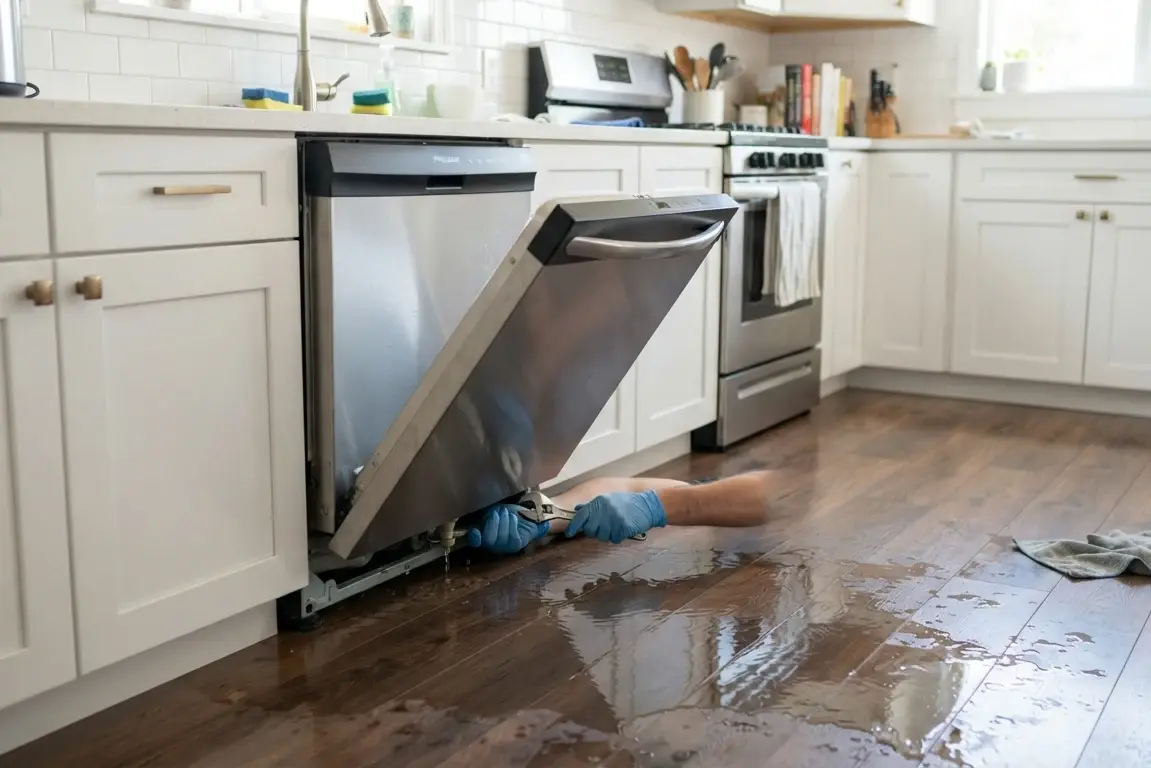
6 Steps to Fix Your Flooded Dishwasher: Complete Guide (2026)
By: John Garcia | Date Posted: July 10, 2026
Table of Contents
- Common Causes of Dishwasher Flooding
- How to Stop the Flooding
- Diagnosing and Fixing the Problem
- When to Call a Professional
- Frequently Asked Questions[+]
- How to Check and Clean the Dishwasher Drain
- How to Check and Replace the Float Switch
- How to Check and Replace the Door Seal
- Preventive Maintenance Tips
- How to Check and Replace the Water Inlet Valve
- How to Check and Clean the Air Gap
- My Recommendation for Dishwasher Maintenance[+]

Updated July 2026. A flooded dishwasher is a common household emergency that can cause significant water damage if not handled quickly. The most common causes are a clogged drain, a faulty float switch, or a damaged door seal. I’ve dealt with dishwasher floods in three different homes, and in most cases, the problem can be fixed in under an hour with basic tools.
Below I’ll explain the common causes of dishwasher flooding, how to diagnose the problem, and the step-by-step repair process.
Common Causes of Dishwasher Flooding
The most common cause of dishwasher flooding is a clogged drain. Food particles and debris can accumulate in the drain hose or the garbage disposal connection, preventing water from draining properly. When the water can’t drain, it backs up and spills out of the dishwasher. The second most common cause is a faulty float switch. The float switch is a small device that detects the water level in the dishwasher. If the float switch is stuck or damaged, the dishwasher may not stop filling with water, causing it to overflow. The third most common cause is a damaged door seal. The rubber gasket around the door can wear out or become damaged, allowing water to leak out during the wash cycle. Other possible causes include a cracked drain hose, a loose hose connection, or a faulty water inlet valve.
How to Stop the Flooding
When you discover a flooded dishwasher, the first step is to stop the water flow. Turn off the dishwasher by pressing the cancel or drain button. If the dishwasher doesn’t respond, turn off the circuit breaker that powers the dishwasher. Turn off the water supply to the dishwasher. The shut-off valve is usually under the kitchen sink. If there’s standing water on the floor, use towels or a wet/dry vacuum to remove it. Check for water damage to the floor, cabinets, and walls. If the flooding is severe, call a professional water damage restoration company.
Diagnosing and Fixing the Problem
Step 1: Check the drain. Remove the bottom rack and look for standing water in the bottom of the dishwasher. If there’s water, the drain is likely clogged. Remove the drain cover and clean out any debris. Check the drain hose for kinks or clogs. Step 2: Check the float switch. The float switch is located in the bottom of the dishwasher, usually in the front corner. Lift the float to make sure it moves freely. If it’s stuck, clean around it and make sure nothing is blocking it. Step 3: Check the door seal. Inspect the rubber gasket around the door for cracks, tears, or gaps. If the seal is damaged, replace it. Step 4: Check the hose connections. Make sure the drain hose and water supply hose are securely connected and not leaking. Step 5: Check the water inlet valve. If the dishwasher continues to fill after the float switch is lifted, the water inlet valve may be faulty and needs to be replaced.
When to Call a Professional
If you’ve tried the basic troubleshooting steps and the dishwasher is still flooding, it’s time to call a professional. A faulty water inlet valve or control board requires specialized knowledge and tools to replace. If the flooding has caused significant water damage to your floor, cabinets, or walls, call a water damage restoration company. If your dishwasher is more than 10 years old and has a major problem, consider replacing it rather than repairing it. The cost of a new dishwasher is $400 to $1,000, while major repairs can cost $200 to $500. If the dishwasher is under warranty, contact the manufacturer or the store where you purchased it. Attempting repairs yourself may void the warranty.
Frequently Asked Questions
Why is my dishwasher flooding from the bottom?
A flooded dishwasher from the bottom is usually caused by a clogged drain or a faulty float switch. The water can’t drain properly and overflows from the bottom of the dishwasher.
Can a flooded dishwasher be fixed?
Yes, in most cases. The most common causes are simple to fix, such as cleaning the drain or unclogging the float switch. More serious problems like a faulty water inlet valve require professional repair.
Does homeowners insurance cover dishwasher flooding?
Homeowners insurance may cover water damage from a sudden dishwasher flood, but it depends on your policy. Standard policies typically cover sudden and accidental water damage but not damage from lack of maintenance.
How do I prevent my dishwasher from flooding?
Regular maintenance is the best prevention. Clean the drain filter monthly, check the door seal for damage, and run a cleaning cycle with dishwasher cleaner every 3 months. Don’t overload the dishwasher.
Written by Mike, home improvement and appliance repair specialist. Updated July 2026.
How to Check and Clean the Dishwasher Drain
The drain system is the most common source of dishwasher flooding problems. Start by removing the bottom rack of the dishwasher to access the drain area. Remove the drain cover, which is usually located in the center or back of the dishwasher bottom. The drain cover may be secured with screws or clips. Under the drain cover, you’ll find a filter screen that catches food particles and debris. Remove the filter and clean it thoroughly under running water. Use a small brush to remove any debris that is stuck in the filter. Check the drain impeller, which is a small rotating blade that helps pump water out of the dishwasher. Make sure the impeller can spin freely and is not blocked by debris. If the impeller is stuck, remove any debris that is blocking it. Check the drain hose connection where it connects to the dishwasher. The hose should be securely attached and not leaking. If the hose is loose, tighten the clamp. If the drain hose is clogged, disconnect it from the dishwasher and the garbage disposal or drain pipe. Use a long, flexible brush or a plumbing snake to clear the clog. Flush the hose with water to make sure it’s clear. Reconnect the hose and run a test cycle to make sure the drain is working properly.
How to Check and Replace the Float Switch
The float switch is a safety device that prevents the dishwasher from overfilling. It’s a small plastic device that floats on the water in the bottom of the dishwasher. When the water level rises, the float rises and triggers a switch that tells the dishwasher to stop filling. If the float switch is stuck or damaged, the dishwasher may not stop filling, causing it to overflow. To check the float switch, locate the float assembly in the bottom of the dishwasher. It’s usually in the front corner, near the door. Lift the float to make sure it moves freely. It should move up and down without resistance. If the float is stuck, clean around it and make sure nothing is blocking it. Check the float switch mechanism under the float. The switch should click when the float is lifted. If the switch doesn’t click, it may be faulty and need to be replaced. To replace the float switch, remove the screws that hold the float assembly in place. Disconnect the wire harness from the old switch. Connect the wire harness to the new switch. Install the new float assembly and secure it with the screws. Test the dishwasher to make sure the float switch is working properly.
How to Check and Replace the Door Seal
The door seal is a rubber gasket that runs around the perimeter of the dishwasher door. It prevents water from leaking out of the dishwasher during the wash cycle. Over time, the seal can become worn, cracked, or damaged, allowing water to leak out. To check the door seal, inspect the rubber gasket around the door for cracks, tears, or gaps. Run your finger along the seal to feel for any damage. Check the seal at the corners and along the bottom edge, where damage is most common. If the seal is damaged, it needs to be replaced. To replace the door seal, purchase a replacement seal that is compatible with your dishwasher model. Remove the old seal by pulling it out of the groove. The seal is usually held in place by friction and can be pulled out by hand. Clean the groove where the seal sits. Install the new seal by pressing it into the groove. Make sure the seal is seated evenly and securely. Close the door and check that the seal makes contact with the dishwasher body evenly around the entire perimeter. Run a test cycle to make sure the new seal is not leaking.
Preventive Maintenance Tips
Preventive maintenance is the best way to avoid dishwasher flooding. Clean the drain filter after every use. Rinse dishes before loading them to reduce the amount of food debris that enters the dishwasher. Run a cleaning cycle with a dishwasher cleaner every 3 months. Check the door seal monthly for damage. Check the float switch monthly to make sure it moves freely. Don’t overload the dishwasher, as this can prevent proper water circulation and drainage. Use the correct amount of detergent, as too much detergent can cause excessive sudsing that can lead to overflow. Run the hot water at the kitchen sink before starting the dishwasher to ensure hot water enters the dishwasher from the start. If you have hard water, install a water softener to reduce mineral buildup in the dishwasher. Following these preventive maintenance tips can extend the life of your dishwasher and prevent flooding problems.
How to Check and Replace the Water Inlet Valve
The water inlet valve controls the flow of water into the dishwasher. If the valve is faulty, it may not close properly, causing water to continuously flow into the dishwasher. To check the water inlet valve, turn off the water supply and disconnect the power to the dishwasher. Remove the lower access panel at the front of the dishwasher. Locate the water inlet valve, which is usually at the bottom front of the dishwasher where the water supply hose connects. Check the valve for visible damage or corrosion. Use a multimeter to test the valve for continuity. If the valve does not have continuity, it needs to be replaced. To replace the water inlet valve, disconnect the water supply hose from the valve. Disconnect the wire harness from the valve. Remove the mounting screws that hold the valve in place. Install the new valve and secure it with the mounting screws. Connect the wire harness to the new valve. Connect the water supply hose to the new valve. Turn on the water supply and check for leaks. Reconnect the power and run a test cycle. The water inlet valve is a relatively simple part to replace, but it requires access to the bottom of the dishwasher and basic electrical testing skills. If you’re not comfortable working with electrical components, call a professional.
How to Check and Clean the Air Gap
Some dishwashers have an air gap device installed on the countertop near the kitchen sink. The air gap prevents contaminated water from flowing back into the dishwasher. If the air gap is clogged, it can cause water to back up and overflow from the dishwasher. To check the air gap, remove the chrome cover on the countertop. Inside, you’ll see a small plastic cap. Remove the cap and check for debris. Clean the air gap with a small brush or pipe cleaner. Run water through the air gap to make sure it’s clear. Reinstall the cap and cover. If the air gap is not clogged, check the drain hose connection between the air gap and the dishwasher. The hose should be securely connected and not kinked or clogged. If the air gap is clogged frequently, consider installing a garbage disposal that can handle more food waste, or scrape dishes more thoroughly before loading them into the dishwasher. The air gap is a simple device that is easy to clean and maintain. Cleaning it regularly can prevent dishwasher flooding problems.
My Recommendation for Dishwasher Maintenance
Based on my experience with dishwasher repairs, I recommend cleaning the drain filter after every use and checking the door seal monthly. These two simple maintenance tasks can prevent most dishwasher flooding problems. If you have a dishwasher flood, act quickly to stop the water and clean up the mess. The longer water sits on the floor, the more damage it can cause. Most dishwasher floods are caused by simple problems that can be fixed in under an hour. If you’re not comfortable working on the dishwasher yourself, call a professional appliance repair technician. The cost of a service call is about $100 to $200, which is reasonable for a repair that can prevent water damage to your home.
Thank you for reading!